
Simplified GST system can bring extra revenue with reduced tax-burden
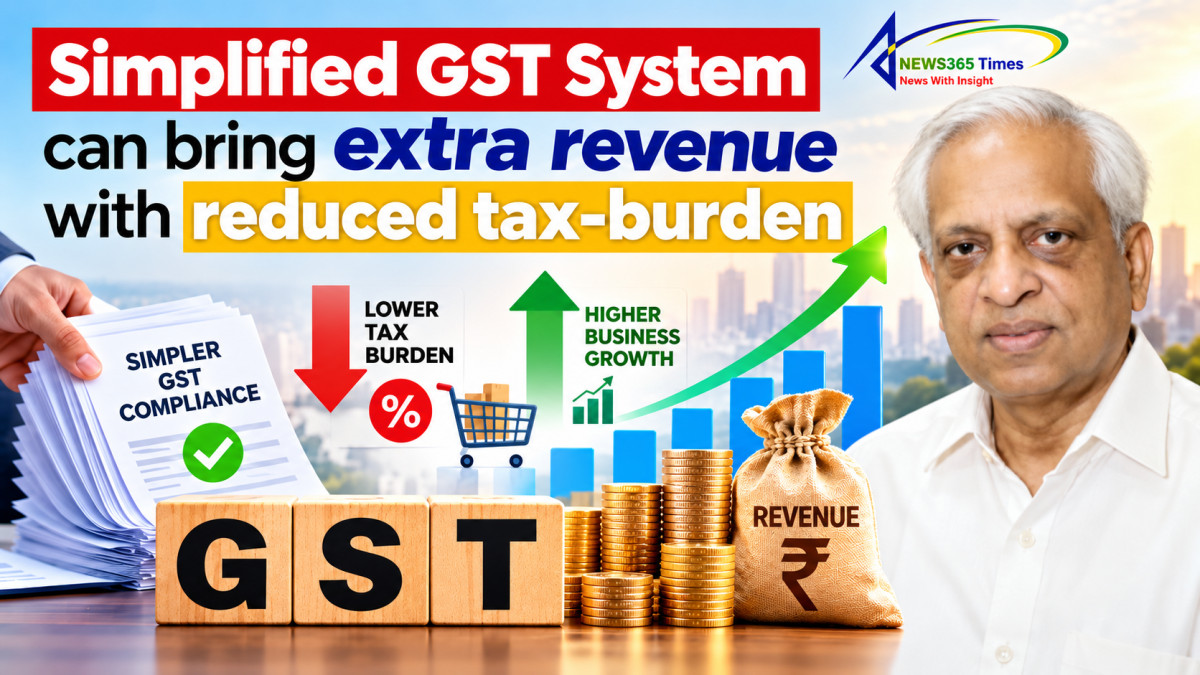
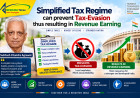
Ever since a reformative step of introducing Goods & Service Tax (GST) Act was introduced in the country from 1st July 2017, there has been a regular practice of changing tax-structure in ever-confusing GST regime with too many confusing and complicated provisions incorporated in the system. India is perhaps only country in the world where there are so many GST-slabs added by further confusing cess without any systematic tax-slab on so-called luxury items. Countries having adopted GST-system usually have single tax-rate. Even then petroleum products are out of purview of GST regime. Present haphazard GST-system has resulted in much-increased cash-transactions undoing the good done by harsh step of demonetisation of old currency of rupees 500 and 1000 which was also aimed to lead nation towards cashless economy.
Input-Tax-Credit system in GST-regime in manufacturing-sector is biggest corrupt practice of tax-evasion where left-out GST-invoices by ordinary customers are sold by traders to consuming manufacturers or producers to avail false Input-Tax-Credit where cash is paid back by traders to those purchasing left-out GST-invoices of actual consumers bringing more currency in circulation, this being the reason of basic motive of currency-demonetisation being failed where currency in circulation rapidly increased rather than projected decrease. Annual forensic audit may be made compulsory on claims made for Input-Tax-Credit by manufacturers/producers to avoid false claims of excessive Input-Tax-Credit in these sectors. Rather study should be made if with abolition of an excessively high 18-percent GST slab, Input-Tax-Credit can be altogether abolished from manufacturing/producing sectors, retaining it only on tradable commodities.
False claim of Input-Tax-Credit is also otherwise possible when there exists a senseless provision to provide Input-Tax-Credit on expense-items which are debited as expenses in profit-loss accounts and balance-sheets of traders and manufacturers. Input-Tax-Credit must not also be allowed on assets for which depreciation is claimed in preparing balance-sheets. Like Input-Tax-Credit is not allowed on car-expenses, same system should be applicable for all types of expenses. Such abolishing benefits of Input-Tax-Credit on expense-items and assets will in no way affect normal consumers, but will result in heavy increase in revenue-earning through GST which then can be utilised to abolish at least excessively high 18-percent GST slab by moving some items in higher GST slab presently of 28-percent (suggested to be marginally higher at 30-percent) and reducing tax-slab on remaining items to 12-percent GST-slab. GST slab of 5-perent can then be marginally increased to 6-percent abolishing altogether slab of 3-percent. Such slight increase of 5-percent to 6-percent and 28-percent to 30-percent will not be under criticism because such increase together with abolition of Input-Tax-Credit on expense-items and assets will pave way for abolishing harsh 18-percent tax-slab which is always considered to be high.
Thus GST slabs should be reduced basically to just four slabs i.e. zero, six, twelve and thirty percent thereby nominally increasing present 5-percent GST slab marginally to 6-percent and replacing 28-percent by 30-percent GST-slab. Gradually even slabs of 6 and 12 percent may also be replaced by a new 10-percent tax-structure. Zero-percent GST slab may only be retained on totally unbranded raw-materials which cannot be consumed without giving a finishing touch like agricultural-products, fish, meat, cotton-yarn etc. Only limited items may attract 6-percent tax-slab. All other items may be uniformly taxed at 12-percent GST-slab which should also be tax-slab for service sector which presently attracts 18-percent GST slab.
Complete GST system and website should be overhauled in a manner that educated persons may by themselves get registered under GST and also may be able to file GST returns themselves. It is unnecessary to have too many classifications under service-sector even though all are under same GST-slab of 18-percent presently. Useless system of nominal Tax-Deducted-At-Source for GST, which is hardly used in practice, should be altogether abolished. Or otherwise, any such deducted tax should be auto-reflected in GST-accounts of affected ones, abolishing cumbersome practice of filing a new monthly return to get credit of deducted GST. With GST-slab of 18-percent abolished and service sector then attracting just 12-percent GST, those with income of rupees ten lakhs or more (instead of present rupees 20 lakhs) can be brought under GST-regime like was the system before GST-regime. It is totally illogical to keep lawyers out of purview of GST-regime.
All items of long-term use like cars, air-conditioners, TV-sets, refrigerators and electrical & electronics items may attract 30-percent GST while their parts may uniformly attract 12-percent GST. Unmindful policy-framers brought clutch-plate and clutch-bearing under different GST-slabs of 18 and 28 percent. Likewise, similar items sold by confectioners like sweets, biscuits, namkins (salted food-items) etc attract different GST-slabs with luxury sweets causing diabetes attract just 5-percent GST while namkins (salted food-items) attract 12-percent GST.
Invoices for items like gold-jewellery can be drawn in two parts, one for metal and embodied items and the other for making-charges so that suggested 12-percent GST may be payable only on making-charges while gold/silver and embodied items may attract 6-percent GST-slab. Cess on extra-luxurious items should be replaced by additional GST-slabs in multiples of 60-percent, also bringing petroleum products under GST-regime to ensure uniform pricing of petrol and diesel in all states. Abolishing 18-percent GST-slab will be more than compensated by clubbing lower slabs of 3 and 5 percent into single 6-percent GST-slab. Input-Tax-Credit (ITC) system should not be applicable on non-tradable commodities and services like has been done, and rightly too, in case of car-expenses for non-commercial use.
All government-services including like railway-fares and select postal-items (like Speed Post) should be exempted from GST to avoid unnecessary government-accounting by putting tax from one government-pocket to other. Otherwise also, it was indeed silly to have some postal-services under GST and rest others without GST. There have been cases where some government-departments had to pay penalty for default in filing GST-returns or late payment of GST. Exempting all government-services from GST will result in saving of government-resources and man-power where different government-departments will be free from filing GST-returns. However any revenue-loss in case all government-services are exempted from GST should be prevented by absorbing present applicable GST in cost of government-service itself. As far as possible, cost of government-services should be in round figures. For example, presently local Speed Post tariff for first 50-gms slab is rupees 18 which can be marginally increased to rupees 20 (GST exempted).
In case cess is replaced by additional GST slabs in multiples of 30 or 60-percent, all petroleum products which are presently out of purview of GST, can then be brought under GST making prices of all petroleum products uniform throughout the country. It is highly improper that prices of petroleum products vary by even more than 30-percent in the country. While petrol was priced at just rupees 82.46 per litre in Andaman & Nicobar on 09.05.2025, same was priced at rupees 109.60 per litre in Andhra Pradesh with petrol costing rupees 94.77 per litre in Delhi on the same date 09.05.2025. Petroleum products in case becoming uniform after being under GST network then can be in round figures. Petrol, diesel, kerosene then can be priced in multiples of rupee one inclusive of GST while LPG gas-refill can be in multiples of rupees 50 inclusive of GST. It will not practically affect consumers because LPG delivery-persons usually keep balance money as “tips”!
What's Your Reaction?
 Like
0
Like
0
 Dislike
0
Dislike
0
 Love
0
Love
0
 Funny
0
Funny
0
 Wow
0
Wow
0
 Sad
0
Sad
0
 Angry
0
Angry
0

English Daily News Platform #News #Latestupdates #Tech #Business #Politics #Indianews #India. Regd No : JMAGC/HR/00072 (JMAGC ), MIB ,Govt of India






Comments (0)