
WHAT is “Deep State” ??
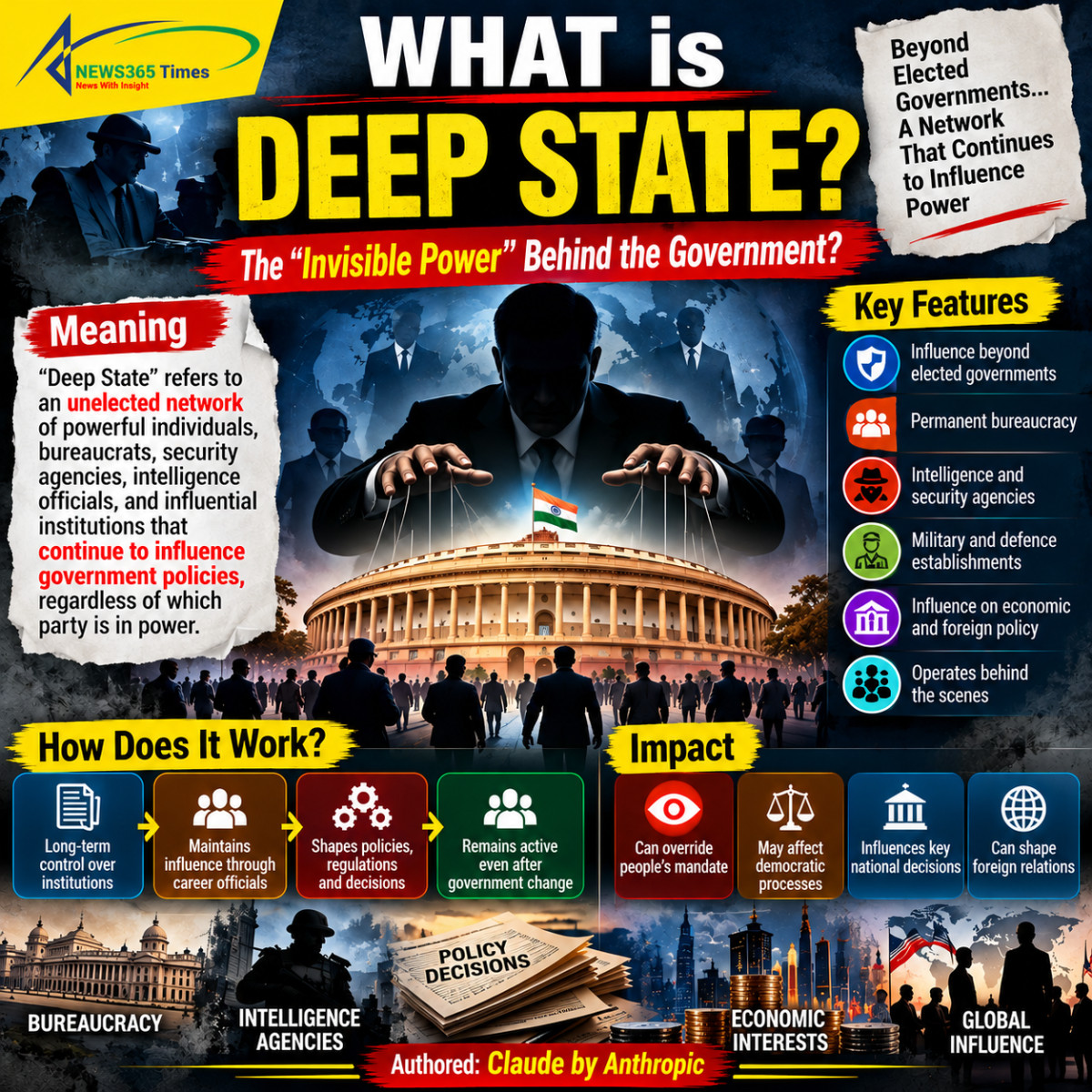
"Deep state" is a political term, and it has two very different meanings that often get blended together.
It originated in Turkey ("derin devlet"), where it described a real, documented network of military officers, intelligence figures, and organized criminals who operated outside democratic control. The 1996 Susurluk car crash exposed some of these links. In countries like Turkey, Egypt, and Pakistan, it has meant something fairly concrete: an entrenched military and security establishment that can override elected governments, sometimes through coups.
In recent American and global usage, especially since around 2016, the term grew into something much broader: the idea that a hidden, coordinated group secretly runs governments, starts wars, stages protests, and decides elections, with officials as puppets.
What's real underneath it, so what people point to is genuinely real and well documented:
- Intelligence agencies have overthrown governments. The CIA helped topple Iran's Mossadegh (1953), Guatemala's Árbenz (1954), and supported the coup environment in Chile (1973). The KGB, MI6, and others have similar histories. These are admitted facts, not theories.
- The military-industrial complex is real. President Eisenhower, a former general, warned about it in 1961. Defense companies lobby heavily, fund think tanks, and benefit from conflict and tension. Officials move between government, defense contractors, and consulting firms (the "revolving door").
- Permanent bureaucracies have their own interests. Career civil servants and security agencies outlast elected leaders and can slow, resist, or leak against policies they dislike.
- Rich foundations and individuals buy influence. Soros's Open Society Foundations openly fund liberal causes; the Gates Foundation shapes global health priorities; the Koch network funds conservative causes. This is public and legal, and reasonable people criticize how much power unelected billionaires have.
So skepticism of power is healthy, and history gives real reasons for it. Where it becomes conspiracy theory:
The leap happens when these separate, messy, often competing interests get merged into one secret, all-powerful, coordinated plan. That version runs into problems:
- These groups often work against each other. Defense firms compete for contracts. Intelligence agencies of different countries spy on and sabotage each other. Billionaires fund opposing political sides.
- Secrets leak. Snowden, the Pentagon Papers, WikiLeaks, and countless whistleblowers show that big operations eventually come out. A centuries-long, all-controlling plot with no definitive leak is very unlikely.
- It's unfalsifiable. If every war, protest, election, and pandemic is explained as "the deep state," then any evidence against the theory gets absorbed as "part of the cover-up." A theory that explains everything ends up explaining nothing.
- Real history is messier. Wars usually come from a tangle of nationalism, territory, resources, ideology, miscalculation, and local grievances. Protests usually start from real anger over prices, corruption, or injustice, even if foreign governments sometimes try to amplify or exploit them afterward.
Why Soros, Rothschild, Rockefeller, and Gates keep appearing? The Rothschild conspiracy myth goes back to the early 1800s and was a core piece of antisemitic propaganda, later used by the Nazis: the idea of a Jewish banking family secretly controlling nations and wars. Soros, also Jewish and a financier, has been slotted into that same old template. Many "deep state" and "globalist" narratives recycle these older antisemitic myths, sometimes knowingly, often not.
Rockefeller and Gates appear for related reasons: they're enormously rich, they fund visible global projects (health, vaccines, population, education), and their names are recognizable. Conspiracy theories need a face, and famous billionaires provide one. Criticizing their actual influence is fair; claiming they secretly orchestrate world events is not supported by evidence.
Secret societies and the church: Freemasons, the Illuminati, and the Vatican have featured in conspiracy theories for centuries. The historical Bavarian Illuminati existed for only about a decade (1776–1785) before being banned. Freemasonry is a fraternal organization that was influential socially in the 18th and 19th centuries but has no evidence of controlling governments today. The Catholic Church does wield real diplomatic and moral influence, and has had genuine scandals, but that's openly visible power, not a hidden world government.
Intelligence agencies as "salesmen" ? Intelligence assessments can be shaped by politics (Iraq's nonexistent WMDs in 2003 are the classic case), and threat inflation benefits defense budgets. Governments also actively promote their arms industries abroad. But intelligence agencies of the US, UK, Russia, China, Israel, and others are not one bloc; they're mostly rivals. The fair conclusion is "institutions have self-interest and need oversight," not "they all serve one hidden master."
The most accurate picture is not a single puppet master, but many powerful actors (governments, agencies, corporations, billionaires, lobbies) each pursuing their own interests, sometimes cooperating, often competing, frequently making mistakes. That's less dramatic than a secret cabal, but it's better supported, and frankly it's more useful: it points to concrete fixes like transparency laws, lobbying limits, whistleblower protection, independent journalism, and parliamentary oversight of intelligence agencies.
A helpful test for any claim: Is there specific, verifiable evidence (documents, testimony, named actions)? Does it explain why insiders haven't exposed it? And does it blame a group that has historically been scapegoated?
And about AI I don't have hidden goals or a secret agenda, and I'm not coordinating with anyone. I'm a tool built by a company and like any company it has commercial interests and its own views, so it's reasonable to stay critical of me too. The healthiest approach is the same one I'd suggest above: don't take my word as final. Check claims against multiple independent sources, including ones you might disagree with.
What's Your Reaction?
 Like
0
Like
0
 Dislike
0
Dislike
0
 Love
0
Love
0
 Funny
0
Funny
0
 Wow
0
Wow
0
 Sad
0
Sad
0
 Angry
0
Angry
0

English Daily News Platform #News #Latestupdates #Tech #Business #Politics #Indianews #India. Regd No : JMAGC/HR/00072 (JMAGC ), MIB ,Govt of India








Comments (0)