

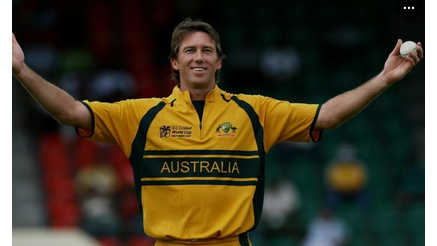
The name Glenn McGrath is synonymous with greatness in the cricketing landscape. Extra bounce, exemplary control and an unmatched fast-bowling mindset — he had it all. In an exclusive chat with RevSportz, the legendary Australian shares his views on Jasprit Bumrah and India’s next generation of fast bowlers. He also delves into the mental side of the game, explains how he would approach bowling in modern-day T20 cricket, discusses his role at the MRF Pace Foundation, and revisits some cherished memories from his glittering career.
Excerpts:
How do you look at your long association with the MRF Pace Foundation? You took over the mantle of mentoring young Indian fast bowlers from another Australian great, Dennis Lillee…
I always look forward to my time here. I have been coming here for 14 years. As you said, I took over from Dennis (Lillee). Back when it was set up, India had a shortage of fast bowlers. Since then, a lot of fast bowlers have come through. If you look at the Indian fast bowlers now, they are as good as anyone in the world. So, working with the next generation of Indian fast bowlers is something I really enjoy. Not just technique, but also mindset, attitude, bowling consistently, looking at how to take wickets, staying strong, staying fit — everything to do with fast bowling. I come over for six weeks a year. Just seeing the fast bowlers develop from March, when I am here, to August is very rewarding.
Is there any young Indian pacer to watch out for at the MRF Pace Foundation?
We have got Abhishek Moond, there is Ashutosh, there is Rinku. I could go through a whole list of bowlers. Young guys who haven’t played much first-class cricket. The plan is to get them to play first-class cricket and hopefully for India. IPL cricket is another goal a lot of the boys strive for. All the boys who are here at the moment are quality bowlers. They all have the ability to play at the highest level. Now it is up to them.
How do you look at Prasidh Krishna, one of the MRF Pace Foundation’s students? Yes, he has achieved some success, but there is a school of thought that says he goes for plenty of runs too…
I am a big fan of Prasidh. I have been impressed with the way he is bowling. Yes, he has got a little bit of work to do, just to get that right length and work out how to tie up the batter a little bit. It is a balance between what the team wants and its plans, and what you’re trying to do yourself. As you progress, and the captain has more faith in the younger bowlers coming through, they are allowed to bowl to, or alter, the plans.
It comes back to control. Prasidh is quite tall, hits the deck very well, gets bounce and good carry. Sometimes he is used as the enforcer, to bowl short and unsettle batters. It is about working out your role in the team. The secret to taking wickets is building pressure on the batter by not giving away easy runs. I think Prasidh will develop the more he plays. He has already had some really good results. Yeah, there is still a bit more work to do.
What about India’s pace spearhead, Jasprit Bumrah? There isn’t much doubt about his greatness, but he has had back injuries. In that context, how do you look at his future across formats? Can you explain his biomechanics in a few words?
One of the main things we work on here is strength. To be a fast bowler, you need to be strong enough to cope with the stresses of bowling fast. As you complete your season, your strength levels drop off a bit. When they fall below the stresses of fast bowling, that is when injuries become an issue. We build the boys’ strength so that they can maintain it throughout the season. The issue for Bumrah, other Indian bowlers and fast bowlers around the world is that the season continues. A lot of cricket is played all year round. There is no off-season to rebuild your strength.
Someone like Jasprit Bumrah is a little different from other fast bowlers. He has a very unique run-up and bowling action. He is easily one of the best fast bowlers in the world. The way he goes about it is absolutely brilliant. But, as I said, he is a little different. You may not teach that to other young bowlers because it is so unique to him. He has a short run-up, builds up to the crease, and those last two steps really power into and through the crease. He has a little bit of hyperextension and a great wrist. That is how he generates extra pace.
He is brilliant. But that action does put a lot of stress on your body. He has to work harder to get that strength level up. But the problem is there is not much of a break, not much of an off-season. Those are the challenges faced by any pace bowler. That is one thing we focus on at the MRF Pace Foundation.
Let’s continue on the subject of Indian pacers. Mayank Yadav, Gurnoor Brar and others are already playing for India. There could be a few from the MRF Pace Foundation coming through the ranks too. So, how do you look at India’s upcoming fast bowlers?
It is just about moving up a level. The main difference isn’t the skill; they all have that. It is the mindset, the attitude, adapting to different conditions and knowing what to bowl. All those bowlers you mentioned have potential. But it is about getting out there, doing your business, gaining experience and working as a team. We always say batters work together in partnerships; fast bowlers need to work in partnerships as well. From one end to the other, keeping the pressure on — that is how you take wickets. It is the mental side of the game they need to focus on.
How important is it for a fast bowler to be mentally strong?
It is incredibly important. I always say anyone playing first-class cricket as a bowler has the skill to play for their country. The difference is mental strength. Good bowlers have the skill. Great bowlers have the mental strength on top of it. All those little things — routines, discipline and getting into the right mindset. Self-belief, backing yourself to try something, and then learning whether it worked or not. In that same situation next time, what am I going to try?
To adapt to different conditions, you have to assess them quickly. Whether it is a fast pitch, a slow pitch or there is grass on it, all these factors matter. When you’re bowling the first over, you have to work out whether the batter is on the front foot or the back foot. The great bowlers work all that out quickly. They have the strength, adaptability and mental toughness that hold them in good stead.
In an imaginary world, put yourself in the shoes of a modern-day fast bowler playing in the IPL. How would you go about your business?
It is getting tougher for fast bowlers, isn’t it? The game is set up for the batters. They want to see big scores and sixes. The pitches are getting flatter, the boundary ropes have come in, and the rules are designed to help the batters. Bowlers have to adapt. Batters innovate with new shots, so bowlers have to work really hard. It still comes back to control — bowling the ball where you want it. If you have that control, you can set fields and bowl to them. If you don’t, the batter can hit you to any part of the ground.
What I have seen over the last few years is that Jasprit Bumrah and Josh Hazlewood are the two bowlers who really stand out. They bowl a good Test-match length, hit the pitch, top of off stump, just outside, and that actually builds pressure. You make batters play at good balls. That surprises me because the good-length ball is still effective in T20 cricket. Bowlers need better control, three or four slower balls and reliable back-up deliveries. All those things come into play. Yes, bowlers have to improve their skill levels to match the batters. Scores of 250-plus were unheard of when T20 cricket first started. Bowlers have to adapt and move with the times.
Let’s shift our focus to your glittering career. Any fond memories from your first Test match against New Zealand in 1993?
To be selected for your first Test is very special. In Australia, the Baggy Green is the symbol of Test cricket and everyone strives to wear it. To receive my first one, then bowl and take a wicket in my first few overs… Mark Greatbatch, the left-handed opener, edged one across to Ian Healy. That first Test wicket is something no one can ever take away from you. Those memories remain very special.
The very next year, things didn’t exactly go your way at the Gabba against England, but then you made a comeback for the Perth Test. That was followed by an iconic series in the West Indies, where you spearheaded the attack in the absence of two senior pacers. Take us through that phase of your career…
I went to the West Indies in 1995 and it was a tour where I was asked to step up. We had McDermott and Fleming, probably our two main pacers at the time, injured. We had a young bowling attack and I was asked to lead it. I enjoyed that challenge. In the first Test in Barbados, I picked up my first five-wicket haul. I got the great Brian Lara caught behind for the first time. I won my first Player of the Match award. That first five-for made me feel I was contributing to the team. It gave me a lot of confidence and cemented my place in the side. Even before that, the 1994-95 Ashes, as you mentioned, had helped me establish myself, and things went on from there.
You briefly touched upon Brian Lara. Any evocative memories of dismissing him?
I loved bowling to the players who were regarded as the best — Brian Lara, Tendulkar, Dravid and VVS Laxman. But Brian and Sachin were the two I loved bowling to the most. The first time I got Brian out, in Barbados, he edged behind and that was special. But in the 1999 World Cup, Australia were in a position where we had to win every game to reach the final. I bowled one, Brian played straight, it did just enough off the pitch to miss the edge and hit the top of off stump. The second one was my 300th Test wicket — Brian Lara, caught at fourth slip/gully off the first ball. That was the middle wicket of my hat-trick.
Follow Revsportz for latest sports news
Click here to watch the full video here
EXCLUSIVE
The legendary Glenn McGrath shares his thoughts on Bumrah, Prasidh, and other IND pacers. He also opens up on his glittering career and MRF Pace Foundation.@Fancricket12 @glennmcgrath11 @AgeasFederal #GlennMcgrath #MRFpaceFoundation pic.twitter.com/KlixkXqdzs
— RevSportz Global (@RevSportzGlobal) August 7, 2026
The post The legend speaks — Glenn McGrath opens up on Bumrah, young Indian fast bowlers, the fast-bowling mindset and more appeared first on Sports News Portal | Revsportz.