

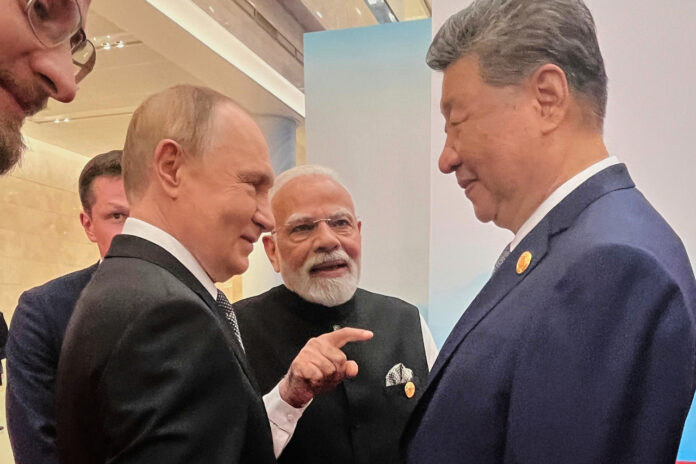
The 25th summit of the Shanghai Cooperation Organization (SCO), held in Tianjin from August 31 to September 1, 2025, marked a turning point in the bloc’s evolution. Chinese President Xi Jinping used the platform to set forth an ambitious agenda to expand the SCO’s role from a primarily regional security grouping into a central force shaping global governance, development, and technological cooperation.
Addressing leaders from across Asia and beyond, Xi emphasized that the world is undergoing unprecedented changes, with rising geopolitical tensions, global economic headwinds, and technological competition creating uncertainty. Against this backdrop, he called for stronger multilateralism, rejection of Cold War-era divisions, and a new framework of international cooperation that places the SCO at the heart of an emerging multipolar world order.
Xi announced several initiatives designed to give the SCO greater institutional and practical weight. Among the most significant was the proposal to establish an SCO development bank. This institution would provide financing for major infrastructure, industrial, and technological projects across member states, aligning with the group’s long-standing vision of shared prosperity and regional connectivity. To support this effort, Xi pledged \$1.4 billion in loans over the next three years, earmarked for development projects in SCO countries.
Another key announcement was the creation of an SCO platform for energy and green cooperation. With energy security and climate change ranking high on global agendas, Xi positioned the SCO as a forum that can help countries transition toward sustainable energy systems while ensuring stability in supply. This initiative also builds on China’s efforts to promote renewable technologies and environmental collaboration under the Belt and Road framework.
In a significant technological move, Xi invited SCO member states to access China’s BeiDou satellite navigation system. By offering an alternative to the U.S.-controlled GPS, BeiDou strengthens the SCO’s ability to reduce dependence on Western-dominated technologies and advance its own technological autonomy. This announcement was welcomed by several countries seeking diversified options in critical digital infrastructure.
Xi also introduced the “Global Governance Initiative,” marking the fourth major global initiative proposed by China in recent years, after those focusing on development, security, and civilization. He argued that the current international system faces a “new crossroads” and that the SCO should champion a governance model rooted in sovereign equality, inclusivity, and people-centered development rather than power politics and protectionism.
The summit in Tianjin drew wide international attention not only for Xi’s proposals but also for the participation of over 20 heads of state, making it the largest SCO gathering to date. Russian President Vladimir Putin voiced strong support for China’s vision, describing the SCO as a foundation for building a fairer and more balanced global order. Indian Prime Minister Narendra Modi also underscored the importance of bilateral stability and cooperation within the SCO, with both India and China signaling their willingness to work together as symbols of “dragon and elephant” partnership. Their joint message highlighted the broader role of the Global South in reshaping global decision-making.
The SCO summit concluded with the adoption of the “Tianjin Declaration,” which reinforced commitments to multilateral cooperation and set out the SCO’s development strategy through 2035. The document outlined goals for economic integration, expanded trade, counter-terrorism efforts, and stronger cultural exchanges. It also confirmed the launch of the SCO energy cooperation platform and the drafting of frameworks to strengthen digital and scientific collaboration.
For China, Xi’s proposals represent both a domestic and international strategy. Domestically, they showcase Beijing’s determination to lead in multilateral diplomacy and present alternatives to Western-led institutions. Internationally, they signal China’s intent to use the SCO as a tool to consolidate partnerships, enhance influence across Asia, and shape global governance structures that reflect the priorities of emerging economies.
The summit also highlighted the SCO’s expanding geographic footprint. Beyond its core members—China, Russia, India, Pakistan, and Central Asian states—the organization welcomed observers and dialogue partners from regions as diverse as the Middle East, Africa, and Latin America. This growing outreach reflects Xi’s broader vision of turning the SCO into a truly global institution.
Looking ahead, the success of these initiatives will depend on the ability of member states to navigate differences and commit resources to shared goals. While China and Russia remain the driving forces behind the SCO, the involvement of India and other countries will determine whether the organization can evolve into a genuine counterweight to Western-led alliances.
In Tianjin, Xi Jinping made clear that the future he envisions for the SCO is not limited to regional security or economic coordination. Instead, it is about building a new pillar of global governance—one that offers developing nations a stronger voice, promotes technological independence, and supports sustainable development. The message from Tianjin was unambiguous: the Shanghai Cooperation Organization is no longer just an observer of world affairs, but an active player in shaping them.