

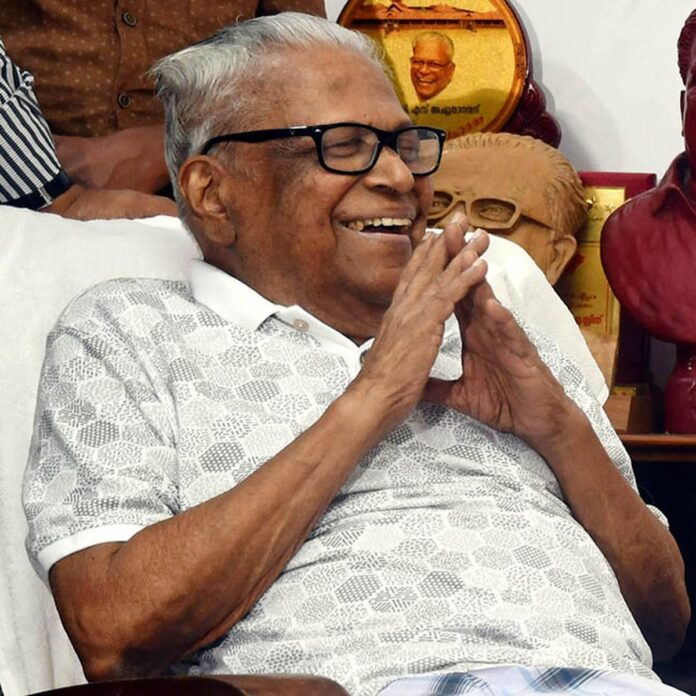
V.S. Achuthanandan, a 78-year-old veteran communist leader and then Leader of the Opposition in Kerala, embarked on a physically demanding trek through the rugged hills of Mathikettan Shola, a pristine forest in Idukki district. This lush ecosystem, part of the Western Ghats, was under siege by land grabbers backed by political patronage, who were clearing trees and establishing illegal settlements. Achuthanandan’s bold intervention—sparked by a tip-off from a forest officer—exposed a nexus of officials and encroachers, mobilized public support, and catalyzed the Kerala government’s decision to declare Mathikettan Shola a national park on November 21, 2003. Covering 12.82 square kilometers, the park now stands as a critical biodiversity hotspot and water source for local communities. This article explores Achuthanandan’s historic act, its impact on environmental conservation, and his broader legacy as Kerala’s unlikely green warrior.
The Crisis at Mathikettan Shola
Mathikettan Shola, located in Poopara village of Udumbanchola taluk, Idukki, is a dense shola forest ecosystem renowned for its rare flora, including orchids, Strobilanthes, and medicinal plants, and fauna like elephants, tigers, Nilgiri martens, and giant grizzled squirrels. Part of the Cardamom Hill Reserve (CHR) since 1897, the forest had been partially leased for cardamom cultivation, but its ecological significance as a wildlife corridor and water source for Santhanpara panchayat was immense. By 2002, however, the forest faced a severe threat. Encroachers, supported by influential political and official networks, were rapidly clearing trees, farming the land, and using heavy machinery to carve roads. Goons were stationed to block forest officials and locals, while a district collector’s meeting proposed redistributing Mathikettan’s 12.82 sq km to landless tribal families, exploiting its legal status as a cardamom reserve to bypass forest laws.
The crisis came to light when V.K. Francis, a forest range officer, alerted Achuthanandan, warning that only his intervention could save the forest. The stakes were high: unchecked encroachment risked destroying a biodiversity hotspot and disrupting the elephant corridor connecting Munnar to Bodinayakkanur. Achuthanandan, known for his fierce commitment to public welfare, recognized the urgency and acted decisively.
The Trek That Changed History
At 78, Achuthanandan’s decision to personally visit Mathikettan Shola was a testament to his resolve. Defying his age and the physical challenges of the terrain, he traveled from a politburo meeting in New Delhi, stopping overnight in Aluva before driving up the ghat roads to Santhanpara, near Mathikettan. The journey was arduous, with no proper roads leading to the hills. Accompanied by environmental activist John Peruvanthanam, Achuthanandan witnessed firsthand the devastation: felled trees, new farming activity, and signs of aggressive land grabs. Protesters, some dressed as forest dwellers and armed with bows and arrows, confronted him, shouting slogans. Unfazed, Achuthanandan sat calmly in his jeep as police dispersed the crowd.
His approach was methodical. Armed with facts gathered on-site, he exposed the collusion between land grabbers, revenue officials, and political figures, including some within his own Communist Party of India (Marxist) (CPI(M)). He leveraged his extensive network of environmental groups and media to amplify the issue, sparking public outcry. His relentless campaign, both in the Kerala Legislative Assembly and through public platforms, pressured the government to act. On November 21, 2003, the Kerala government issued a notification declaring Mathikettan Shola a national park, securing its 1,281.74 hectares under stringent forest laws and transferring full control to the Forest Department.
Impact of the Declaration
The declaration of Mathikettan Shola National Park was a landmark victory for conservation:
-
Ecological Protection: The park safeguards a critical ecosystem, home to endangered species like the Indian elephant, Nilgiri tahr, and Nilgiri marten, and serves as a vital wildlife corridor between Eravikulam and Pampadum Shola National Parks.
-
Water Security: The shola’s streams—Uchillkuthi Puzha, Mathikettan Puzha, and Njandar—feed the Panniyar River, supplying water to 7,000 families in Santhanpara panchayat, including tribal settlements, without need for purification.
-
Biodiversity Preservation: The park’s evergreen forests, shola grasslands, and rare flora, including medicinal plants, are protected from further degradation.
-
Legal Precedent: The shift from cardamom reserve to national park status ended dual control by the Revenue and Forest Departments, closing loopholes exploited by encroachers.
Achuthanandan’s intervention also led to accountability. The district collector and other officials were suspended after an inquiry confirmed their role in facilitating encroachments, though a 2023 acquittal of 13 officials after a 23-year legal battle sparked debate over delayed justice.
Achuthanandan’s Broader Environmental Legacy
The Mathikettan victory was not an isolated act but part of Achuthanandan’s transformation into Kerala’s “green warrior.” As Leader of the Opposition (2001–2006) and later Chief Minister (2006–2011), he championed environmental causes:
-
Munnar Eviction Drive (2007): As Chief Minister, he led a high-profile campaign to reclaim 11,000 acres of illegally occupied land in Munnar, targeting resorts and constructions threatening the Western Ghats’ fragile ecology.
-
Paddy Land Conservation: His 1997 agitation against paddy field reclamation in Alappuzha paved the way for the Kerala Conservation of Paddy Land and Wetland Act (2008), reducing paddy land loss from 8.82 lakh hectares in 1974–75 to 1.96 lakh hectares by 2015–16.
-
Endosulfan Campaign: In 2016, Achuthanandan protested for endosulfan victims in Kasaragod, demanding ₹10 lakh ex-gratia payments per Supreme Court orders.
-
Plachimada Struggle: He opposed groundwater exploitation by a multinational beverage company in Palakkad, supporting local communities in the Plachimada movement.
-
Silent Valley Buffer Zone: He advocated for a 148 sq km buffer zone for Silent Valley National Park, enhancing its protection.
His environmental activism was rooted in a belief that natural resources belong to all, not just the elite, and that progress must not sacrifice ecological balance or human dignity. His campaigns often faced resistance, even within his own party, but his persistence earned him widespread public support.
Challenges and Controversies
Achuthanandan’s Mathikettan intervention faced significant hurdles:
-
Political Resistance: Some CPI(M) leaders opposed his involvement, fearing backlash from influential land interests.
-
Physical Demands: The trek was grueling for a 78-year-old, with no proper roads and hostile protesters adding to the challenge.
-
Legal Delays: The 2023 acquittal of officials in the encroachment case disappointed activists and families like that of V.K. Francis, who faced hardships for exposing the issue.
-
Ongoing Threats: Despite national park status, Mathikettan faces pressures from cardamom cultivation and a 2021 eco-sensitive zone (ESZ) declaration that sparked local protests over its impact on 4,000 acres of farmland.
Broader Implications
-
Ecological: Mathikettan’s protection ensures water security and biodiversity conservation, critical for Idukki’s tribal settlements and regional ecology.
-
Social: Achuthanandan’s actions elevated environmental issues in Kerala’s political discourse, inspiring grassroots activism and public awareness.
-
Political: His willingness to challenge allies and adversaries alike redefined political responsibility, emphasizing transparency and public welfare.
Path Forward
To honor Achuthanandan’s legacy and sustain Mathikettan’s protection:
-
Strengthen Enforcement: Enhance forest patrols and monitoring to prevent future encroachments.
-
Community Engagement: Involve local tribal communities in eco-tourism and conservation, as seen in trekking programs managed by the Forest Department and Eco-development Committees.
-
Policy Advocacy: Continue advocating for laws like the Paddy Land Act to protect Kerala’s ecosystems.
-
Public Awareness: Promote Mathikettan’s ecological value through education and media to sustain public support.
V.S. Achuthanandan’s 2002 trek to Mathikettan Shola was a defining moment in Kerala’s environmental history. At 78, his resolute journey through a threatened forest exposed a powerful nexus, galvanized public action, and led to the declaration of Mathikettan Shola National Park in 2003. This act not only saved a biodiversity hotspot but also cemented Achuthanandan’s legacy as an unlikely green warrior. His broader environmental campaigns—spanning Munnar, Plachimada, and endosulfan victims—reflect a commitment to justice and sustainability that continues to inspire. As Mathikettan thrives as a water source and wildlife haven, Achuthanandan’s courage reminds us that one leader’s conscience can reshape a landscape and a state’s environmental future.