

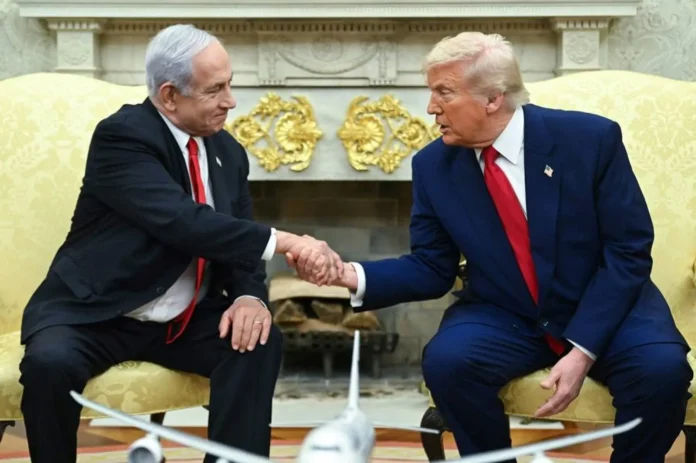
Former U.S. President Donald Trump is set to host Israeli Prime Minister Benjamin Netanyahu at the White House on July 7, in what is being seen as a highly symbolic and politically significant meeting amid a turbulent Middle East landscape and a charged U.S. election season.
This marks Netanyahu’s first formal meeting with Trump since the Israeli leader returned to office and comes at a time when both leaders face challenges—Trump with his ongoing presidential campaign and legal pressures, and Netanyahu with domestic unrest and international scrutiny over his government’s judicial reforms and Gaza policy.
Topics on the Table
The meeting is expected to cover:
-
U.S.-Israel strategic partnership
-
Security concerns in the Middle East, especially related to Iran and Hezbollah
-
The evolving Gaza situation
-
Potential Abraham Accords expansion
-
Deepening of tech, intelligence, and defense ties
Trump, who has long touted his role in brokering the original Abraham Accords, is expected to pitch himself as a dealmaker once again, signaling potential future diplomatic efforts if he wins re-election.
Political Significance
The timing is crucial—both leaders are facing election cycles and political tests. Trump is in the thick of his 2026 campaign and seeks to reaffirm his credentials in foreign policy. Netanyahu, on the other hand, may leverage U.S. political support to reinforce his image at home amid mounting protests and political fractures.
Diplomatic Sensitivities
The meeting has drawn global attention due to its unofficial yet high-profile nature. While Trump is no longer president, his influence in Republican and pro-Israel circles remains strong. The gathering at the White House—despite being outside official U.S. diplomatic channels—underscores Trump’s continuing ambition to shape global affairs.
Netanyahu is also expected to meet with U.S. Jewish leaders, business delegates, and defense industry officials during his visit.
Conclusion:
The July 7 Trump-Netanyahu summit will not only be a platform to reaffirm U.S.-Israel ties but also a moment for both leaders to reposition themselves domestically and internationally. The outcome may hint at how U.S.-Middle East relations could evolve should Trump return to the presidency.