

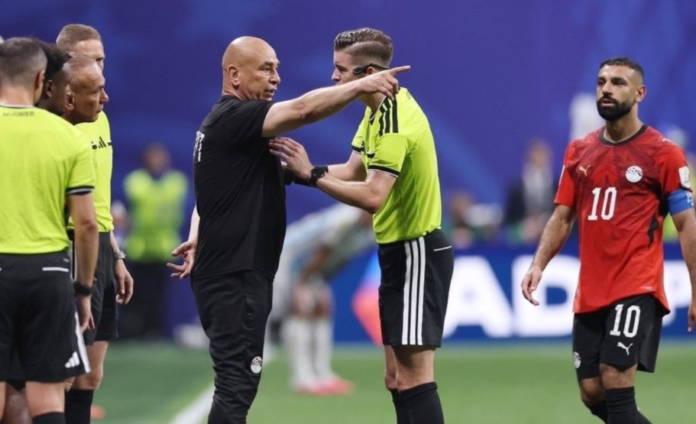
Will July 7 now be remembered as another dark day in Atlanta’s sporting history?
It is difficult to describe it any other way. The aftermath of the Argentina-Egypt World Cup match has turned French referee François Letexier into the central figure of a global controversy. At the heart of it all is Atlanta’s Mercedes-Benz Stadium, which has become the focal point of debate across the footballing world. The discussions have become so intense that, at times, they seem to overshadow even one of the city’s darkest sporting memories—the controversy surrounding the 1996 Atlanta Olympics.
Back then, it was July 27, 1996. The Summer Olympics were underway when a bomb exploded at Centennial Olympic Park. Authorities later identified extremist Eric Rudolph as the man responsible for the attack. The explosion left one person dead and injured 111 others.
Nothing of that magnitude happened physically after the Argentina-Egypt match on July 7. There were no casualties. Yet millions of football supporters around the world feel something far more intangible was taken away from them. The outrage over Letexier’s decisions has divided the football community like few refereeing performances ever have.
Away from football, Letexier is a lawyer by profession. Many believe that explains his officiating style. Critics argue that he places greater emphasis on applying the laws of the game to the letter than preserving its spirit. Maintaining the flow of football, they say, is secondary to ensuring every technical aspect of the rulebook is followed. His reliance on VAR has drawn criticism before, and Tuesday’s Round of 16 clash only intensified those concerns.
The biggest talking point came when Egypt’s Mostafa Ziko thought he had scored against Argentina. While the Egyptian players celebrated, Letexier reviewed the sequence through VAR and ruled that, nearly 30 seconds before the goal, midfielder Marwan Attia had committed a foul on Argentine defender Lisandro Martínez during the build-up. The goal was disallowed.
The controversy stems from what happened after that challenge. Egypt completed several more passes before Ziko eventually found the net. Had the goal stood, Egypt would have gone 3-0 ahead. Whether Argentina could have staged the remarkable comeback that followed is now one of football’s biggest “what ifs.”
The debate became even louder towards the end of the match. Egypt felt Mohamed Salah was brought down inside the penalty area, but no penalty was awarded. More significantly, the referee did not even consult VAR.
How could two situations in the same match be treated so differently?
Technically, the Laws of the Game allow VAR to review an attacking phase leading to a goal. The referee was within his rights to go back and identify a foul if he believed one had occurred. But whether to scrutinise an incident that far back in the build-up remains a matter of judgement. That naturally raises another question: if such extensive review was justified for Argentina’s benefit, why was VAR not used for Egypt’s penalty appeal?
It is precisely this inconsistency that has split opinion across the sporting world.
The controversy has reached well beyond football. Former world chess champion Garry Kasparov publicly criticised FIFA, alleging that the governing body consistently favours football’s biggest stars. He questioned how a goal could be ruled out because of an incident so far earlier in the move, while Egypt’s penalty appeal received no VAR review at all.
The Egyptian Football Association reacted immediately after the final whistle. Following an emergency meeting, it lodged a formal complaint with FIFA’s Disciplinary Committee against Letexier, alleging biased officiating and requesting that he be removed from officiating any remaining matches at the tournament.
Whether FIFA acts on that request or not, it will not change Egypt’s fate. Their World Cup journey is over, and they must now wait another four years for another opportunity.
Egypt head coach Hossam Hassan did not hold back after the match.
“What the referee did to us was institutional theft,” he said. “He found a reason to review and cancel our goal, but when it came to us, he suddenly became blind.”
Hassan went further, suggesting that commercial interests influence football’s biggest tournament.
“FIFA talks about fair play, but acts differently. When the intention is to ensure the bigger teams reach the latter stages, what is the point of inviting teams like us? Keeping Messi in the tournament is also a commercial decision. Billions of dollars are involved. That is why decisions like these are made against smaller nations.”
The Egyptian coach revealed that he confronted Letexier after the match and told him history would never forgive his decisions. He suggested the referee may have succumbed to pressures beyond the game itself.
The controversy has added to a growing list of issues surrounding the World Cup in the United States. Since the tournament began, there have already been complaints over ticket prices and concerns about the treatment of Iran. Now, many believe another underdog has been denied its rightful chance.
Inside the Egyptian dressing room after the final whistle, Mostafa Ziko and goalkeeper El Shenawy were reportedly in tears. Captain Mohamed Salah tried to console them.
“The whole world saw what happened to us today,” Salah reportedly told his teammates. “We did not lose. We were made to lose.”
It is only natural that Egypt’s players and coaching staff would protest after such a painful exit. But after Tuesday night in Atlanta, many observers across the football world appear to be giving serious thought to the questions raised by Hossam Hassan.
Are underdog nations truly competing on equal terms? Or do commercial interests worth billions of dollars influence the biggest decisions in world football?
Also Read: Did the Officials Get It Right? Breaking Down the Biggest Calls in Argentina vs Egypt
The post The Night Atlanta Became Football’s Most Controversial Stage appeared first on Sports News Portal | Revsportz.