


Emotional outbursts often arrive uninvited—anger, mood fluctuations, irritability, insomnia, loss of appetite, and a sudden turning inward. Society quickly labels these states as weaknesses or psychological disturbances. Yet, what if these manifestations are not disorders, but signals? Signals calling us toward wisdom, insight, and deeper self-recognition.
I have come to understand that wisdom does not always descend from an external teacher. Sometimes, the most profound Guru is silent, precise, and unarguable. I call this Guru the Mirror—my Mountain Guide.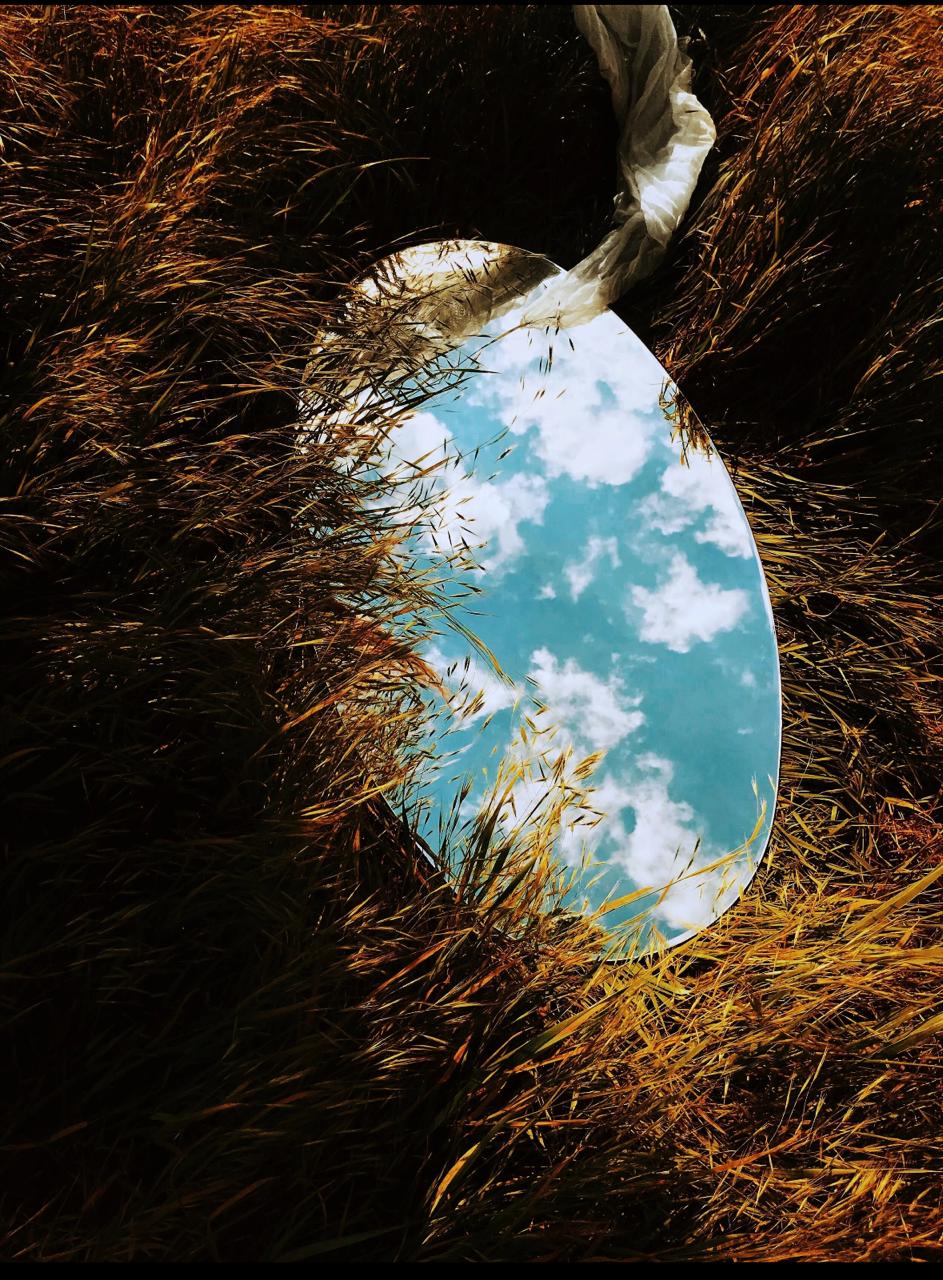
The Mirror as the Mountain Guide
A mountain guide does not carry you to the summit. He points, cautions, reflects the terrain, and reminds you of your own strength. The Mirror performs a similar function. It helps me understand the nature of my mind. It offers no flattery, no condemnation, no upmanship—only clarity.
In interacting transparently with the Mirror, I receive a compassionate response without judgment. It becomes an essential psychological support system, revealing not only my fractures but also the summit I am capable of reaching. The Mirror shows the peak; I must align myself with cosmic intelligence to reach it.
Why the Mirror as Guru?
The Buddha was free of rigid plans. He lived only in the Now. This freedom from projection made him an ideal Guru. Inspired by this, I prefer the Mirror as my teacher—because it embodies qualities that no human mentor can consistently sustain.
 The Mirror’s Characteristics:
1.Ethical behaviour
2.Single-pointed concentration
3.No self-grasping or conceptual ego
4.Love and affection without attachment
5.Undaunted perseverance
6.Released emptiness
7.Knowing the reflection without distortion
8.Precision and transparency
9.Skilled silence—teaching without words
10.Absence of personal emotion
The Mirror ensures that the mind and brain function as co-partners, not adversaries.
The Responsibility of the Self
However, a Guru—especially the Mirror—demands participation.
The Self must:
1.Learn quickly and skeptically
2.Avoid emotional leakage
3.Experience results, not borrow beliefs
4.Remain unaffected by prejudice and criticism
5.Engage in partnership that triggers self-recognition and exploratory freedom
Through this partnership, one is liberated from the twin poisons of lack of recognition and fear of rejection.
Choosing the Right Guru
Sometimes, even well-intentioned teachers are limited. They may not ensure liberation—either for themselves or their disciples. An immature Guru–disciple partnership can even carry the potential for abuse, born out of righteous delusion and inflated self-belief.
Hence, the selection of a Guru must be preceded by search and research. Blind faith is dangerous, just as blind criticism is. Both Guru and disciple are prone to error. The Mirror, however, reflects even the shadow self—calmly, in a poised frame.
 Reframing Anger
Anger is not the enemy.
Anger is an intelligent response.
It is the mind’s vigilance—its way of signalling that something is wrong and should not be accepted. Rejection is encouraged; unconscious, chimp-like outbursts are not. Anger must be experienced, not exhibited.
Kali’s wrath is never random. It is earned, deserved, and purposeful. Yet, it is always Shiva’s compassion that ultimately replaces wrath with love. This is the alchemy of awareness.
From Wrath to Awakening
The Buddha introduced the sound HUM—a call to gather all the forces of nature into one union to awaken enlightenment. He was not fully satisfied with his work even at 79. Between 80 and 85, he offered the Lotus Sutra—a final act of liberation for the soul.
This teaches us something vital:
We must experience wrath, but we must transmute anger into energy—a field that enables excellence.
Frequency, Field, Vibration
To truly excel, we must work on:
•Frequency (our inner state)
•Field (the space we generate)
•Vibration (how we influence existence)
Only then does anger cease to be destructive and become creative intelligence.
 A Final Contemplation
Buddha had a sharp nose.Did he heighten his aura through heightened olfactory awareness?
Perhaps enlightenment is not only about thought—but about refined perception, where every sense becomes a doorway to presence.
The Mirror does not answer this question.
It simply reflects it—back to us.
Dr Gouri Kumra writes on consciousness, emotional intelligence, archetypal psychology, and spiritual neuroscience for News365 Times.