

Independence is usually spoken of in the language of nations. We talk about August 15, the freedom struggle, the Tricolour and a country determining its own destiny. But independence is also deeply personal. It can mean the freedom to leave a life you did not choose, earn your own money, occupy space, dream beyond your circumstances, or simply decide who you want to be. For many Indians, sport has become an unexpected vehicle for that freedom. The medals are visible, but beneath them is a quieter transformation: sport gives people the opportunity to create an identity of their own.
Few stories illustrate that better than Sharmila Dhankar.
The freedom to break boundaries
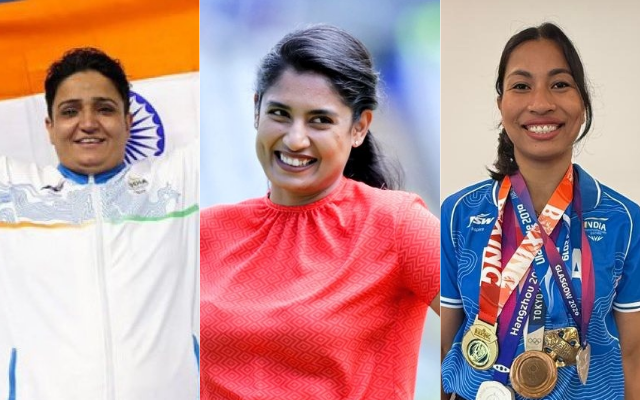
When Dhankar stood on the podium in Glasgow in July and became India’s first Commonwealth Games para-athletics gold medallist, the 40-year-old was not simply celebrating a sporting achievement. Her 9.81m throw in the women’s F57 shot put completed a remarkable journey. Fourteen years earlier, she had been thrown out of her home with her two daughters after suffering domestic violence. She had also lived with childhood polio. Instead of allowing those circumstances to define her, she found para-athletics and became a champion.
What makes Dhankar’s story powerful is that sport allowed her to reclaim her identity. For years, her life had been defined by violence, motherhood, disability and survival. Sport gave her something that belonged entirely to her. She was no longer simply a woman who had endured domestic violence; she was an athlete, a competitor and eventually a Commonwealth Games champion. The gold medal did not give her worth. It gave the world a reason to finally see it.
The freedom to break boundaries
Look at Lovlina Borgohain. Her journey from Assam to the Olympic podium is also a story about challenging geography as destiny. Her family struggled financially and her path to elite sport involved sacrifice. She became the first boxer from Assam to win an Olympic medal, taking bronze at Tokyo 2020. Her success showed children from smaller towns and villages that their address did not have to determine the size of their ambition.
The freedom to earn and choose
For women, independence through sport carries an even deeper meaning. A girl entering sport learns to occupy space, compete, travel and make decisions. For those who reach the professional level, sport can also provide financial independence.
Mithali Raj has spoken about financial independence being empowering for women. Her generation understood the economic uncertainty surrounding women’s cricket very differently from today’s players, with institutions such as Indian Railways providing women cricketers with employment and security when playing for India did not necessarily mean a sustainable career. Sport, when it becomes a profession, can give a woman the agency to build a life on her own terms.

The freedom to be seen for ability
Then there are India’s para-athletes. At the Paris 2024 Paralympics, India won 29 medals, seven gold, nine silver and 13 bronze, its best-ever Paralympic performance. More important than the tally was the change in perception.
For years, disability was too often viewed through sympathy. Elite sport changes that conversation. The questions become about performance: How fast did they run? How far did they throw? Did they win? The athlete is no longer primarily seen through what society thinks they lack, but through what they can do. The 29 medals were not merely a tally; they were a statement of ability.
The freedom to become
Sport cannot erase inequality. Access to coaching, nutrition, equipment, facilities and money remains deeply unequal, and many talented athletes never reach the point where the country knows their names. Yet those who do show what can happen when opportunity meets ability.
On Independence Day, perhaps Indian sport deserves to be viewed through that lens. We should celebrate the medals and the moments when the Tricolour rises above a podium, but also what happens beyond the medal: the moment an athlete decides she/he is entitled to dream, a family supports that dream, a community begins to believe, and an individual realises that identity does not have to be dictated by where they were born or what happened to them.
India became independent in 1947, but every generation continues to discover what freedom means. For some, it is the freedom to speak, work, earn, travel or compete. For an athlete, it can be the freedom to define oneself on one’s own terms.
Perhaps that is the greatest gift sport can give India beyond medals: the confidence to step outside the identity handed to you and create one of your own. Your circumstances may be part of your story, but they do not have to be the ending. On Independence Day, there may be no more powerful definition of freedom than this: the freedom to be exactly who you choose to become.
For More Exciting Articles: Follow RevSportz
The post The Freedom to Be: What Sport Gives India Beyond Medals appeared first on Sports News Portal | Revsportz.