

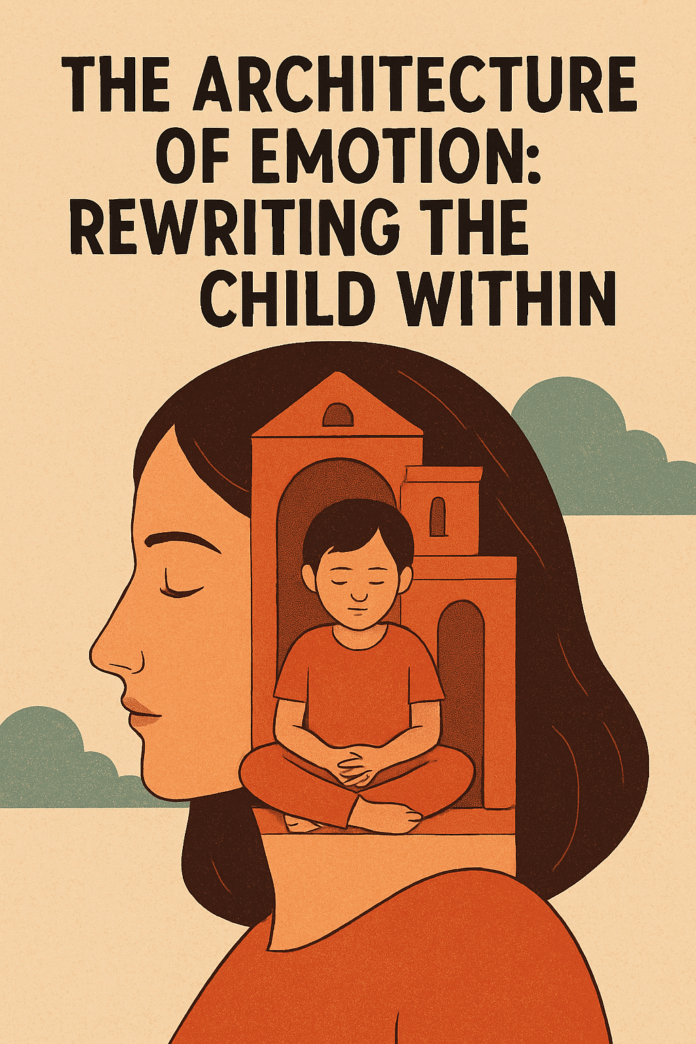
A growing body of psychological research is shedding new light on how early childhood experiences form the “architecture of emotion” — a dynamic internal structure that influences how individuals think, feel, and respond throughout their lives. Experts say that understanding and “rewriting” the inner child can lead to profound emotional healing, improved relationships, and stronger mental resilience.
According to psychologists, the concept of the “inner child” refers to the unconscious part of the mind that stores memories, fears, and emotional patterns developed during early years. These patterns can shape adult behavior in ways that are not always visible but often deeply impactful.
Dr. Raina Kapoor, a clinical psychologist at the Indian Institute of Mental Health, explains, “Our emotional wiring is built during childhood. When unresolved experiences — such as neglect, criticism, or trauma — remain unaddressed, they continue to influence our adult reactions. Rewriting the child within means revisiting these emotional imprints with compassion and awareness.”
Globally, therapists have observed a rise in adults seeking inner-child-focused therapy. Sessions often involve guided reflections, journaling, and experiential exercises that allow individuals to reconnect with younger versions of themselves. Through this, many discover the root causes of persistent anxiety, low self-esteem, and relationship conflicts.
Neuroscientific studies support these therapeutic approaches, showing that emotional regulation can be improved by consciously reshaping neural pathways. “The brain is much more adaptable than we once believed,” says behavioral neuroscientist Dr. Martin Hughes. “When individuals process old emotional wounds in a safe environment, new patterns of thought and response begin to replace the old ones.”
The trend is also gaining momentum on social media platforms, where mental health educators and wellness coaches share tools for emotional self-repair. Techniques such as mindfulness, affirmations, and somatic grounding are becoming widely practiced.
For many, rewriting the inner child is not merely a psychological exercise but a transformational journey. It encourages individuals to build emotional honesty, rediscover lost creativity, and develop healthier boundaries.
As mental health awareness continues to expand, experts emphasize that healing the child within is not about revisiting the past with blame but about understanding it with clarity. “When we rebuild our emotional architecture,” Dr. Kapoor notes, “we create space for a more grounded, compassionate, and empowered self.”
The growing acceptance of inner-child healing marks a significant shift in how societies perceive emotional well-being, indicating that the path to a healthier future may very well start by listening to the child within.