

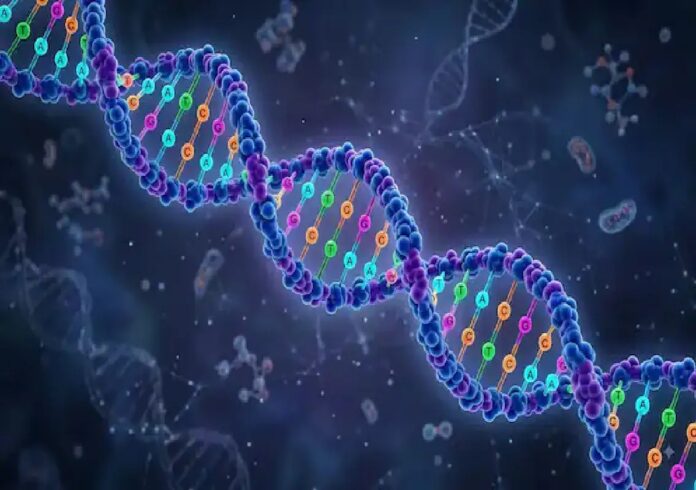
New Delhi: Researchers have discovered that the TBX5 gene plays a crucial role in organising the three-dimensional structure of DNA in developing heart cells, offering new insight into how congenital heart defects can arise.
Congenital heart disease is the most common type of birth defect, affecting about one in 100 babies born each year. While the condition can have several causes, genetic changes involving TBX5 are known to play an important role in some cases.
A new study by researchers at Gladstone Institutes, published in Science, suggests that TBX5 does more than regulate the activity of individual genes. It also acts as an organiser of the genome, helping heart cells maintain the complex three-dimensional arrangement of DNA required for normal development.
The researchers found that losing just one of the two copies of TBX5 can disrupt this organisation, affecting the way numerous genes involved in heart development are switched on and off.
The findings could help explain why people carrying the same TBX5 mutation can develop different types of congenital heart defects.
TBX5 does more than control genes
TBX5 has long been recognised as an important regulator of heart development.
The gene produces a protein that helps activate genes needed for heart cells to develop and function. Previous research had shown that losing one copy of TBX5 could alter the activity of hundreds of other genes in heart cells.
However, scientists had not fully understood why reducing the amount of TBX5 by half could have such significant consequences.
The new research suggests that the answer lies partly in the physical organisation of DNA.
Rather than functioning only as a conventional gene regulator, TBX5 appears to help arrange the genome into a structure that allows different parts of DNA to communicate effectively.
How DNA folding helps heart cells
DNA inside a cell is extraordinarily long and must be tightly packed into the microscopic space of the nucleus.
However, the genetic material is not simply compressed into a random bundle. It is folded into an organised three-dimensional structure that differs according to the type of cell.
This arrangement determines which parts of the genetic instruction manual can be accessed by a particular cell.
Heart cells, for example, need to activate genes involved in heart development and function, while brain cells require a different collection of genetic instructions.
The three-dimensional genome contains several levels of organisation, including large compartments, smaller domains and chromatin loops.
These loops are particularly important because they can bring distant sections of DNA into physical proximity.
Some of these distant regions contain enhancers, which act as regulatory switches. By bringing enhancers close to specific genes, DNA folding can help determine which genes are activated.
Researchers mapped DNA in individual cells
To investigate TBX5’s role, the research team used human stem cells and guided them to develop into heart muscle cells.
The scientists studied cells with different amounts of functional TBX5. Some cells had normal copies of the gene, while others had one copy removed. A further group lacked both copies.
The researchers then used high-resolution techniques to examine the three-dimensional organisation of DNA within individual cells.
The experiments generated millions of data points from thousands of cells.
Because of the enormous amount of information produced, computational models were used to analyse the changes in genome organisation and identify patterns that might otherwise have been difficult to detect.
The researchers observed substantial changes in DNA organisation when TBX5 levels were reduced.
TBX5 helps guide cohesin
One of the key findings concerns a molecular motor called cohesin.
Cohesin plays an important role in forming loops within DNA. These loops allow distant regions of the genome to interact with each other.
The researchers found that TBX5 appears to help direct cohesin to appropriate locations on DNA.
This led the scientists to describe TBX5 as functioning somewhat like a molecular GPS for cohesin.
When sufficient TBX5 is present, cohesin can help establish the chromatin loops required for the correct organisation of the heart-cell genome.
When TBX5 levels fall, however, these loops can become disrupted.
As a result, parts of the DNA may no longer be positioned correctly, potentially preventing important heart-development genes from interacting with the regulatory elements that control them.
Losing one copy can have major effects
The researchers found that reducing TBX5 to approximately half its normal level was sufficient to cause widespread changes in genome organisation.
The disruption was observed across several levels of DNA structure, including compartments, domains and chromatin loops.
The finding provides a possible explanation for a phenomenon known as haploinsufficiency.
In haploinsufficiency, one functioning copy of a gene is not enough to maintain normal biological function, even though the second copy remains intact.
TBX5 appears to be an example of a gene where the quantity of the protein matters greatly.
The researchers observed that the greater the reduction in TBX5, the more severe the disruption to genome organisation.
Individual heart cells respond differently
Another important finding was that the effects of TBX5 loss were not identical in every heart cell.
The researchers observed differences between atrial and ventricular cells, which perform different functions within the heart.
Variation was also detected between individual cells belonging to the same broad cell type.
This variability could help explain an important mystery in genetic disease: why people with the same mutation can sometimes develop different abnormalities.
If the loss of TBX5 affects the three-dimensional genome differently from one cell to another, the resulting changes in gene activity could also vary.
That may ultimately contribute to differences in the type or severity of heart defects.
Findings could extend beyond heart disease
The researchers believe the mechanism identified in the study could have implications beyond congenital heart disease.
TBX5 is only one example of a gene where losing a single copy can result in developmental abnormalities.
The scientists suggest that other genes associated with birth defects may also influence genome organisation.
Under this model, a mutation could cause disease not simply because it removes a specific genetic instruction, but because it alters how the entire genetic instruction manual is physically arranged.
Incorrect DNA folding could therefore prevent multiple genes from interacting with their regulatory elements at the appropriate time during development.
A new way to understand genetic disorders
The findings provide a broader perspective on how genetic mutations can lead to disease.
Traditionally, scientists have often focused on how a mutation changes the sequence or activity of a particular gene.
The new research highlights another possibility: mutations can also interfere with the three-dimensional architecture of the genome.
This means that the consequences of losing a single gene may extend across large sections of DNA.
For congenital heart disease, this could help researchers understand why relatively small changes in TBX5 levels can have widespread effects during the development of the heart.
Researchers plan further studies
The Gladstone Institutes team plans to investigate when TBX5 first begins organising the genome during early heart development.
Understanding the timing could help reveal when disruption of DNA architecture first begins to influence heart formation.
Researchers also want to determine whether other proteins associated with birth defects perform similar functions in organising the genome.
If the mechanism is found to be widespread, it could eventually provide a common framework for understanding several developmental disorders.
The findings do not yet provide a treatment for TBX5-related congenital heart disease. However, they offer researchers a new biological pathway to investigate and could eventually contribute to a better understanding of how genetic changes produce different developmental outcomes.
Conclusion
The study suggests that TBX5 acts as more than a switch for individual heart-development genes. It helps organise the physical structure of DNA, directing molecular machinery that creates the loops and contacts necessary for genes and their regulatory elements to communicate.
Losing one copy of TBX5 can therefore disturb the genome’s three-dimensional architecture, potentially disrupting heart development. Differences in how individual cells respond to this loss may also help explain why people carrying the same mutation can develop different heart defects.
The researchers’ findings raise the possibility that similar DNA-folding problems could contribute to other birth defects, opening a new area of investigation into the relationship between genome architecture and developmental disease.