

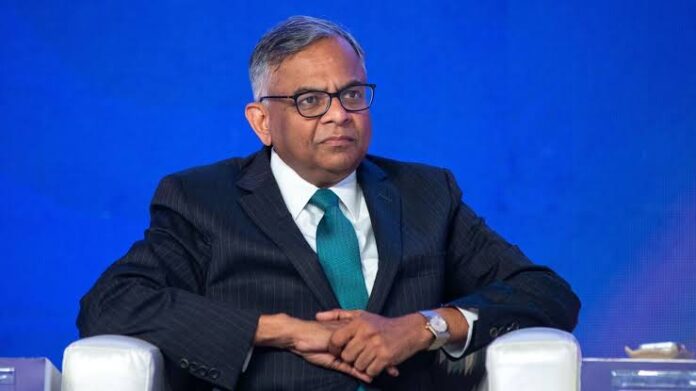
Tata Sons Chairman N Chandrasekaran received a 15% increase in total compensation during the financial year 2024–25, taking his earnings to ₹156 crore, even as the company’s net profit dropped sharply by over 24%, according to the latest annual report.
This development comes at a time when Tata Sons — the holding company of the $300 billion Tata Group — saw its standalone profit fall to ₹26,232 crore in FY25, down from ₹34,654 crore in FY24.
Executive Pay vs. Company Performance
Chandrasekaran’s rising compensation, amid a significant profit dip, has drawn attention to the issue of executive pay versus company performance — a topic that is increasingly being discussed in India Inc.
His remuneration package of ₹156 crore includes salary, commission, benefits, and other perks. Despite the profit decline, Tata Sons cited performance-based benchmarks and strategic milestones achieved during FY25 to justify the increase in his pay.
What Justifies the Hike?
Several factors may have contributed to the board’s decision:
Group-Wide Growth & Expansion:
Despite the dip in Tata Sons’ standalone profit, several Tata Group companies — including Tata Consultancy Services (TCS), Tata Motors, and Tata Power — reported growth, international expansions, and strategic partnerships under Chandrasekaran’s leadership.
Strategic Leadership:
Chandrasekaran has been instrumental in reshaping Tata Group’s digital and manufacturing ecosystems, overseeing the launch of Tata Electronics, scaling up Tata Neu, and guiding the group’s electric mobility ambitions.
Long-Term Value Creation:
The board may be viewing compensation in terms of long-term value creation across multiple businesses and global markets, rather than just the year’s financials.
Tata Sons Profit Decline: What Went Wrong?
Tata Sons’ 24.3% drop in profit can be attributed to several factors:
Lower dividend inflows from subsidiaries due to sector-specific challenges.
Increased investment expenses in digital and manufacturing verticals.
Global economic slowdown impacting certain Tata Group segments.
One-time costs and provisions made during the fiscal year.
Shareholder & Market Reactions
While Tata Sons is a privately held company and not listed on the stock exchange, public interest remains high due to the group’s enormous influence across sectors. The compensation hike may raise questions among stakeholders about performance-linked pay, especially during years of reduced earnings.
However, corporate experts point out that Tata Group continues to invest heavily in emerging technologies and infrastructure — areas where short-term profit may take a backseat to long-term sustainability.