

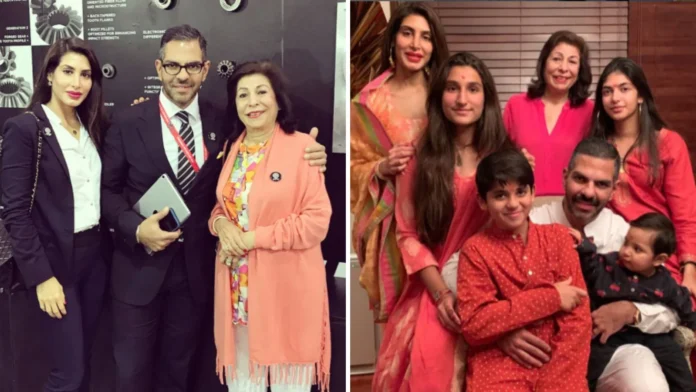
The sudden death of Sunjay Kapur, chairman of Sona BLW Precision Forgings Ltd (Sona Comstar), on June 12, 2025, during a polo match in the UK, has plunged the ₹31,000 crore auto components giant into a high-stakes succession dispute. The conflict, pitting Sunjay’s mother, Rani Kapur, against his widow, Priya Sachdev Kapur, centers on control of the RK Family Trust, which holds a 28.02% stake in Sona Comstar through Aureus Investments Pvt Ltd. Valued at approximately ₹8,200 crore, this stake has ignited a battle over family legacy, shareholding rights, and board governance, exposing systemic weaknesses in succession planning for Indian family-run businesses. This article delves into the dispute’s origins, key allegations, corporate responses, and broader implications, drawing parallels with India’s industrial and civic challenges, such as Hasdeo Arand’s coal mining controversy and Mangampeta’s baryte operations.
Background: Sona Comstar and the Kapur Family
Founded in 1997 by Dr. Surinder Kapur, Sona Comstar is a Gurugram-based global leader in automotive components, specializing in precision-forged gears, differential assemblies, and electric vehicle (EV) systems. With operations in India, China, Mexico, and the US, the company employs over 4,600 people and reported a ₹26,200 crore order book in Q1 FY26, despite a 12% profit dip to ₹125 crore due to rare earth magnet restrictions and US tariffs. Listed on the BSE and NSE since its 2021 IPO, Sona Comstar has a market capitalization of ₹31,000 crore, with 71.98% held by public and institutional investors and 28.02% by Aureus Investments, controlled by the RK Family Trust.
Sunjay Kapur, who assumed the chairmanship in 2015 after his father’s death, was the sole beneficial owner of the RK Family Trust, holding 65% of Aureus Investments. His death at age 53, initially misreported as a bee sting but later confirmed as left ventricular hypertrophy and ischemic heart disease, triggered a succession crisis. On June 23, 2025, Sona Comstar’s board appointed Jeffrey Mark Overly, an independent director, as chairman and Priya Sachdev Kapur, Sunjay’s widow, as a non-executive director (NED) nominated by Aureus. These appointments, approved by 98.9% and 99.4% of shareholders respectively at the July 25, 2025, Annual General Meeting (AGM), sparked fierce objections from Rani Kapur, widow of Surinder Kapur and former Sona Group chairperson.
The Dispute: Allegations and Counterclaims
Rani Kapur’s Allegations
In a letter dated July 24, 2025, to Sona Comstar’s board, shareholders, and the Securities and Exchange Board of India (SEBI), Rani Kapur raised serious allegations, escalating the dispute:
-
Coercion and Exclusion: Rani claimed she was coerced into signing documents “behind locked doors” while grieving Sunjay’s death, without understanding their contents. She alleged being denied access to company accounts and information, undermining her role as a key stakeholder.
-
Shareholding Rights: As the sole beneficiary of Surinder Kapur’s 2015 will, Rani asserted ownership of the Sona Group’s majority stake, including Sona Comstar’s 28.02% through Aureus. She contested Priya’s appointment as the family’s board representative, arguing it lacked her consent as the rightful promoter.
-
Suspicious Circumstances: Rani demanded a UK police investigation into Sunjay’s death, citing “suspicious circumstances” and requesting American involvement due to his US citizenship. A post-mortem, however, confirmed cardiac causes, debunking foul play claims.
-
AGM Deferment: Rani sought a two-week postponement of the July 25, 2025, AGM to gather information and ensure transparency, accusing the board of rushing decisions to “usurp the family legacy.”
Sona Comstar’s Response
Sona Comstar swiftly rejected Rani’s claims, issuing a cease-and-desist notice on July 25, 2025, demanding she retract her “baseless and defamatory” statements within three days or face legal action. The company’s key defenses include:
-
Rani’s Non-Shareholder Status: Sona Comstar clarified that Rani has held no shares or official role since at least 2019, when Sunjay was declared the sole beneficial owner of the RK Family Trust. The Companies Act, 2013, and SEBI filings confirm Sunjay’s control over Aureus’s 65% stake.
-
Board Governance: The company emphasized its professional management structure, with six independent directors, two executive directors (unaffiliated with the Kapur family), and only one NED seat for Aureus. Priya’s appointment, nominated by Aureus, complied with SEBI’s Listing Obligations and Disclosure Requirements (LODR).
-
AGM Compliance: The AGM proceeded in “full compliance” with the Companies Act, 2013, and SEBI regulations, with overwhelming shareholder approval for Overly and Priya’s appointments.
-
No Coercion: Sona Comstar denied obtaining any documents from Rani post-Sunjay’s death, refuting claims of coercion.
Timeline of Events
-
June 2015: Surinder Kapur’s death; Rani inherits a 42% stake in Aureus (then Sona Autocomp Holding Pvt Ltd) per his will.
-
February 2017: Sona Comstar’s articles redefine “promoter” to include Rani and her heirs.
-
June 2017: Rani exits Aureus’s board; Priya joins as a director, becoming managing director in November 2017.
-
May 2019: The RK Family Trust declares Sunjay as its sole beneficial owner, holding 65% of Aureus.
-
June 12, 2025: Sunjay Kapur dies during a polo match in the UK.
-
June 23, 2025: Sona Comstar appoints Jeffrey Overly as chairman and Priya as NED.
-
July 24, 2025: Rani Kapur’s letter to the board and SEBI alleges coercion and demands AGM deferment.
-
July 25, 2025: AGM proceeds; Sona Comstar issues a cease-and-desist notice to Rani.
Corporate Governance and Succession Issues
The Sona Comstar dispute exposes critical gaps in family business succession planning and corporate governance in India:
-
Weak Succession Frameworks: Indian family businesses, which contribute 70% of GDP, often lack formal succession plans. The absence of a clear plan post-Surinder’s death in 2015 and Sunjay’s in 2025 fueled the current conflict. Experts like Harish Salve note that only 15% of Indian family firms have documented succession policies, per a 2023 PwC India report.
-
Promoter Influence: Despite Sona Comstar’s professional board, the 28.02% promoter stake via Aureus gives the Kapur family significant influence, raising questions about independent director autonomy. SEBI’s LODR mandates require transparency in promoter nominations, which Rani claims were bypassed.
-
Board Accountability: The swift appointment of Priya and Overly, while compliant, has drawn scrutiny for sidelining Rani, a potential beneficiary. The Institute of Company Secretaries of India (ICSI) recommends independent audits for such disputes to ensure fairness.
-
Family Trust Ambiguity: The RK Family Trust’s structure, with Sunjay as the sole beneficiary since 2019, lacks clarity on post-death succession, complicating Rani’s claims. Legal experts suggest a probate process to verify Surinder’s will and trust terms.
Financial and Market Impact
Despite the dispute, Sona Comstar’s shares have remained resilient, gaining 5% in July 2025, closing at approximately ₹660 on the BSE, buoyed by a strong ₹26,200 crore order book and EV sector growth. However:
-
Profit Dip: Q1 FY26 saw a 12% decline in profit to ₹125 crore due to supply chain issues and US tariffs, potentially amplifying investor concerns about governance stability.
-
Stake Value: The 28.02% stake (₹8,200 crore) is a focal point, with Rani’s claim to it potentially triggering a legal battle over trust ownership, impacting investor confidence.
-
Reputation Risk: Public spats, as seen in Rani’s SEBI letter, could dent Sona Comstar’s reputation, especially in global markets where it competes with BorgWarner and Schaeffler.
Parallels with Broader Indian and Global Contexts
The Sona Comstar dispute resonates with industrial and civic challenges in India and beyond:
-
Governance Failures: The Gurugram garbage crisis, highlighted by Sanjiv Kapoor, reflects systemic governance issues akin to Sona Comstar’s succession lapses, where lack of transparency fuels conflict.
-
Industrial Precision: The precision in gold smelting flux ratios (borax, sodium carbonate, silica, sodium nitrate) and L&T’s Debari Smelter project underscores the need for meticulous planning, a lesson for Sona Comstar’s succession strategy.
-
Environmental and Social Conflicts: The Hasdeo Arand coal mining approvals, threatening 450,000–850,000 trees and Adivasi rights, mirror the Sona dispute’s clash between corporate interests and stakeholder rights. Coal India’s FY26 900 MT target and ₹16,000 crore capex highlight the need for balanced governance, which Sona Comstar must emulate.
-
Global Mining Lessons: The El Teniente tragedy in Chile, where a seismic collapse killed six, emphasizes transparent audits, a model for resolving Sona Comstar’s governance disputes.
-
Entrepreneurial Resilience: India’s teen tycoons, like Kaivalya Vohra of Zepto, navigate systemic gaps with innovation, offering a blueprint for Sona Comstar to resolve internal conflicts through professional mediation.
Challenges and Opportunities
Challenges
-
Legal Uncertainty: Rani’s claims, if pursued in court, could delay trust ownership resolution, impacting board decisions and investor trust. The Bombay High Court or NCLT may adjudicate, given SEBI’s involvement.
-
Promoter Conflicts: The dispute risks alienating public shareholders, who hold 71.98%, if promoter influence overshadows professional governance.
-
Operational Risks: Ongoing supply chain issues and US tariffs, as seen in Q1 FY26, require stable leadership, which the dispute threatens.
-
Reputation Damage: Public allegations, especially Rani’s “suspicious death” claim, could harm Sona Comstar’s global partnerships.
Opportunities
-
Strengthened Governance: Appointing an independent committee, as suggested by ICSI, to audit the RK Family Trust and board decisions could restore trust, aligning with SEBI’s LODR norms.
-
Succession Framework: Developing a formal succession plan, as recommended by PwC India, could prevent future disputes, setting a model for family businesses.
-
Stakeholder Engagement: Transparent communication with shareholders and Rani could mitigate conflict, drawing on community engagement lessons from Hasdeo Arand protests.
-
Market Resilience: Leveraging the ₹26,200 crore order book and EV growth, Sona Comstar can focus on innovation, like Mangampeta’s sustainable baryte mining, to maintain market leadership.
Future Outlook
The Sona Comstar dispute awaits resolution through legal or mediation channels. Rani’s claims, if substantiated, could lead to a probate battle over the RK Family Trust, potentially redistributing the 28.02% stake. SEBI’s scrutiny may enforce stricter governance, as seen in past cases like Satyam Computers. The board’s professional structure, with six independent directors, positions Sona Comstar to weather the storm, but a swift resolution is critical to maintain its EV leadership amid a projected 30% CAGR in India’s EV market by 2030.
Lessons from Coal India’s sustainable mining push, Mangampeta’s environmental compliance, and teen tycoons’ resilience highlight the need for transparent, inclusive governance. As India navigates civic challenges like Gurugram’s garbage crisis and global tragedies like El Teniente, Sona Comstar’s ability to resolve its succession crisis will set a precedent for family businesses, balancing legacy with professional management in a dynamic industrial landscape. The Sona Comstar succession dispute, triggered by Sunjay Kapur’s death in June 2025, pits Rani Kapur against Priya Sachdev Kapur over control of a ₹8,200 crore stake and board representation. Rani’s allegations of coercion, shareholding rights, and suspicious circumstances have met fierce resistance from Sona Comstar, which defends its professional governance and SEBI compliance. The conflict exposes India’s family business vulnerabilities—weak succession planning and promoter influence—mirroring governance failures in Hasdeo Arand and Gurugram. By adopting transparent audits, as in El Teniente, and learning from Mangampeta’s sustainability, Sona Comstar can resolve the dispute, strengthen governance, and maintain its ₹31,000 crore legacy as a global EV leader. The outcome will shape India’s corporate landscape, emphasizing the need for robust succession frameworks in family-run empires.