

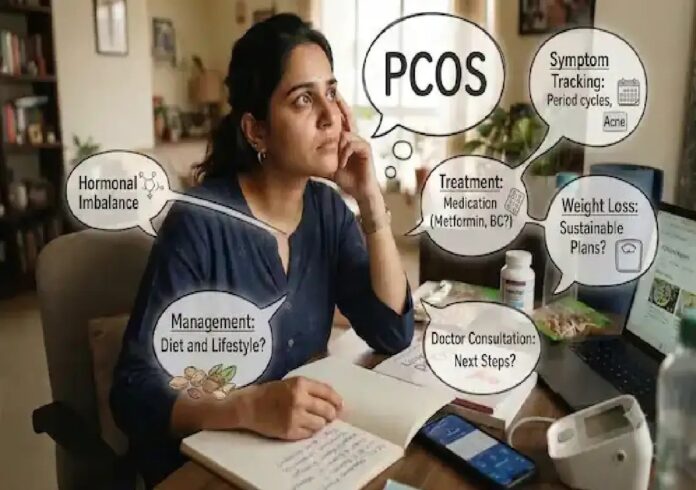
New Delhi: For many women, polycystic ovary syndrome (PCOS) can feel like a condition that improves after weight loss and lifestyle changes, only for troubling symptoms to return years later. A 28-year-old working professional, identified as Tanisha Sharma, said her experience reflects the frustrating and long-term nature of the condition.
Tanisha was diagnosed with PCOS at the age of 13 after a routine medical visit led to further examination by a gynaecologist. At the time, she was too young to fully understand the condition. As she grew older, she experienced symptoms including low energy, irritability, hair fall, weight gain and irregular menstrual cycles.
Over time, doctors advised her to focus on maintaining a healthy weight, eating a balanced diet and exercising regularly. In her early twenties, she lost weight and saw a significant improvement in her symptoms. Her menstrual cycles became regular, acne reduced and she felt healthier overall.
However, after starting a desk job and gradually gaining weight, several symptoms returned. Years later, she lost around 7 kg again, following which her doctor reportedly found no visible signs of PCOS and her menstrual cycles had become regular.
By mid-2026, however, the symptoms had returned once more. Her experience highlights an important medical reality: improvement in PCOS symptoms does not necessarily mean that the underlying condition has permanently disappeared.
A long-term condition rather than a one-time problem
According to gynaecologist Dr Anjana Singh, PCOS is a long-term condition in which symptoms can improve and later become noticeable again. Changes in body weight, physical activity and metabolic health may influence symptoms such as irregular periods, difficulty with ovulation, acne and excess hair growth.
However, there is no single pattern explaining why symptoms return in every woman.
Experts emphasise that PCOS cannot currently be permanently cured. When symptoms improve, the condition may be well managed or remain in remission, rather than being completely eliminated.
This means that stopping all healthy routines after symptoms improve can make long-term management more difficult. Doctors therefore stress the importance of maintaining sustainable lifestyle habits and monitoring menstrual and metabolic health even during periods when symptoms are less noticeable.
The focus, according to experts, should be on long-term management rather than short periods of intense dieting or exercise followed by a return to previous habits.
Why weight changes can affect PCOS symptoms
The relationship between body weight and PCOS is complex. There is no fixed amount of weight gain that automatically causes symptoms to return, and PCOS can affect women across different body weights.
However, weight changes may be associated with changes in menstrual regularity, ovulation and metabolic health in some women. At the same time, underlying hormonal and metabolic factors linked to PCOS can make weight management more challenging.
Tanisha said she experienced this difficulty first-hand. She described a cycle in which fatigue made regular exercise difficult, while cravings and appetite changes made it harder to maintain a healthy diet.
Experts caution against viewing the weighing scale as the only measure of successful PCOS management. Healthy eating and physical activity can offer benefits even when they do not lead to significant weight loss.
Preventing further weight gain, improving metabolic health, maintaining menstrual regularity and supporting emotional wellbeing are also important aspects of long-term care.
Sustainable habits are more important than strict routines
Doctors say PCOS management does not require a permanently restrictive diet or an exhausting exercise routine. There is no single diet or specific type of exercise that works best for every woman with PCOS.
Instead, a sustainable approach is generally considered more practical. A balanced eating pattern, regular physical activity and behavioural support can help women build habits that can be maintained over the long term.
The routine should also be adjusted to suit an individual’s lifestyle and health needs. For working women, for example, a manageable exercise schedule may be more sustainable than an intensive fitness routine that is difficult to continue.
Regular medical follow-up can also help identify changes early. Monitoring may include menstrual patterns and other individual metabolic or hormonal concerns identified by a doctor.
Looking beyond symptom-free periods
One of the biggest challenges with PCOS is the assumption that the condition has been cured once periods become regular or other symptoms disappear. Experts say symptom improvement should instead be seen as a sign that management measures are working.
Long-term care may therefore involve maintaining healthy habits even after symptoms improve. The goal is not to achieve perfect control every day, but to develop a realistic routine that supports overall health over time.
For Tanisha, the return of her symptoms has strengthened her determination to understand and manage the condition. She continues to work with health professionals and hopes her experience will help others recognise that PCOS management is often a long-term journey.
For women living with PCOS, experts advise seeking personalised medical guidance rather than relying solely on restrictive diets or short-term lifestyle changes. With consistent monitoring and sustainable habits, symptoms and associated health risks can be better managed over time.