

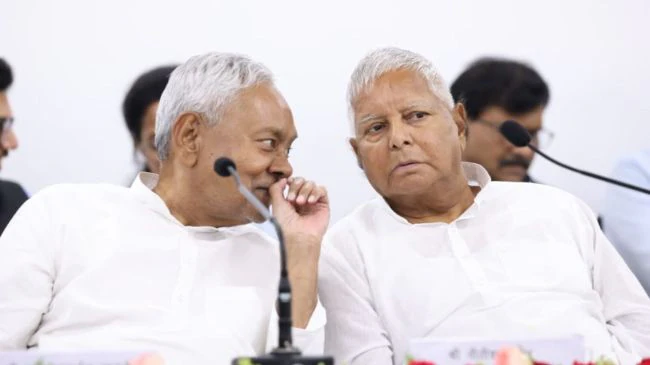
The political landscape of Bihar has historically been shaped by its diverse social fabric, marked by a delicate interplay of caste, religion, and regional identity. Among the communities, Muslims have constituted a significant demographic presence, accounting for nearly 16-17% of the state’s population according to past census data. However, their representation in the Bihar Legislative Assembly, particularly during the decades dominated by the Lalu Prasad Yadav and Nitish Kumar era, has often been a point of discussion and scrutiny.
During Lalu Prasad Yadav’s tenure as Chief Minister (1990–2005), the politics of Bihar was strongly influenced by caste alliances and social justice narratives. Lalu, a prominent leader of the backward caste (Yadav) community, championed the cause of marginalized groups, particularly focusing on the empowerment of OBCs (Other Backward Classes). While the Muslim community formed a significant voter base, their representation in the legislative assembly often fell short of proportionality. Despite being a vital constituency in several districts, Muslims held only a fraction of seats in the state legislature—often less than their share of the population.
This disparity was partly rooted in the political strategy of coalition-building. Lalu’s party, the Rashtriya Janata Dal (RJD), relied heavily on the support of Yadavs and other backward castes, positioning them as primary beneficiaries of power and governance. While Muslims were allied electorally and played a crucial role in ensuring victories in many constituencies, the number of Muslim faces in the Bihar House remained limited. Analysts argue that this reflected broader structural challenges in Bihar politics, where caste and sub-caste dynamics often overshadowed religious representation.
The subsequent Nitish Kumar era (2005 onwards) brought its own dynamics. Nitish, representing the Janata Dal (United), focused on governance, development, and law-and-order improvements. Under his tenure, efforts were made to include minority communities in governance, but the proportion of Muslim legislators in the assembly remained disproportionately low relative to the population. While Nitish’s leadership opened avenues for development schemes targeted at minorities, the actual number of Muslim representatives rarely exceeded one-fourth of the assembly seats.
Several factors contributed to this underrepresentation. Firstly, internal fragmentation within the Muslim community often prevented a consolidated electoral push. Secondly, the influence of caste-based politics meant that many constituencies with sizable Muslim populations were still dominated by OBC or upper-caste candidates. Finally, political parties—whether RJD, JD(U), or Congress—frequently opted to project candidates based on strategic alliances rather than proportional demographic representation.
The underrepresentation of Muslims in Bihar’s legislature during the Lalu-Nitish era highlights a broader pattern in Indian politics: communities can be critical to electoral success without achieving proportional legislative presence. While Muslims were an influential voting bloc and active participants in political mobilization, their actual legislative visibility remained limited. This has led to ongoing debates about the need for more inclusive representation and mechanisms to ensure that all communities have a voice commensurate with their demographic presence.
In conclusion, the era of Lalu Prasad Yadav and Nitish Kumar underscores a paradox in Bihar politics: Muslim voters were pivotal in shaping electoral outcomes, yet the number of Muslim faces in the Bihar House was consistently less than half of what demographic proportion might suggest. Addressing this gap remains a challenge for Bihar’s democratic institutions and reflects the continuing need for equitable political representation in a diverse society.