

Paromita Das
New Delhi: The Waqf Amendment Bill, set to be tabled in the Parliament, has sparked a heated debate within the Muslim community. While some see it as a much-needed reform to bring transparency and efficiency to the management of Waqf properties, others fear it could lead to undue government interference in religious endowments. One of the most vocal supporters of the Bill is Haji Syed Salman Chishty, the chief of Ajmer Sharif Dargah, who has described it as a “crucial reform.” However, his endorsement has been met with resistance from other Muslim authorities, reflecting a broader divide on the issue.
Ajmer Sharif Dargah Chief’s Perspective on the Waqf Amendment Bill
In an opinion piece published in The Hindu, Chishty emphasized the Bill’s potential to address the long-standing inefficiencies of the Waqf Board. He pointed out that Waqf institutions, despite their vast resource base, have failed to uplift the socio-economic status of the Muslim community due to mismanagement and lack of transparency.
He cited the Sachar Committee Report of 2006, which estimated that Waqf properties had the potential to generate an annual income of Rs 12,000 crore. However, recent surveys suggest that with inflation-adjusted figures, this number could rise to Rs 20,000 crore annually. Yet, the actual revenue generated remains a mere Rs 200 crore. According to Chishty, this stark discrepancy highlights the urgent need for structural reforms.
Chishty also underscored that the Bill aims to curb corruption by holding custodians of Waqf properties (mutawallis) accountable. “By overhauling the governance and administration of Waqf boards and the Central Waqf Council, the Bill seeks to create a more accountable and transparent system that can better serve the community,” he wrote.
Dissenting Voices: Concerns of Other Muslim Authorities
Despite Chishty’s strong advocacy, several Muslim leaders and scholars have expressed concerns over the implications of the Waqf Amendment Bill. Critics argue that while reforms are necessary, the Bill may provide excessive governmental control over Waqf properties, potentially diminishing the autonomy of the Muslim community in managing its own religious endowments.
Prominent Islamic scholars and Waqf Board members from various states have voiced apprehensions that the Bill could lead to centralization of power, making it easier for authorities to take over Waqf assets under the pretext of “better management.” Some fear that the amendment might pave the way for political misuse, similar to previous cases where Waqf land was allegedly acquired for commercial and governmental projects.
Government’s Response and Public Reaction
Union Minister Kiren Rijiju responded to Chishty’s article by acknowledging the necessity of reforms. In a post on X (formerly Twitter), he stated, “By embracing reform and demanding accountability, we can ensure that the Waqf serves its intended purpose of benefiting the Muslim community and contributing to the broader society.”
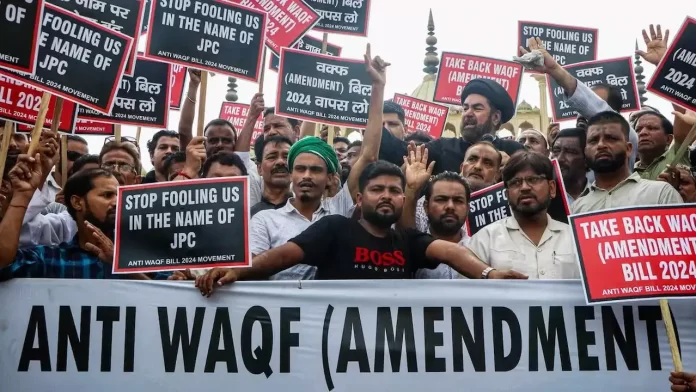
While the government maintains that the Bill will bring much-needed transparency, opposition parties and some religious leaders have questioned its timing and intent. Several Muslim organizations have called for a more inclusive approach, demanding consultations with key stakeholders before passing the legislation.
Potential Impact of the Waqf Amendment Bill
If implemented effectively, the Waqf Amendment Bill could unlock vast financial resources for the development of Muslim educational and healthcare institutions. Proper governance mechanisms could ensure that Waqf properties are used efficiently to benefit the community rather than remaining mired in corruption and litigation.
However, if the Bill is seen as an attempt to infringe upon the independence of Waqf institutions, it could lead to widespread unrest. Striking a balance between transparency and autonomy will be crucial to gaining the trust of all stakeholders.
Is Reform the Right Path Forward?
The debate surrounding the Waqf Amendment Bill reflects a broader struggle between modernization and tradition within the Muslim community. While the inefficiencies in Waqf management are undeniable, any reform should be carried out with the active participation of the community. A top-down approach without consultation could backfire, leading to mistrust and resistance.
The real question is not whether reforms are needed, but how they should be implemented. The government must ensure that the new legislation does not become a tool for political maneuvering but genuinely serves the interests of the community. Transparency and accountability are essential, but so is the preservation of religious autonomy.
The Waqf Amendment Bill is at the center of a crucial debate that has divided Muslim authorities. While some see it as an opportunity for reform, others fear it may lead to excessive government control. The only way forward is through constructive dialogue, where concerns are addressed, and a balanced approach is adopted. If executed properly, the Bill could transform Waqf institutions into powerful engines of socio-economic development. However, failure to build consensus could deepen divisions within the community. The coming months will be pivotal in determining the future of Waqf governance in Bharat.
The post Muslim Authorities Divided on Waqf Amendment Bill: Reform or Controversy? appeared first on Global Governance News- Asia's First Bilingual News portal for Global News and Updates.