

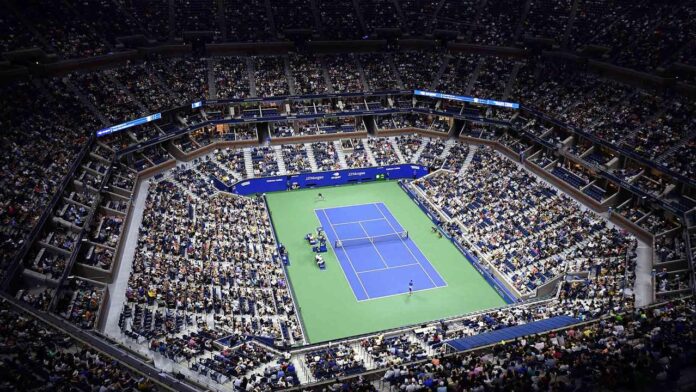
The U.S. Open is more than just a tennis tournament – alongside the serves and rallies, the tournament has built another platform around an idea that extends well beyond tennis: Be Open.
Launched in 2020, Be Open began as a social responsibility campaign aimed at amplifying conversations around equality, inclusivity, progression and representation. Six years later, it has evolved into a larger, purpose-driven platform. Today, this movement leverages the global stage of Flushing Meadows to push boundaries and inspire societal change.
The idea behind it is simple: tennis should be a sport in which everyone has a place. At the U.S. Open, this idea is expressed through far more than a slogan, and the platform now champions diversity, inclusion and equity, both on and off the tennis court.
As stated on the U.S. Open website: “In line with our mission, values and growth strategy of getting 35 million Americans playing tennis by 2035, we seek to welcome more people into the tennis community because when we’re open, great things can happen in our sport and out in the world.”
Multiple tennis champions have etched their names in history by becoming figures who helped reshape the sport while simultaneously fighting broader battles for representation and equality.
Althea Gibson became a barrier-breaking icon who shattered the colour line in tennis at the 1950 U.S. National Championships.
Arthur Ashe, the legendary champion, spent his life fighting institutional racism and apartheid, and today the main stadium is named after him.
Billie Jean King protested against the gender pay gap, helping to shape modern women’s professional tennis.
Notably, rather than treating inclusion and equality as separate conversations from the tournament itself, the U.S. Open has successfully incorporated them into the experience surrounding the event, allowing spectators to encounter these stories alongside the tennis. Some of the initiatives include:
Celebrating the New York story at the Be Open Bodega, which is inspired by New York City’s neighbourhood corner stores and aims to celebrate the diverse communities that make New York City what it is today.
Every year, the U.S. Open conducts a series of events that pay tribute to historically Black colleges and universities (HBCUs) and their influence on the sport. This is a legacy that lives on through changemakers such as Gibson herself, who attended Florida A&M University and became the first Black player to win a Grand Slam singles title.
Be Open also aims to celebrate the LGBTQ+ community by conducting an annual Open Pride celebration, incorporating live performances and spectacles across the grounds and Arthur Ashe Stadium.
Later in the tournament, Hispanic and Latin American communities will be celebrated by highlighting their contributions to tennis and society.
These initiatives cover very different communities, but they share the same underlying message: the U.S. Open can be a stage not only for sporting champions, but also for people whose stories deserve to be heard.
While the phrase ‘Be Open’ may sound simple, the U.S. Open has spent years giving it different meanings.
-It could mean opening doors for communities that have historically been marginalised.
-It could mean remembering the athletes who changed the sport before today’s stars arrived, and celebrating the change they brought to the world.
-It could mean using art, music and culture to make a tennis tournament feel connected to the city around it and to ensure that everyone gets to celebrate the sport equally.
And, most importantly, it reflects an attempt to make the U.S. Open about more than who wins the final.
Tennis is a sport where every match eventually has a winner and a loser, but Be Open is an initiative that offers a different definition of what it means to succeed: creating a tournament where people feel encouraged, see themselves represented, and feel celebrated, recognised and welcomed.
The post More Than a Slogan: How ‘Be Open’ Is Changing the US Open Experience appeared first on Sports News Portal | Revsportz.