

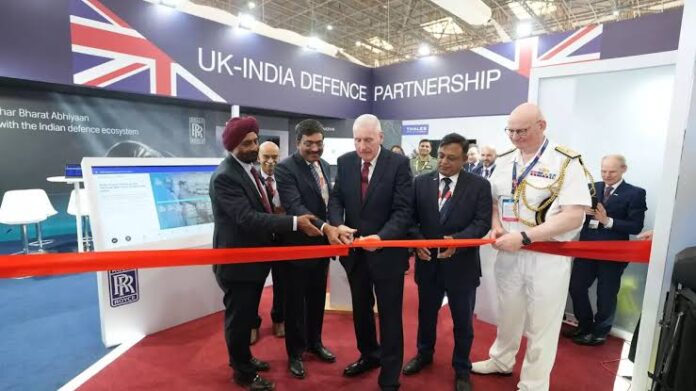
As geopolitical tensions reshape global defence alliances, the United Kingdom and India find themselves at a strategic crossroads. The two democracies — bound by historical ties and shared security concerns — are increasingly aligned on matters of regional stability, Indo-Pacific engagement, and technological collaboration. But for this partnership to truly evolve, it must go beyond ceremonial dialogue and unlock real, tangible cooperation in missile systems, manufacturing capabilities, and mutual trust.
1. Missile Cooperation: Beyond Buyer-Seller Dynamics
India’s rapid modernization of its missile arsenal presents an opportunity for the UK to become more than just a supplier. Britain must:
Offer joint development opportunities in missile technology, including air defence and surface-to-air systems.
Support co-development of next-gen guided weapons, possibly leveraging British expertise in missile propulsion and guidance systems.
Encourage collaboration between India’s DRDO and UK’s Defence Science and Technology Laboratory (DSTL).
India is increasingly unwilling to rely solely on imports and expects strategic partners to offer deeper involvement in the value chain. The UK should take a cue from recent Indo-Israeli and Indo-French missile collaborations that blend technology transfer with joint R&D.
2. Defence Manufacturing: Aligning with India’s ‘Make in India’ Vision
India’s defence market is shifting rapidly from foreign acquisition to indigenous production, spurred by its ambitious “Make in India” and “Atmanirbhar Bharat” (self-reliant India) policies. For the UK to remain relevant, it must:
Invest in local defence manufacturing by forming joint ventures with Indian defence PSUs and private firms.
Offer long-term production partnerships, not just licensed assembly.
Encourage UK defence majors like BAE Systems and Rolls-Royce to deepen their presence in Indian aerospace and naval sectors.
A good precedent is BAE Systems’ past collaboration with Hindustan Aeronautics Ltd (HAL). More such partnerships with Indian firms could open doors to not only Indian markets but also to third-country exports from India.
3. Mutual Trust: Building Strategic and Technological Confidence
Trust remains the most critical component. To build it, the UK must:
Support India’s strategic autonomy, without pressuring it into bloc politics.
Ease export controls and share sensitive technologies that show real commitment — especially in areas like cyber defence, AI-based battlefield systems, and advanced sensors.
Address past irritants, such as visa challenges for Indian engineers and tighter scrutiny on Indian investments in UK’s tech ecosystem.
Furthermore, enhancing defence staff exchanges, regular joint war games, and interoperability training can build a cultural and institutional understanding that lasts beyond governments.
4. Collaborate on Global Security Concerns
India and the UK both support a free and open Indo-Pacific, but collaboration must move from rhetoric to reality. This includes:
Joint patrols or exercises with QUAD and ASEAN navies.
Maritime domain awareness sharing.
Coordinated responses to cybersecurity threats and supply chain vulnerabilities.
India values practical cooperation, especially in safeguarding maritime trade routes and securing critical infrastructure. The UK, with its renewed Indo-Pacific tilt, can become a trusted partner — if it brings substance to the table.
5. Leverage Multilateral Platforms, Avoid Red Tape
India often sees Western defence collaboration as bogged down by bureaucratic layers. To streamline cooperation, Britain must:
Use platforms like Defence Consultative Groups to push faster approvals.
Appoint a dedicated defence attaché or envoy focused solely on industrial defence partnerships.
Reduce policy friction and clarify export procedures for dual-use technologies..