

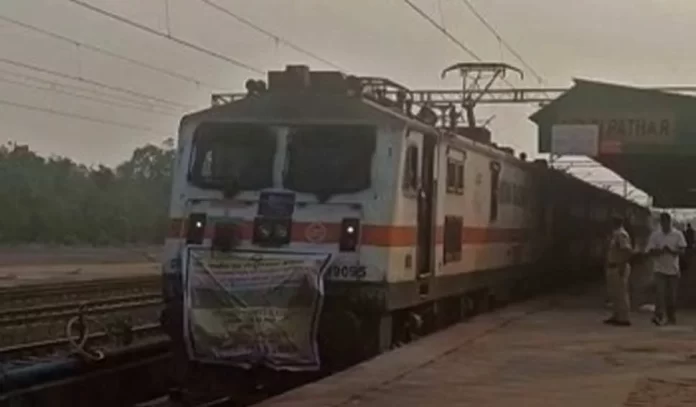
Shillong: In a first-of-its-kind decision highlighting the long-running conflict between Meghalaya’s infrastructure development and identity politics, the state government has formally dumped the long-frozen Byrnihat-Shillong railway scheme. The state government is currently set to surrender ₹209.37 crore of the project funds to the Ministry of Railways, bringing curtains down on an initiative that originally promised to take the hill state into a whole new era of connectivity.
Authority has reaffirmed that the procedure for refunding the unused land acquisition funds—taken by the Ri-Bhoi Deputy Commissioner on March 30, 2017—has commenced already. The funds, previously allocated for the purchase of land within the Ri-Bhoi district, will now be refunded after seven years of inertia and vigorous opposition from influential civil society actors.
The move follows the state government’s establishment of a high-level committee under the chairmanship of Chief Minister Conrad K. Sangma to examine the wider repercussions of railway connectivity, especially in the Khasi-Jaintia Hills. But many feel that this exercise in consultation is too little, too late, considering the growing regional isolation as neighboring northeastern states push hard for railway connectivity.
By doing this, Shillong is now poised to be the sole state capital in India without a railway connection. At the same time, smaller and more distant capitals such as Aizawl, Imphal, and Gangtok are working towards becoming part of the national railway network.
The abandoned project—the Tetelia-Byrnihat railway line—was to be a humble 20.5-km link, connecting Tetelia in Assam to Byrnihat in Meghalaya, with only 2.5 km of the track being within the state. The ₹496 crore-estimated project was halted in 2017 after local pressure groups organized huge protests and blocked construction work.
At the core of the opposition is a long-standing fear among the local population: demographic dilution. Influential organisations like the Khasi Students’ Union (KSU), Federation of Khasi Jaintia and Garo People (FKJGP), and other pressure groups have argued that any type of railway connectivity would open the floodgates to unregulated migration, which would jeopardise the cultural and ethnic identity of the indigenous population.
Last week, some of these organizations—the KSU, FKJGP, Jaintia Students’ Union (JSU), and Hynniewtrep National Youth Front (HNYF)—issued a strong warning against the revival of any railway schemes in Jaintia Hills or at large, reaffirming that no railways without a strict anti-influx policy would be allowed.
Chief Minister Conrad Sangma has publicly acknowledged the economic potential of railways, particularly in aiding agricultural transport and improving supply chains. However, his government has treaded cautiously, insisting on building consensus before moving forward. Despite these statements, little progress has been made toward bridging the gap between development goals and public apprehension.
Critics contend that the government’s inability to sit down and discuss things with civil society and political forces has cost the state dearly in terms of long-term infrastructure planning. With the return of ₹209 crore, Meghalaya has in effect shut its doors to a central investment opportunity—and maybe on a vision of modern connectivity.
While pressure groups remain to protect the gates of Meghalaya’s cultural heritage, the railway debate in the state now serves as a warning of how distrust, lack of communication, and fear of change can derail progress—literally.
The post Meghalaya Declines Railways: ₹209 Crore to Be Refunded as Byrnihat-Shillong Project is Abandoned appeared first on Global Governance News- Asia's First Bilingual News portal for Global News and Updates.