

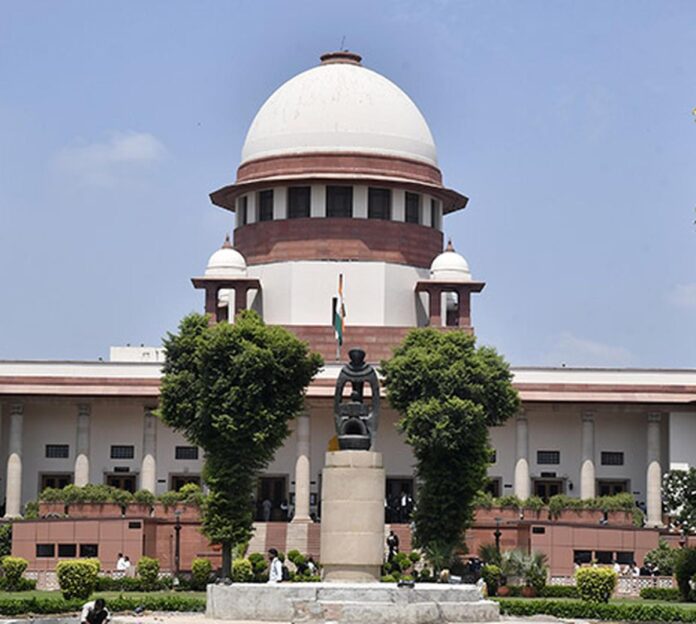
In a significant observation ahead of the festive season, the Supreme Court of India has addressed the contentious issue of the ban on firecrackers in the Delhi-NCR region, hinting that the restriction could be partially relaxed under strict conditions. The apex court made it clear, however, that public health and environmental safety remain paramount, emphasizing that any relaxation must align with the broader goal of reducing pollution and safeguarding citizens’ right to clean air.
A Balancing Act Between Tradition and Public Health
During the hearing on petitions challenging the ban, the Supreme Court acknowledged the cultural and traditional importance of Diwali, where bursting crackers has long been a part of celebrations. However, the Bench observed that this cannot come at the cost of environmental degradation and human health.
The Court remarked that it may consider lifting the ban partially — but only if the use and sale of firecrackers are limited to “green crackers”, which emit less pollution and comply with prescribed emission standards. The justices noted that the right to celebrate festivals is a constitutional one, but it must coexist with the right to life and a clean environment, especially in a region that faces some of the worst air quality levels in the world.
What the Supreme Court Said
The Bench reportedly observed, “We are not against celebrations. But people cannot be allowed to suffocate the city in the name of tradition.” It further stated that the court’s intent is not to impose a blanket prohibition but to ensure responsible and environmentally conscious festivities.
The Court emphasized that the ban on highly polluting firecrackers — those containing barium salts, aluminum, or other toxic chemicals — would continue. Manufacturers and sellers would need to prove compliance with the green cracker certification issued by the Council of Scientific and Industrial Research (CSIR) and other regulatory bodies.
Additionally, the Court directed that the state governments and pollution control boards ensure strict enforcement and monitoring of firecracker sales, noting that illegal and unregulated markets had often undermined previous restrictions.
Delhi-NCR’s Air Quality Crisis
The discussion comes at a time when Delhi-NCR’s air quality typically dips to “severe” levels in the weeks surrounding Diwali, largely due to a mix of stubble burning, vehicular emissions, industrial pollutants, and the bursting of firecrackers. The region’s pollution levels have been a recurring concern for both courts and policymakers, with health experts warning of respiratory illnesses, asthma, and long-term damage to children and the elderly.
The Supreme Court observed that a complete ban, while effective in theory, often fails in implementation, leading to black markets and sporadic enforcement. Instead, it hinted that a regulated permission-based model could allow citizens to celebrate responsibly while still protecting the environment.
Possible Conditional Relaxation
The Court may permit the use of green crackers within restricted time frames, possibly an hour or two during Diwali night, as has been ordered in earlier years. Furthermore, it could direct state authorities to designate specific zones or open spaces where such crackers can be used under supervision to prevent widespread air pollution.
The Bench also underscored the need for public awareness campaigns, urging both the government and civic bodies to educate citizens about the health risks associated with conventional firecrackers and the benefits of switching to eco-friendly alternatives.
Government and Public Reaction
Environmentalists have welcomed the Court’s cautious stance, saying it strikes a pragmatic balance between cultural sensitivity and ecological responsibility. However, some traders and manufacturers have expressed concern, arguing that unclear definitions of “green crackers” and delayed regulatory approvals have hurt small businesses and workers in the fireworks industry.
Meanwhile, the Delhi government has reiterated its commitment to maintaining air quality standards, stating that it would abide by the Court’s directives and ensure that enforcement agencies remain vigilant against violations.
Conclusion
As Diwali approaches, the Supreme Court’s remarks underline the delicate balance between tradition and sustainability. While the festival is a symbol of light, joy, and renewal, the Court reminded citizens that the spirit of Diwali should not be overshadowed by the haze of pollution.
Whether the ban is lifted partially or maintained, the message from the country’s highest court is clear — celebration cannot come at the cost of health and life. The focus, it said, must shift from loud and polluting fireworks to cleaner, greener, and more responsible festivities, reflecting both cultural pride and environmental consciousness.