

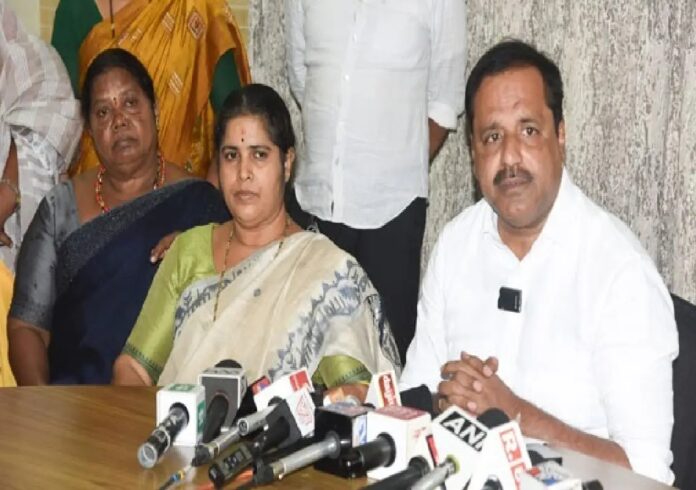
Mangaluru: Karnataka Health and Family Welfare Minister U T Khader on Thursday announced a comprehensive roadmap to modernise the state’s public healthcare system through large-scale digitisation, expansion of Tele-ICU services, strengthened newborn care and greater integration of AYUSH facilities into government hospitals. The minister also criticised a BJP leader over controversial remarks directed at Congress leader Rahul Gandhi, calling the comments an insult to the culture and dignity of the coastal region.
Addressing a press conference at the Circuit House in Mangaluru, Khader outlined several initiatives aimed at improving healthcare delivery across Karnataka while leveraging technology to make government hospitals more efficient and patient-friendly.
Statewide digital transformation of healthcare
Khader said the Health Department has launched an ambitious digital transformation programme that will gradually convert government healthcare institutions into a fully integrated digital network.
As part of the initiative, high-speed broadband connectivity will be provided to all Primary Health Centres (PHCs), Community Health Centres (CHCs) and taluk hospitals, creating the digital backbone required for modern healthcare services.
The minister said a paperless hospital management system, which was piloted in 40 government hospitals across four districts, has shown encouraging results and will now be expanded to 183 additional government healthcare institutions, including district hospitals, taluk hospitals and CHCs.
Digital health records for every patient
Under the proposed system, patients’ medical information will be stored digitally, enabling doctors to access complete treatment histories during future visits.
The digital records will include:
- Consultation history
- Laboratory test reports
- Pharmacy prescriptions
- Blood pressure records
- Blood sugar readings
- Other clinical observations
Khader said maintaining comprehensive electronic health records would help doctors monitor long-term health trends and improve continuity of care.
He added that the government eventually plans to integrate private hospitals into the same digital platform so that patients can access their medical records regardless of where they receive treatment.
Tele-ICU services to address specialist shortage
To overcome the shortage of specialist doctors, the minister announced that Tele-ICU units will be established at taluk hospitals and Community Health Centres.
Under the system, trained nurses will manage critically ill patients on-site while specialist doctors provide remote supervision and clinical guidance using digital communication technology.
According to Khader, the initiative will ensure timely specialist support for patients in rural and semi-urban areas without requiring them to travel to major cities.
Focus on newborn and paediatric care
The government also plans to strengthen maternal and child healthcare by establishing Paediatric Emergency Care Units and Special Newborn Care Units (SNCUs) at taluk hospitals and CHCs.
Khader said these facilities would significantly reduce the burden on rural families by enabling specialised neonatal care closer to home, reducing dependence on expensive private hospitals and long-distance travel.
Rs 72 crore allocated
The minister disclosed that the government has allocated substantial funds for the healthcare modernisation programme.
According to him:
- Rs 42 crore has been earmarked for digital healthcare infrastructure.
- Rs 30 crore has been sanctioned for establishing Tele-ICU facilities across 183 government institutions.
Khader explained that multiple technology vendors participated during the pilot phase, allowing the department to evaluate different software platforms.
The best features from each system will now be incorporated into a common specification before inviting open tenders for statewide implementation.
AYUSH services to be integrated
Reaffirming the government’s commitment to holistic healthcare, Khader said future hospital projects will integrate AYUSH facilities alongside allopathic services.
He cited the Ullal model, where both systems function within the same hospital complex, allowing patients to choose their preferred mode of treatment without visiting separate facilities.
The minister stressed that preserving patients’ freedom to choose their preferred healthcare system remains an important government objective.
Rollout to begin in major hospitals
Khader clarified that while broadband connectivity will reach all PHCs, the complete paperless hospital system will initially be introduced in district hospitals, taluk hospitals and Community Health Centres before being extended to PHCs in later phases.
Preventive healthcare measures
Emphasising the importance of preventive healthcare, Khader urged people to adopt healthier lifestyles.
He encouraged families to drink boiled water instead of sugary soft drinks and announced that the government will issue an order making boiled drinking water mandatory in:
- Government hospitals
- Hotels
- Restaurants
He also warned food establishments against using harmful artificial food colourants and Ajinomoto (MSG) in violation of food safety norms, stating that strict legal action would be taken against offenders.
International outreach for millet promotion
Khader also referred to his recent visit to the United States, where he attended an international leadership recognition programme in Chicago.
During the visit, he met the Consul General of India to discuss expanding overseas markets for Indian millets ahead of an international Millet Conclave scheduled to be held in Washington.
He said the discussions focused on promoting millet exports and increasing global awareness of India’s traditional grains.
Political remarks draw sharp response
The press conference also witnessed political exchanges after Khader strongly criticised a BJP leader over controversial remarks directed at Congress leader Rahul Gandhi.
Without naming the individual, Khader said the BJP leader was “not even equal to Rahul Gandhi’s little toe” in political stature and described the comments as a “black mark” on the culture and traditions of Dakshina Kannada.
He said political leaders from the coastal region have historically maintained civility in public discourse and argued that such inflammatory language damages the district’s reputation.
Khader also referred to the sacrifices of former Prime Ministers Indira Gandhi and Rajiv Gandhi, stating that their contributions to the nation could not be erased from history.
He further alleged that repeated calls for the “destruction” of political opponents reflected an extremist mindset and asserted that such rhetoric has no place in a democratic society.
Conclusion
Khader said Karnataka’s digital healthcare mission aims to improve patient care, strengthen rural health infrastructure and make government hospitals more efficient through technology. At the same time, he urged political leaders across parties to maintain dignity in public life and uphold the values and culture of the coastal region while engaging in political debates.