

Bengaluru: The Karnataka government has moved to strengthen accountability among officials responsible for delivering public services, with the state legislature passing an amendment to the Karnataka Sakaala Services Act that provides for a maximum financial penalty of Rs 500 per application for delays in providing notified services or disposing of applications.
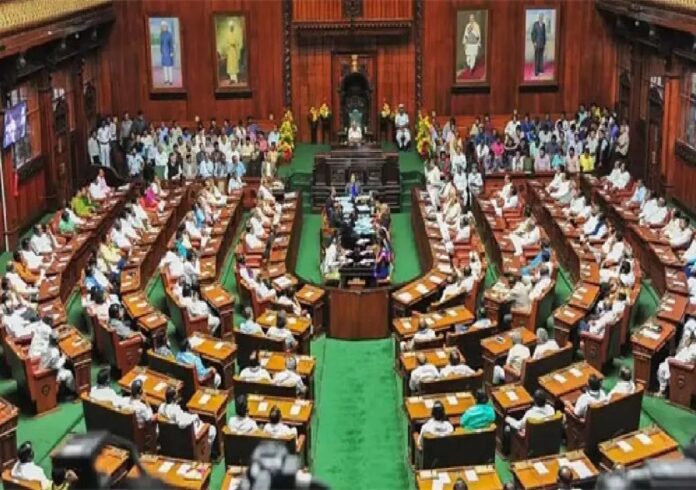
The amendment was among 10 Bills passed by the Legislative Assembly on the final day of the session. The Bills were passed within around 36 minutes without debate, including the Karnataka Sakaala Services (Amendment) Bill.
The changes are aimed at making government officials more accountable for delays in public service delivery and ensuring that citizens have a quicker mechanism to seek redressal when applications are not processed within the prescribed time.
Rs 500 penalty for delayed services
Under the amended Sakaala framework, government employees found responsible for delaying services or applications can face a financial penalty of up to Rs 500 for each application.
The provision is intended to discourage officials from unnecessarily keeping applications pending and improve adherence to stipulated timelines for government services.
Sakaala was introduced to provide citizens with time-bound access to a range of government services. The latest amendment seeks to strengthen the system by attaching a direct financial consequence to delays attributable to officials.
The maximum penalty of Rs 500 per application is expected to place greater responsibility on officials handling citizen applications and service requests.
The amendment comes amid continued efforts to digitise government services and reduce delays in administrative processes.
Civil courts barred from Sakaala matters
Another important provision concerns the handling of appeals and disputes that fall within the jurisdiction of Sakaala authorities.
The amendment seeks to prevent matters legally assigned to Sakaala authorities from becoming prolonged through parallel proceedings in civil courts.
According to the changes, civil courts will not be permitted to intervene in matters that legally fall within the jurisdiction of Sakaala authorities or issue judgments in such cases.
The move is intended to ensure that appeals under the Sakaala framework are resolved within the concerned government department rather than becoming subject to lengthy judicial proceedings.
By keeping the dispute-resolution mechanism within the administrative framework, the government hopes to provide citizens with faster decisions on service-related grievances.
Property registration rules set for change
The Assembly also passed an amendment to the Registration Act aimed at modernising the property registration process.
Under the proposed system, property registrations will be possible without both parties having to be physically present at the sub-registrar’s office.
The amendment replaces a similar Bill introduced in 2024 and incorporates additional provisions concerning documentation, verification and digital registration.
The changes are expected to reduce the need for repeated visits to registration offices and make property-related transactions more convenient.
The move is also part of the broader effort to shift government procedures towards digital platforms and reduce dependence on physical documentation.
Proof required for power of attorney
One of the new requirements under the amended registration framework relates to powers of attorney.
Those granting a power of attorney will be required to provide proof that they are alive.
The provision is intended to strengthen verification and reduce the possibility of fraudulent property transactions being carried out using outdated or invalid powers of attorney.
The amendments also give sub-registrars greater authority to reject property registrations when the original documents are not digitally available through the integrated database.
This provision is aimed at improving document verification and preventing registrations based on documents whose authenticity cannot be established through the official digital records.
Centralised system for certified copies
The amended registration framework also provides for a centralised virtual delivery system for issuing certified copies.
Under the system, members of the public will be able to obtain certified copies without unnecessary delays at registration offices.
Digitisation of property records and delivery of certified documents through a centralised system could make it easier for citizens, legal professionals and other stakeholders to access registration records.
The reforms are also expected to reduce paperwork and improve the efficiency of the registration department.
Land Revenue Act gets amendments
The Assembly also approved amendments to the Karnataka Land Revenue Act.
The changes provide the government with the authority to appoint an officer to conduct investigations in matters covered under the legislation.
The amendment also provides clearer definitions for terms relating to incitement, fraud and the creation of fake documents.
More precise definitions are intended to provide greater clarity while dealing with violations and during investigations.
The government has sought to strengthen the administrative framework for land-related matters through these changes.
Shops and Commercial Establishments Act amended
Another amendment approved by the Assembly concerns the Karnataka Shops and Commercial Establishments Act.
The changes permit the digital payment of fees and seek to simplify certain procedures under the legislation.
The government has projected the reforms as measures aimed at improving the ease of doing business and reducing administrative burdens on commercial establishments.
Allowing digital payment is expected to make fee-related transactions more convenient while reducing dependence on cash-based or physical processes.
Simplifying procedures under the Act could also help businesses comply with regulatory requirements more easily.
Focus on digital governance and accountability
The amendments passed during the session collectively reflect the government’s focus on digitisation, administrative efficiency and accountability.
The Sakaala amendment specifically targets delays in public service delivery, while the Registration Act changes seek to reduce physical requirements and strengthen digital verification of property documents.
The Land Revenue amendments focus on investigation and clearer definitions, while changes to the Shops and Commercial Establishments Act are intended to simplify business-related procedures.
The passage of the Bills marks another step towards restructuring government processes around digital systems and time-bound service delivery.
For citizens, the key change under Sakaala will be the financial liability faced by officials responsible for unjustified delays. At the same time, the restriction on civil court intervention in matters falling under Sakaala is intended to ensure that departmental appeals do not become prolonged.
The effectiveness of the reforms, however, will depend on their implementation, monitoring and the extent to which departments enforce the prescribed timelines and accountability mechanisms.