

It’s Time for Africa.
Is world football finally witnessing a shift in the balance of power?
The United States, a country that has so often served as the stage for defining sporting moments, may now be witnessing the beginning of football’s next great story. For decades, the sport has largely been shaped by Europe and South America. One gave us tactical excellence and relentless efficiency, the other artistry and flair. This World Cup, however, has belonged to Africa.
The numbers tell the story. It is not merely that Africa had more representatives after FIFA expanded the tournament. Of the 10 African teams that qualified, nine reached the Round of 32. This was not a case of benefiting from extra places. They earned their place through performances, proving that African football can no longer be viewed as an outsider on football’s biggest stage.
This rise has not happened overnight. It is the result of long-term planning and investment, something many footballing nations, including India, have struggled to implement consistently. African football has steadily climbed the pyramid, and this World Cup has become its biggest statement yet.
The signs have been there for years.
Roger Milla’s iconic corner-flag dance at Italia ’90 first announced Africa’s arrival. Senegal stunned defending champions France in 2002. Then came Morocco’s unforgettable run to the semi-finals in Qatar after beating Spain and Portugal. Those moments were once seen as isolated successes. In the United States, they have become part of a much larger movement.
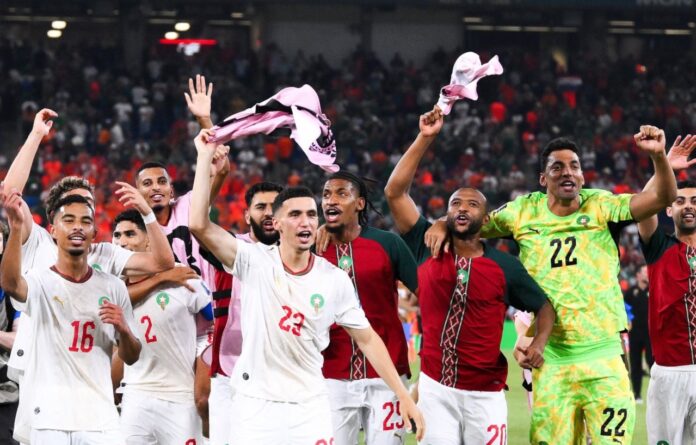
Morocco, Senegal, Ivory Coast, South Africa, DR Congo, Egypt, Algeria, Ghana, Cape Verde and Tunisia represented Africa at this World Cup. Only Tunisia failed to reach the knockout stage. Morocco have already advanced to the Round of 16 after eliminating the Netherlands, while several others remain in the fight. Even tiny Cape Verde, with a population of barely half a million, reached the knockout stage in their debut World Cup and pushed Argentina into a genuine contest. DR Congo may have lost to England, but their fearless display showed just how far African football has come.
For years, African football was stereotyped as relying only on pace and physical strength. This World Cup has challenged that perception. Tactical discipline, structured defending and intelligent game management have become equally important parts of these teams.
African stars have always excelled in Europe. Samuel Eto’o, George Weah, Didier Drogba and Mohamed Salah became global icons, but those achievements were largely individual. The question was always whether African nations could translate that talent into collective success.
This tournament suggests they finally have.
Senegal’s battle with Belgium and Ivory Coast’s fearless display against Norway showed teams that no longer suffer from any inferiority complex. They now believe they belong alongside football’s traditional powers.
Several factors have driven this transformation.
More African players than ever before are regulars in Europe’s biggest leagues, from the Premier League and La Liga to the Bundesliga. Competing against the world’s best every week has erased the psychological gap that once existed when they stepped onto the World Cup stage.
The athleticism was always there. Now it has been complemented by elite tactical education.
Perhaps the biggest factor, however, has been FIFA’s revised eligibility rules on dual nationality.
Six years ago, FIFA relaxed regulations, allowing players under specific conditions to switch national teams if they had not become fully tied to another country. Many players born and raised in Europe, developed through elite academies and professional clubs, have since chosen to represent the countries of their parents or grandparents.
That emotional pull towards their roots has transformed the fortunes of several African nations.
Players like Ayoub Bouaddi are part of that new generation, footballers shaped by Europe’s best academies but choosing to wear the colours of their ancestral homeland.
The balance of power in world football may not have shifted completely just yet. Europe and South America still possess the trophies and the history.
But the gap has never looked smaller.
Perhaps all Africa now needs is one World Cup trophy to complete the story.
Morocco are still standing.
Who knows?
Maybe it really is time for Africa.
Follow RevSportz for latest sports news
The post It’s Time for Africa: A New Football Power Is Rising appeared first on Sports News Portal | Revsportz.