

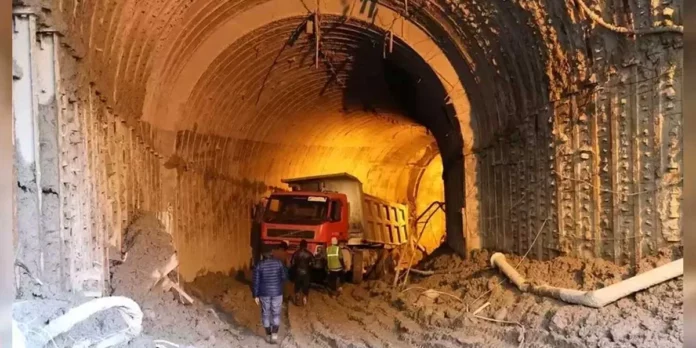
About 15 years ago, a leading Korean EPC (Engineering, Procurement, and Construction) company approached us to explore the potential of India’s tunnelling sector. Armed with cutting-edge technologies, they sought to determine if India’s burgeoning infrastructure market was ready for advanced tunnelling solutions. Our study revealed significant potential, but the timing wasn’t ideal. The ecosystem—comprising policy frameworks, local expertise, and project scale—wasn’t mature enough to fully embrace such advanced technologies. The Korean company chose to wait and eventually exited the Indian market.
Fast forward to 2025, and the landscape has transformed dramatically. India’s tunnelling sector is no longer a nascent opportunity—it’s a dynamic, rapidly growing industry that demands attention. With a robust pipeline of projects, evolving engineering capabilities, and a pressing need for smarter, faster, and safer tunnelling solutions, India is poised to become a global hub for tunnelling excellence. This article explores how India’s tunnelling sector has evolved, the opportunities it presents today, and why global players should reconsider their strategies to capitalize on this golden moment.
The Evolution of India’s Tunnelling Sector
India’s infrastructure sector has undergone a remarkable transformation over the past decade, with tunnelling emerging as a critical component of the nation’s connectivity and economic growth. The National Highways Authority of India (NHAI) and other government bodies have spearheaded ambitious projects to enhance road, rail, and metro connectivity, particularly in challenging terrains like the Himalayas and urban landscapes.
A Decade of Achievements
Over the last 10 years, India has made significant strides in tunnelling:
-
Completed Projects: NHAI has successfully completed 35 tunnel projects spanning 49 kilometers at a cost of ₹20,000 crore (approximately US$2.5 billion). Notable examples include the Atal Tunnel (9.02 km, the world’s longest highway tunnel above 10,000 feet), the Chenani-Nashri Tunnel (9.2 km, India’s longest road tunnel at the time of completion), and the Sela Tunnel (a strategic project in Arunachal Pradesh enhancing all-weather connectivity).
-
Ongoing Projects: As of 2025, 75 tunnel projects covering 146 kilometers are under construction, with investments totaling ₹49,000 crore (US$6 billion). These projects are spread across highways, railways, and metro systems, showcasing India’s growing expertise in managing large-scale tunnelling initiatives.
-
Upcoming Pipeline: The future looks even more promising, with 78 planned tunnel projects spanning 285 kilometers and backed by investments of ₹1.10 trillion (US$13 billion). These projects are set to address critical infrastructure needs, from improving connectivity in remote regions to decongesting urban centers.
India’s ability to deliver complex tunnels in some of the world’s most challenging geographies—such as the seismically active Himalayas and densely populated urban areas—demonstrates its growing engineering prowess. Projects like the Z-Morh Tunnel in Jammu & Kashmir, designed to provide all-weather access to strategic regions, highlight the country’s ability to tackle both technical and geopolitical challenges.

Why the Timing Wasn’t Right 15 Years Ago
Fifteen years ago, India’s tunnelling sector was in its infancy. While the potential for growth was evident, several factors limited its readiness for advanced technologies and global partnerships:
-
Limited Project Scale: The volume and complexity of tunnelling projects were modest compared to today’s ambitious undertakings. Most projects were smaller in scope, with limited budgets and less demand for cutting-edge solutions.
-
Underdeveloped Ecosystem: The local supply chain, skilled workforce, and project management capabilities were not fully equipped to adopt advanced mechanized tunnelling technologies. Traditional drill-and-blast methods dominated, and the adoption of modern equipment like tunnel boring machines (TBMs) was minimal.
-
Policy and Regulatory Gaps: The regulatory framework for large-scale infrastructure projects was evolving, with delays in approvals, land acquisition challenges, and limited public-private partnership (PPP) models discouraging foreign investment.
-
Risk Aversion: International EPC companies, like the Korean firm we worked with, were cautious about entering a market with high perceived risks and limited track records of successful large-scale tunnelling projects.
As a result, many global players, including the Korean EPC company, chose to wait for a more mature market. Unfortunately, some missed out on early-mover advantages as India’s infrastructure sector began its rapid ascent.
Why Now Is the Golden Moment
Today, India’s tunnelling sector is at an inflection point. The convergence of government ambition, technological advancements, and global demand for infrastructure excellence has created an unparalleled opportunity for both domestic and international players.
1. Unprecedented Scale and Ambition
The sheer scale of India’s tunnelling projects is staggering. With ₹1.10 trillion in upcoming projects, the country is investing heavily in tunnels to support its vision of becoming a $5 trillion economy. These projects span diverse applications:
-
Strategic Connectivity: Tunnels like the Sela and Z-Morh are critical for year-round access to border regions, enhancing national security and economic development.
-
Urban Mobility: Metro rail projects in cities like Delhi, Mumbai, and Bengaluru rely on tunnels to alleviate traffic congestion and provide sustainable transport solutions.
-
Highway Expansion: Tunnels are integral to India’s highway network expansion, enabling faster and safer travel through mountainous and hilly regions.
This ambitious pipeline ensures a steady demand for tunnelling expertise, equipment, and technologies for years to come.
2. Evolving Engineering and Project Management Capabilities
India has made significant strides in building local expertise:
-
Engineering Excellence: Indian engineers have gained hands-on experience in executing complex projects in diverse terrains. The successful completion of the Atal Tunnel, for instance, showcases India’s ability to manage high-altitude, seismically challenging environments.
-
Project Management: Improved project management practices, including better risk assessment, timeline adherence, and cost optimization, have reduced delays and cost overruns. The use of digital tools like Building Information Modeling (BIM) is becoming more common.
-
Technology Adoption: India is increasingly adopting mechanized tunnelling methods, such as TBMs, to improve efficiency and safety. For example, TBMs have been deployed in metro projects in cities like Mumbai and Delhi.
However, gaps remain in areas like research and development (R&D) and advanced mechanized tunnelling, creating opportunities for global technology providers to fill the void.
3. Growing Need for Smarter, Faster, Safer Tunnels
India’s tunnelling sector is not just about building more tunnels—it’s about building better ones. The demand for smarter, faster, and safer tunnelling solutions is driven by:
-
Safety Imperatives: Tunnels in seismic zones and urban areas require advanced safety features, such as real-time monitoring systems and fire-resistant materials.
-
Speed and Efficiency: With rapid urbanization and economic growth, there’s pressure to complete projects faster without compromising quality. Mechanized tunnelling and automation can significantly reduce construction timelines.
-
Sustainability: Environmentally conscious tunnelling practices, such as minimizing ecological disruption and optimizing energy use, are gaining traction.
These needs align perfectly with the expertise of global EPC companies, many of whom have decades of experience in advanced tunnelling technologies.
4. Policy and Investment Support
The Indian government has created a conducive environment for infrastructure development:
-
Policy Reforms: Streamlined approval processes, simplified land acquisition, and robust PPP models have reduced barriers to entry for foreign players.
-
Investment Push: Initiatives like the National Infrastructure Pipeline (NIP) and PM Gati Shakti prioritize connectivity and allocate significant funds to tunnelling projects.
-
Global Collaboration: The government actively encourages foreign direct investment (FDI) and technology partnerships to bridge capability gaps.
This supportive ecosystem makes India an attractive destination for international EPC firms looking to expand their footprint.
The Case for Global Collaborations
While India has made remarkable progress, certain challenges persist that global players can help address:
-
R&D and Innovation: India’s tunnelling sector lags in cutting-edge R&D, particularly in areas like geotechnical analysis, smart tunnelling systems, and automation. Global firms with advanced R&D capabilities can partner with Indian companies to develop tailored solutions.
-
Mechanized Tunnelling: While TBMs are gaining traction, their adoption is still limited compared to global standards. International expertise in TBM design, operation, and maintenance can accelerate India’s transition to mechanized tunnelling.
-
Skilled Workforce: Training programs and knowledge transfer from global leaders can upskill India’s workforce, enabling them to handle sophisticated tunnelling technologies.
-
Safety and Sustainability: Global firms can introduce best-in-class safety protocols and sustainable practices, ensuring that India’s tunnels meet international standards.
Collaborations can take various forms, including joint ventures, technology transfers, and consortiums for large-scale projects. For instance, partnerships between Indian EPC firms and global leaders in TBM manufacturing could drive innovation while ensuring cost competitiveness.
Success Stories: Learning from India’s Landmark Tunnels
India’s recent tunnelling projects offer valuable lessons for global players:
-
Atal Tunnel: Completed in 2020, this 9.02-km tunnel in Himachal Pradesh was a feat of engineering, overcoming extreme weather, high altitude, and seismic risks. It showcased India’s ability to execute complex projects with international support (e.g., collaboration with Austrian consultants).
-
Chenani-Nashri Tunnel: This 9.2-km tunnel in Jammu & Kashmir, completed in 2017, was India’s first to use advanced NATM (New Austrian Tunnelling Method) techniques, demonstrating the country’s readiness for modern methodologies.
-
Sela Tunnel: Under construction in Arunachal Pradesh, this project highlights India’s focus on strategic infrastructure in border regions, with a clear need for advanced technologies to navigate challenging terrains.
These projects underscore India’s growing capabilities while highlighting areas where global expertise can add value, such as in advanced tunnelling methods, real-time monitoring, and risk mitigation.
Why Global Players Should Act Now
For international EPC companies, the reasons to re-evaluate India’s tunnelling sector are compelling:
-
Market Size: With ₹1.10 trillion in upcoming projects, India offers one of the largest tunnelling markets globally, rivaling established markets like China and Europe.
-
Long-Term Potential: India’s infrastructure ambitions extend beyond 2030, ensuring a steady pipeline of projects for decades.
-
First-Mover Advantage: Early entrants can establish strong partnerships, secure prime contracts, and build brand credibility in a competitive market.
-
Government Support: Policies favoring FDI and technology transfers make it easier for global players to enter and scale.
The Korean EPC company that walked away 15 years ago missed an opportunity to shape India’s tunnelling sector. Today, the conditions are ripe for global players to make a lasting impact.
India’s tunnelling sector has evolved from a missed opportunity to a golden prospect. With a robust project pipeline, maturing engineering capabilities, and a supportive policy environment, the country is on the cusp of a tunnelling revolution. However, to realize its full potential, India needs smarter, faster, and safer tunnelling solutions—precisely the kind of expertise that global EPC companies can provide.
The time for hesitation is over. International players who act now can not only tap into a multi-billion-dollar market but also play a pivotal role in shaping India’s infrastructure future. For those who walked away in the past, it’s time to take another look. India’s tunnelling sector is ready—and it’s calling.