

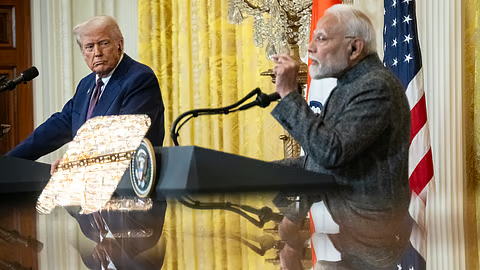
The ongoing dialogue between India and the United States over a limited trade agreement has taken a dual-track approach — collaborative discussions in Washington and a combative stance in Geneva, reflecting both countries’ attempts to balance bilateral interests and global trade obligations.
Senior trade officials from both nations met this week in Washington to iron out pending issues relating to tariffs, digital trade, and market access. This comes amid broader efforts to deepen strategic and economic cooperation, especially following Prime Minister Narendra Modi’s and President Joe Biden’s recent statements on enhancing trade ties. Sources indicate that talks have reached an advanced stage, with both sides showing flexibility on select goods and services in order to conclude a “mini-deal” ahead of the U.S. presidential election cycle.
However, even as the tone remains conciliatory in Washington, tensions flared in Geneva, where both India and the United States presented sharply divergent views at the World Trade Organization (WTO). The primary areas of discord include digital trade regulations, agricultural subsidies, and public stockholding of food grains.
In particular, India challenged what it described as the “disproportionate scrutiny” it faces regarding its Minimum Support Price (MSP) program and food security initiatives. The U.S. delegation, on the other hand, pushed back against India’s call for greater flexibility, arguing that such policies distort global trade and harm American farmers. These disputes come amid a broader deadlock at the WTO over reforming subsidy rules and addressing e-commerce governance.
The stark contrast between the cooperative mood in Washington and the combative exchanges in Geneva highlights the complexity of Indo-US trade relations. While both countries seek to strengthen their strategic partnership and expand bilateral trade — which crossed $200 billion in 2024 — they remain locked in multilateral disagreements that often slow down progress.
Observers note that the U.S. may be willing to make concessions on select tariff lines, especially in areas like pharmaceuticals, textiles, and select agricultural exports from India, in exchange for greater access to India’s digital services and alignment on emerging standards like AI governance and cross-border data flows. India, for its part, is pushing for restoration of its GSP (Generalized System of Preferences) benefits and greater clarity on investment rules.
Trade experts say this dual approach — partnership in bilateral channels and assertiveness in multilateral forums — reflects India’s emerging trade strategy, where it seeks to balance protection of domestic interests with the imperatives of global engagement. The current developments will be closely watched as the two countries move closer to a formal announcement of the trade agreement, which could come as early as August.
The outcomes of these discussions could have ripple effects across global trade negotiations and set the tone for future cooperation in key sectors such as digital commerce, green energy, and technology transfers.