

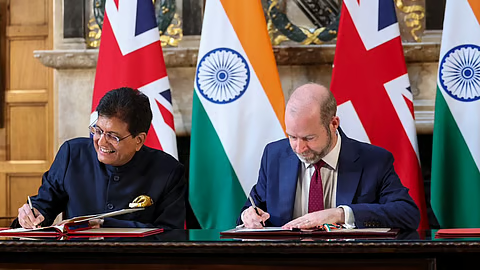
The India–UK Free Trade Agreement (FTA), currently in its final stages of negotiation, is projected to unlock thousands of new jobs across both nations while opening up significant economic opportunities in key sectors. This landmark deal is poised to strengthen bilateral ties, boost exports, increase investment flows, and support job creation across manufacturing, technology, services, and agriculture.
With both countries seeking post-pandemic economic revitalization and diversification of trade partnerships, the India–UK FTA is being hailed as a strategic milestone that will shape a new era of economic collaboration.
Key Features of the Proposed Trade Deal
The trade agreement, which has been under negotiation for over two years, covers a wide range of economic sectors and proposes the reduction or elimination of tariffs, easing of regulatory barriers, and mutual recognition of professional qualifications. Key features include:
-
Lower tariffs on UK exports to India, including Scotch whisky, automotive parts, and pharmaceuticals
-
Increased access for Indian services, particularly in the IT, healthcare, and education sectors
-
Investment protections and dispute resolution mechanisms for businesses
-
Facilitation of student and professional mobility between the two countries
The deal is expected to include both goods and services, making it one of the most comprehensive trade pacts India has negotiated with a Western economy.
Job Creation and Economic Impact
In the United Kingdom
The UK government anticipates that the FTA could lead to thousands of new jobs, especially in sectors like manufacturing, financial services, education, and technology. Easier access to the Indian market is expected to:
-
Increase exports of UK-made goods
-
Enhance the competitiveness of UK-based service providers
-
Attract Indian companies to set up operations in the UK, boosting local employment
Small and medium enterprises (SMEs) in the UK are also expected to benefit significantly from simplified trade procedures and reduced import/export costs.
In India
India is likely to experience job growth across:
-
Information technology and digital services
-
Pharmaceutical manufacturing and healthcare services
-
Textiles and garment exports
-
Agri-tech and food processing
The opening of the UK market to more Indian goods and services will enable Indian companies to scale faster and compete globally. Additionally, increased foreign direct investment from the UK is expected to fuel domestic manufacturing and infrastructure development, leading to further employment generation.
Strategic and Geopolitical Significance
Beyond the economic metrics, the India–UK FTA carries important strategic value:
-
It supports the UK’s post-Brexit global trade strategy, focusing on building closer ties with fast-growing economies
-
For India, it signals a growing confidence in forging balanced, rules-based trade relationships with major economies
-
It enhances cooperation in climate change, innovation, education, and defense, complementing economic goals
The deal is also expected to deepen people-to-people connections, with provisions for easier student visas, research collaboration, and mutual recognition of qualifications in fields such as law, medicine, and engineering.
Challenges and Final Steps
While the agreement is nearing completion, a few sticking points remain, particularly around:
-
Tariff structures for sensitive sectors (e.g., agriculture and dairy)
-
Labor mobility and work visa quotas
-
Intellectual property rights and data protection standards
Both governments have expressed strong intent to conclude the agreement soon, with final rounds of discussion focused on balancing domestic concerns with long-term trade advantages.
The India–UK trade deal is not just a commercial pact—it is a forward-looking partnership designed to unlock mutual economic potential, generate thousands of quality jobs, and strengthen bilateral relations for the long term. As both nations work to finalize the agreement, businesses, workers, and investors on both sides can expect a dynamic shift in trade, employment, and economic opportunity.