

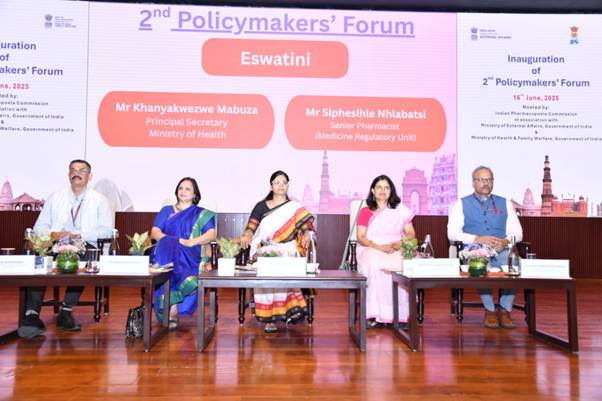
In a strategic move to deepen global cooperation on healthcare standards, India hosted the Second Policymakers’ Forum in New Delhi on June 16, 2025. The event, organized by the Indian Pharmacopoeia Commission (IPC) under the Ministry of Health and Family Welfare in association with the Ministry of External Affairs, saw participation from drug regulators and policymakers of 24 countries.
Union Minister of State for Health & Family Welfare and Chemicals & Fertilizers, Smt. Anupriya Patel, delivered the keynote address, highlighting India’s role as a global hub for affordable healthcare, its rising pharmaceutical exports, and the critical need for regulatory alignment among nations.
Forum Objective and Global Participation
The forum aimed to:
-
Enhance recognition of the Indian Pharmacopoeia globally
-
Promote India’s Pradhan Mantri Bhartiya Janaushadhi Pariyojana (PMBJP) initiative
-
Strengthen regulatory harmonization among participating nations
Delegates from 22 countries—including Kenya, Rwanda, Ethiopia, Botswana, Cuba, Barbados, and others—along with members from CARPHA, reaffirmed their interest in partnering with India on pharmaceutical standards and access to essential medicines.
Key Highlights of Smt. Anupriya Patel’s Address
-
India’s Vaccine Strength: 70% of WHO’s vaccine supply originates from India, underscoring the country’s manufacturing prowess and reliability as a global supplier.
-
Generic Drug Leadership: India supplies 14% of the generics imported by the US and houses the highest number of US FDA-approved drug manufacturing units outside the US.
-
Jan Aushadhi Initiative: The network of Jan Aushadhi Kendras has significantly lowered out-of-pocket healthcare expenses for Indian citizens, offering quality medicines at affordable prices.
-
Vaccine Maitri: India’s COVID-19 vaccine diplomacy demonstrated its commitment to global health equity, supplying vaccines to over 100 countries.
-
Regulatory Recognition: 15 countries, including Cuba most recently, now recognize the Indian Pharmacopoeia as a standard for drug regulation.
Supporting India’s Global Health Diplomacy
The forum built upon the momentum of the first edition held in August 2024, which had already led to multiple nations adopting Indian drug standards. It signals a shift toward multi-nation alignment in pharmacopeial practices, ensuring greater quality assurance, ease of trade, and faster access to life-saving drugs.
India’s “One Earth, One Health” vision is being actualized through such international engagements, where the focus is not just on exports but on capacity building, technical cooperation, and shared regulatory frameworks.
Insights from Other Leaders
Union Health Secretary Punya Salila Srivastava reinforced the government’s commitment to universal health coverage, highlighting that:
-
Over 1.75 lakh Ayushman Arogya Mandirs now provide free diagnostics and drugs.
-
The Ayushman Bharat PM-JAY scheme covers over 40% of India’s population with ₹5 lakh in annual healthcare insurance.
-
Out-of-pocket health expenditure has dropped significantly from 70% in 2004 to 40% in 2025.
She also pointed to the role of AMRIT pharmacies in making branded medicines and devices accessible at lower costs.
Forum Activities and Future Outlook
The four-day event (June 16–19, 2025) includes:
-
Technical sessions on Indian regulatory frameworks, IPC standards, and the PMBJP
-
Visits to IPC’s labs in Ghaziabad, Jan Aushadhi Kendras in Agra
-
Tours of pharmaceutical manufacturing and R&D hubs in Ahmedabad
The event also saw the launch of a digital publication commemorating IPC’s 15-year journey, showcasing India’s progress in setting global pharmaceutical benchmarks.
India’s leadership in affordable medicine production and vaccine supply continues to gain international recognition. The Second Policymakers’ Forum solidified India’s image as a trustworthy partner in global healthcare, ready to collaborate with nations for a healthier, more equitable future. With more countries recognizing the Indian Pharmacopoeia, and increased alignment in drug regulatory standards, India is helping reshape the global health ecosystem.