

In a significant revelation that challenges perceptions about large-scale illegal immigration in border regions, authorities in Bihar’s Kishanganj district have confirmed that only two individuals were flagged as “non-citizens” during the State Identification Register (SIR) verification process — and both have ultimately been included in the final citizenship roll after due verification.
The finding, emerging from one of Bihar’s most sensitive and closely monitored border districts adjoining Bangladesh and West Bengal, underscores that fears of widespread illegal infiltration may be overstated — at least in this part of the Indo-Bangladesh frontier.
Verification Drive and Findings
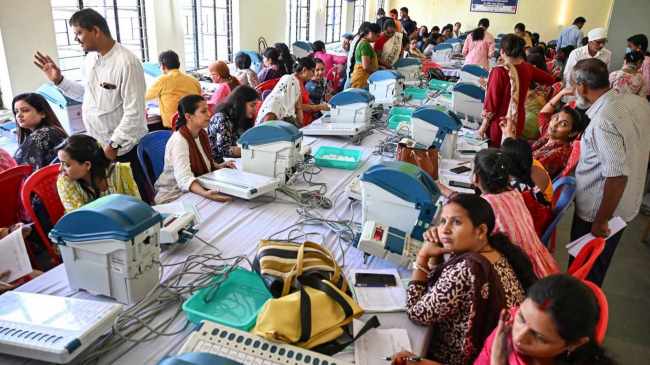
Kishanganj, a district often mentioned in debates around illegal immigration due to its geographical proximity to international borders, underwent a meticulous verification exercise under the SIR framework. The objective was to authenticate the citizenship status of residents based on documentary and demographic evidence.
Officials said that during the preliminary scrutiny, two residents were identified as “doubtful” entries due to discrepancies in age and birthplace records. However, subsequent field investigations, document checks, and local testimonies confirmed that both individuals were indeed Indian citizens. As a result, they were reinstated into the final SIR roll.
“The verification was transparent, evidence-based, and conducted in accordance with established guidelines,” said a senior district officer. “The fact that only two cases were flagged — and even those were later resolved — shows that the scale of illegal residency has been grossly exaggerated in public discourse.”
Border Sensitivity and Ground Realities
Kishanganj lies at the tri-junction of Bihar, West Bengal, and Bangladesh — a region often under the security scanner for cross-border movement. Yet, despite its demographic complexity and high migration from nearby regions for livelihood, the verification results suggest a largely stable and lawful population.
Local administrative officials attribute this outcome to improved border management, digitized identity systems, and widespread awareness among residents about maintaining valid documentation such as Aadhaar, voter ID, and ration cards.
Political and Public Reactions
The revelation has triggered varied reactions in Bihar’s political circles. Leaders of the ruling alliance hailed the findings as proof that fearmongering over “large-scale illegal immigration” in border areas is politically motivated. “This data is an eye-opener,” said a senior state minister. “It proves that people of Kishanganj are lawful citizens who have been unfairly targeted by stereotypes.”
On the other hand, opposition leaders urged continued vigilance, arguing that a single verification cycle may not be conclusive. “Border districts need constant monitoring,” said an opposition spokesperson. “While the data is reassuring, we must not become complacent.”
Civil rights activists, however, view the outcome as a vindication of their stand that arbitrary labeling of citizens as “doubtful” often leads to unnecessary anxiety among poor and minority communities. “The Kishanganj example shows that due process and ground verification matter more than political narratives,” said a local NGO worker.
What Is the State Identification Register (SIR)?
The SIR is a part of a broader state-level effort to maintain accurate records of citizenship, address, and demographic data, aligning with national identification frameworks. The process involves cross-verification of government-issued documents, field inquiries, and validation through local bodies. Unlike the NRC (National Register of Citizens) exercise in Assam, the SIR in Bihar has been conducted with an emphasis on administrative accuracy rather than exclusion.
A Message of Calm Amid Political Noise
The Kishanganj results come at a time when the issue of illegal immigration has become a polarizing subject in parts of eastern India. The minimal number of flagged cases serves as a reminder that border populations — often poor, agrarian, and diverse — deserve recognition rather than suspicion.
Local residents say the verification process was largely smooth and transparent. “Officials came, verified our documents, and cross-checked with village heads. We had nothing to fear,” said a farmer from Bahadurganj block. “For us, Kishanganj is home, and we have lived here for generations.”
Conclusion: Facts Over Fear
The findings from Kishanganj’s SIR roll tell a powerful story — one where facts triumph over fear. In a border district often viewed through the lens of suspicion, the near-absence of “non-citizens” reaffirms that effective governance, documentation, and community engagement can maintain both security and social harmony.
As Bihar continues its verification efforts in other districts, Kishanganj stands out as a model of administrative precision and restraint — a reminder that truth on the ground is often far quieter, and far more reassuring, than political rhetoric would suggest.