

India, often hailed as one of the world’s fastest-growing economies, continues to attract significant attention from global business leaders. Despite projections of moderate economic growth in 2023, with the International Monetary Fund estimating a GDP growth rate of 5.9%, a dozen global CEOs from major corporations are placing substantial bets on India’s potential. This strategic pivot comes as companies like Apple, Coca-Cola, Unilever, and Domino’s see India not only as a burgeoning consumer market but also as a hub for manufacturing and innovation. This article explores the reasons behind this optimism, the sectors driving investment, and the broader implications for India’s economic landscape.
A Bright Spot in a Global Downturn
India’s economic trajectory has been a beacon of hope amid global economic uncertainties. While Europe teeters on the brink of a potential recession and U.S. growth slows, India’s relatively stable political environment, significant infrastructure investments, and controlled inflation have made it an attractive destination for global corporations. The Centre for Economics and Business Research projects that India could surpass Germany and Japan to become the world’s third-largest economy by 2035, with a GDP of $10 trillion. This long-term potential, coupled with short-term opportunities, is driving CEOs to double down on their investments in India.
In a recent PwC Annual Global CEO Survey, 86% of India-based CEOs expressed optimism about the country’s economic growth over the next 12 months, a nearly 30% increase in confidence compared to the previous year. This sentiment is echoed by global executives, with India reclaiming its position as the fifth most favored investment destination, up from ninth in 2023. The survey highlights India’s robust fundamentals, including a youthful demographic, rising middle class, and government policies that encourage foreign investment, as key drivers of this confidence.
Key Sectors Attracting Investment
1. Technology and Smartphone Manufacturing
The technology sector, particularly smartphone manufacturing, is witnessing a significant influx of investment. Apple, under the leadership of CEO Tim Cook, reported record revenue in India for the June 2024 quarter, driven by double-digit growth in smartphones, Macs, and services. The company is expanding its footprint with new retail stores and a 60% increase in iPhone production, reaching over $22 billion in assembly value in April 2025 alone. Apple’s push aligns with the Indian government’s “Make in India” initiative, which aims to transform the country into a global manufacturing hub.
Foxconn, a key contract manufacturer for Apple, has invested $1.48 billion to support Apple’s mobile manufacturing needs and received clearance to build India’s first semiconductor manufacturing unit in Uttar Pradesh in collaboration with HCL. This move not only diversifies Apple’s global supply chain but also positions India as a critical player in the semiconductor industry. Microsoft, led by CEO Satya Nadella, is also investing heavily, with a $3 billion commitment over the next two years to expand cloud and AI infrastructure in India, anticipating a data center capacity surpassing 4,500 MW by 2030.
2. Consumer Goods and Retail
Consumer goods giants like Coca-Cola, Unilever, and Domino’s are capitalizing on India’s reviving demand following a post-pandemic slowdown. With a middle class of approximately 400 million people, India’s consumer market is projected to quadruple by 2025, driven by increasing disposable incomes and urbanization. Coca-Cola and Unilever are scaling up operations to cater to this growing demand, while Domino’s is expanding its network of outlets to capture the fast-growing quick-service restaurant market.
Amazon, which has invested nearly $11 billion in India over the past decade, is further boosting its presence with an additional $8.2 billion commitment to its cloud division in Maharashtra. This investment is driven by the rising demand for local data storage, fueled by AI-driven technologies and India’s digital transformation. Amazon’s operations in India also make it one of the country’s largest employers, with over 100,000 direct jobs created.
3. Luxury and Infrastructure
The luxury sector is also seeing increased interest, with global brands like Louis Vuitton, Christian Dior, and Prada exploring wholly owned subsidiaries or joint ventures to enter India. A Yes Bank and Assocham survey revealed that 95% of luxury brand CEOs are concerned about inadequate premium infrastructure, yet they remain optimistic about India’s booming luxury market, driven by government reforms allowing up to 100% foreign direct investment (FDI) in single-brand retail.
Infrastructure development is another focal point, with companies like Airbus deepening their presence through manufacturing, engineering, and supply chain initiatives. The Indian logistics and warehousing industry, supported by government policies and automation, is becoming more efficient and sustainable, further enhancing its appeal to global investors.
Government Policies and Economic Reforms
The Indian government’s proactive policies have been instrumental in attracting global investment. The “Make in India” campaign, launched in 2014, has bolstered manufacturing through initiatives like the Production-Linked Incentive (PLI) scheme, which has gained traction in sectors like electronics, food processing, and automobiles. India’s merchandise exports rose by nearly 50% in July 2021, reflecting the success of these policies in enhancing global competitiveness.
The One District One Product (ODOP) initiative and the National Single Window System (NSWS) further streamline investment processes, while the India Industrial Land Bank (IILB) provides a repository of industrial infrastructure information, making it easier for investors to navigate opportunities. These reforms, combined with significant infrastructure spending, have created a conducive environment for foreign companies to establish and expand operations.
Challenges and Cautions
Despite the optimism, challenges remain. Some CEOs, such as Whirlpool’s CFO James W. Peters, noted that sales in India lagged expectations due to geopolitical issues and an unusually cool summer in 2024. Regulatory complexity, high import duties, and a shortage of skilled labor are also concerns, particularly in the luxury sector, where 46% of CEOs surveyed believe current regulations are not supportive enough for scalable operations. Additionally, counterfeit goods and exchange rate volatility pose hurdles for luxury brands.
Skeptics argue that India’s growth narrative may be overstated. For instance, some analysts point out that recent GDP growth figures, while impressive, are partly skewed by the pandemic-related contraction in 2020-2021. Others caution that sustained rapid growth requires strengthening India’s macroeconomic stance and addressing infrastructure gaps.
Indian-Origin CEOs Leading the Charge
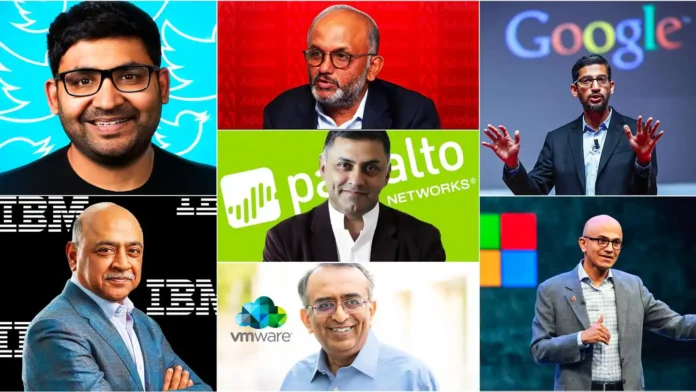
The influence of Indian-origin CEOs on the global stage further underscores India’s rising prominence. Leaders like Satya Nadella (Microsoft), Sundar Pichai (Alphabet), and Arvind Krishna (IBM) are driving innovation in technology and beyond. Nadella’s $3 billion investment in India’s cloud and AI infrastructure and Pichai’s leadership in scaling Alphabet’s operations highlight the diaspora’s role in bridging global companies with India’s growth story. The HSBC Hurun Global Indians List 2024 ranks Nadella and Pichai as the top two most influential Indian-origin leaders, overseeing companies with a combined market capitalization of over $5 trillion.
Looking Ahead
India’s combination of demographic advantages, government reforms, and a resilient economy positions it as a prime destination for global investment. As companies like Apple, Microsoft, and Amazon deepen their commitments, and consumer giants like Coca-Cola and Unilever tap into the expanding middle class, India is poised for a multi-year growth trajectory. However, addressing infrastructure, regulatory, and skill-related challenges will be crucial to sustaining this momentum.
Global CEOs’ confidence in India reflects a broader shift in the global economic order, where India is increasingly seen as a counterbalance to uncertainties elsewhere. As Gautam Adani, Chairman of the Adani Group, noted, “India’s real growth has only begun.” With strategic investments and continued reforms, India is well on its way to becoming a global economic powerhouse, offering immense opportunities for investors and businesses alike.