

Paromita Das
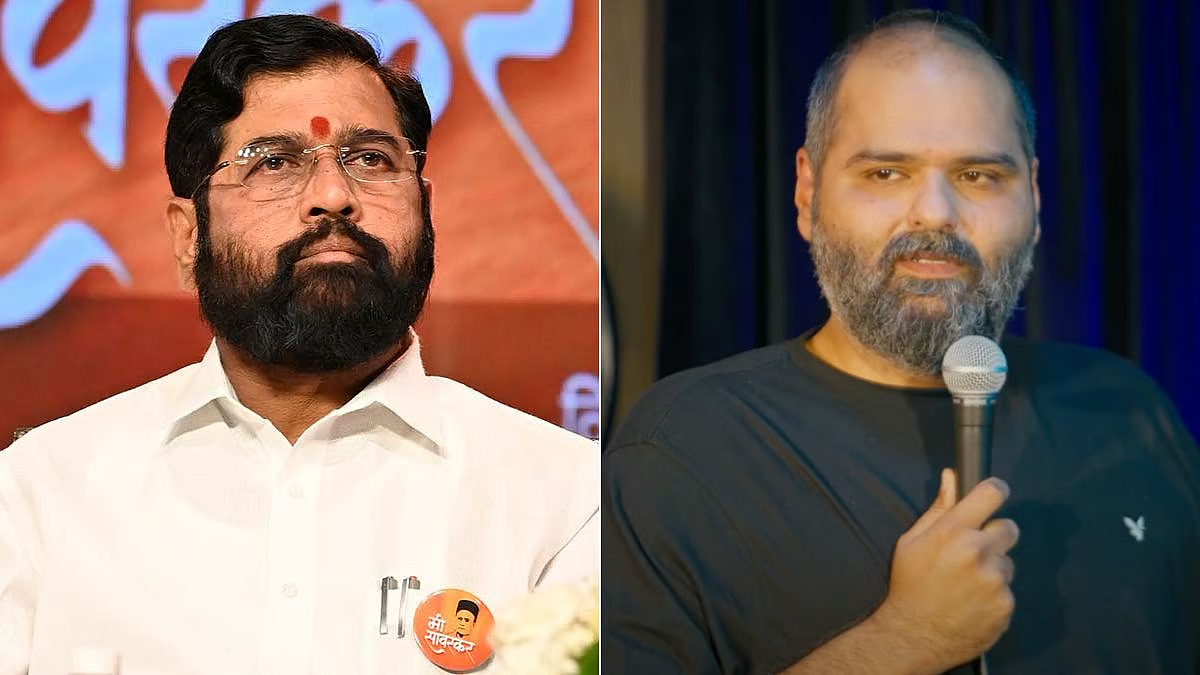
New Delhi: In a democracy like Bharat, freedom of speech and expression is enshrined in the Constitution as a fundamental right. It allows individuals to voice opinions, criticize those in power, and foster a culture of accountability and dialogue. However, this cherished freedom often walks a fine line between constructive criticism and outright defamation. The latest controversy involving comedian Kunal Kamra’s satirical song targeting Maharashtra Deputy Chief Minister Eknath Shinde underscores the ongoing debate on whether freedom of speech is being misused to malign people.
Kamra, known for his scathing political satire, shared a video on social media where he sang a parody song calling Shinde a “gaddar” (traitor) to the tune of a popular 90s Bollywood melody. While the video received mixed reactions from the public, it sparked a major backlash from Shinde’s supporters, with Shiv Sena workers (Shinde faction) vandalizing the comedy center where the show was recorded. The incident has reignited discussions on the limits of satire, the misuse of free speech, and the repercussions of such expressions in Bharat’s politically charged atmosphere.
The Incident: Kamra’s Satirical Song and the Fallout
Kunal Kamra, a comedian known for his sharp critique of political figures and institutions, posted the controversial video on social media platforms, where he mocked Eknath Shinde and labeled him a “traitor.” The reference was to Shinde’s split from the Shiv Sena, which led to the fall of the Uddhav Thackeray government in Maharashtra and the subsequent formation of a new government with the BJP.
The video, while appreciated by Kamra’s followers for its boldness, was met with outrage by Shinde’s supporters. Shiv Sena workers vandalized the comedy venue where the show was recorded and issued public threats against Kamra. In response, the police registered FIRs against both Kamra for allegedly insulting Shinde and the Shiv Sainiks for vandalism.
Reacting to the controversy, Deputy CM Shinde condemned Kamra’s actions, terming them as “crossing the limits of satire.” Speaking at a Marathi news event, Shinde said, “There is freedom of expression. We understand satire. But there should be a limit. This is like taking a ‘contract’ to speak against someone. Every action has a reaction.” While he distanced himself from justifying vandalism, his remarks suggested that Kamra’s song was not merely a case of humor but a targeted attack on his political image.
Freedom of Speech: Where Do We Draw the Line?
The Kamra-Shinde controversy raises a critical question: where does satire end and defamation begin? While freedom of speech is a cornerstone of democracy, it is not absolute. The Indian Constitution imposes reasonable restrictions to prevent hate speech, defamation, and harm to public order. Yet, the subjective nature of these restrictions often blurs the boundaries between what is permissible and what is not.
Critics of Kamra argue that his parody song was not satire but an act of intentional defamation aimed at maligning Shinde’s reputation. They believe such acts, disguised as humor, can erode the dignity of public figures and fuel public hostility. On the other hand, Kamra’s supporters contend that satire is a legitimate form of expression and a vital tool for holding those in power accountable. They view the backlash, including threats and vandalism, as an overreaction that stifles dissent and discourages artists from speaking truth to power.
This is not the first time Kamra has been at the center of a free speech debate. His past criticisms of the Prime Minister, the Supreme Court, and prominent media personalities have frequently sparked controversies, earning him both praise and condemnation.
The Role of Political Sensitivity in Suppressing Expression
In Bharat’s highly polarized political environment, public figures and political parties often react strongly to criticism, viewing it as a direct attack on their legitimacy. The Shinde faction’s response to Kamra’s song—vandalism and threats—highlights the growing intolerance toward dissent. Such reactions create a chilling effect, discouraging individuals from expressing critical views for fear of reprisals.
However, the misuse of free speech cannot be ignored either. In the age of social media, where content spreads rapidly, individuals wield significant power to shape public perceptions. When this power is used irresponsibly, it can lead to misinformation, defamation, and polarization. Comedians, satirists, and commentators must recognize their influence and ensure that their work, while critical, remains rooted in facts and avoids personal attacks.
Balancing Satire and Accountability
The controversy surrounding Kunal Kamra and Eknath Shinde reflects a larger challenge in modern democracies—balancing freedom of speech with accountability and respect. While satire is a powerful tool for critique, it must be wielded responsibly. Personal attacks disguised as humor can undermine the credibility of satire and alienate audiences.
At the same time, political figures and their supporters must recognize that criticism is an integral part of democracy. Intolerance toward dissent, as evidenced by the vandalism in this case, sets a dangerous precedent and risks turning public discourse into a battleground of threats and intimidation. Political leaders must lead by example, responding to criticism with dialogue rather than suppression.
The law also has a critical role to play. FIRs against both Kamra and the vandals demonstrate the need for impartial enforcement of the law. However, the judiciary and law enforcement agencies must ensure that freedom of speech is protected while holding individuals accountable for crossing the line into defamation or incitement.
Toward a Mature Discourse
The Kamra-Shinde controversy serves as a stark reminder of the complexities surrounding freedom of speech in Bharat. As a democratic nation, Bharat must strive to create an environment where individuals can express their views freely without fear of retaliation. At the same time, those wielding the power of expression must act responsibly, recognizing the impact of their words and actions.
For a mature democracy, the key lies in fostering a culture of dialogue and mutual respect. Criticism, whether through satire or other forms of expression, should aim to enlighten and inform rather than malign. Similarly, political figures must embrace dissent as a hallmark of democratic governance, responding to it with grace and reason.
The path forward requires collective introspection—by artists, citizens, and politicians alike—to ensure that freedom of speech remains a tool for progress and accountability, not a weapon for defamation and division. Only then can Bharat truly uphold the principles of democracy and justice enshrined in its Constitution.
The post Freedom of Speech or a Tool to Malign? The Controversy Surrounding Kunal Kamra’s Satirical Song appeared first on Global Governance News- Asia's First Bilingual News portal for Global News and Updates.