

By Subhash Chandra Agrawal
(Guinness World Record Holder for Most Letters Published in Newspapers & RTI Consultant)
India today stands at a crucial policy crossroads. Congested roads, shrinking parking spaces, rising pollution levels, and an alarming shift toward status-driven consumption of large personal vehicles have collectively pushed our urban centres to the brink. While many governments show intent by doubling parking fees or announcing new transport schemes, some contradictory policies—such as reducing GST on small cars—continue to encourage private vehicle ownership.
It is time India adopts a transformative, people-friendly mobility policy that reduces dependence on big cars and sharply improves access to economical, eco-friendly transport. The shift must begin by promoting a new generation of air-conditioned, modern, safer three-wheelers that can genuinely replace a large section of cars on Indian roads.
Why India Needs a New Car Policy
India’s current automobile ecosystem is fundamentally designed around car promotion, not mobility optimisation. This approach benefits manufacturers—but burdens public infrastructure and the common citizen.
Key contradictions include:
- GST on small cars slashed from 28% to 18%, despite Delhi doubling parking charges to discourage car usage.
- Heavy incentives that make cars appear as necessities rather than the luxury items they are.
- SUV-driven consumption encouraged, even though former Environment Minister Jairam Ramesh aptly termed SUVs as “Socially Useless Vehicles.”
- Political decisions that allow luxury car purchases by government departments—even during times of financial stress, as seen in Telangana (2021) and Maharashtra (2020).
India urgently needs a rational, sustainable policy that matches our road realities and economic priorities.
A Smarter Alternative: Air-Conditioned Modern Auto-Rickshaws
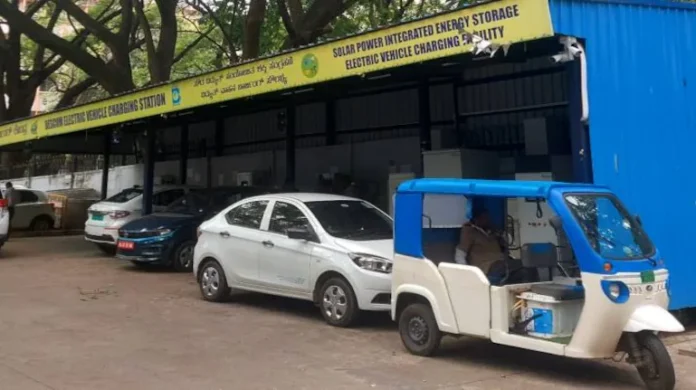
Electric and CNG three-wheelers today offer a clean, cost-efficient and compact mobility option. They are environmentally superior, require less parking space, and are ideal for middle-class urban commuters—especially if upgraded with air-conditioning, safer cabin design, and structured pricing.
Many nations, including Mexico, have witnessed dignitaries preferring high-end rickshaws over cars for practicality and environmental reasons. India must take a cue from such examples by:
- Introducing private AC three-wheelers as a mainstream mobility choice
- Incentivising manufacturers to switch production from oversized cars to three-wheelers and metro components
- Encouraging citizens to adopt compact, eco-friendly vehicles over status-symbol cars
This will reduce congestion, curb pollution, and democratise urban mobility.
Discouraging Production and Purchase of Costly Cars
A revised national policy must strongly discourage cars priced above ₹10 lakh, through the following mechanisms:
1. Higher Taxation
- Double road tax and insurance premium on expensive cars
- Charge full import duty on all foreign cars—including those “gifted” to Indian celebrities
2. Ban on Car Loans Above ₹10 Lakh
For luxury vehicles, buyers must pay upfront—ending the culture of easy-credit-driven extravagance.
3. Standardised Car Variants
Two variants per model are enough:
- Lx (basic)
- Vx (luxury features)
Plus a third for automatic transmission.
The current flood of multiple confusing variants serves no rational consumer purpose.
Government Must Lead by Example
Except for top constitutional offices (President, Vice-President, Prime Minister and foreign dignitaries), all government purchases must be compulsorily restricted to economy cars or AC three-wheelers.
Luxury fleets by state departments—often costing crores—send the wrong message to taxpayers and contradict the principles of austerity and public accountability.
Diesel Cars Must Be Fully Prohibited
Diesel, meant for public transport and freight, must not subsidise private luxury. With diesel and petrol procurement costs nearly identical, the artificially lower diesel price is misused by private car owners.
A Supreme Court-aligned approach is necessary:
- Total ban on diesel cars across categories
- Promotion of CNG and EV vehicles only
- Removal of caps on number of auto-rickshaws permitted in major cities like Delhi
Pollution & Scrappage Policy: A Practical Alternative
The current rule of scrapping cars after 10 years (diesel) and 15 years (petrol) penalises especially senior citizens, who often use their vehicles sparingly.
A better approach includes:
- Mandatory computerised fitness tests every 10 years at authorised workshops
- Fit cars should continue with distinct coloured number plates
- Workshops must offer free pollution-checking, since equipment costs are low
This will reduce waste, allow safe vehicles to remain in use, and curb profiteering by the automobile industry.
Standardising Consumables & Regulating Spare-Part Costs
India must enforce uniform standards for tyres, batteries, and other consumables—allowing cross-compatibility and drastically lowering costs.
Additionally:
- Spare-parts pricing must be regulated by the National Anti-Profiteering Committee
- GST on spare parts should be uniform
- Manufacturers must not enjoy monopoly profits through inflated MRP pricing of components
India Must Prioritise Mobility, Not Car Culture
India should not replicate the Western obsession with car ownership—especially at a time when climate concerns, urban congestion, and economic disparities are rising.
A decisive policy shift is required that:
- Encourages metro expansion
- Promotes AC three-wheelers as practical alternatives
- Discourages costlier cars through taxation, loan restrictions, and public awareness
- Standardises the automobile ecosystem for lower costs and higher consumer benefit
If India reforms its mobility policies today, we can build a cleaner, safer, more equitable urban future—where transport exists to serve people, not the other way around.