

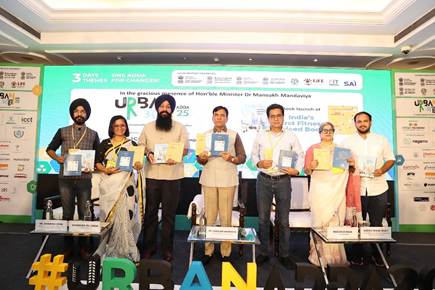
In a major initiative to promote sustainable urban living and healthier lifestyles, Union Minister for Health and Family Welfare and Chemicals & Fertilizers, Dr. Mansukh Mandaviya, inaugurated ‘Urban Adda 2025’ today. The event was marked by the launch of groundbreaking books on cycling, aiming to reposition cycling as a critical tool in India’s urban and environmental transformation.
Held in the national capital, Urban Adda 2025 brought together policymakers, urban planners, health experts, environmentalists, and civil society stakeholders in a vibrant dialogue around active transport, green mobility, and the future of urban India.
Cycling as a Catalyst for Change
Dr. Mandaviya, known for personally endorsing cycling as a daily mode of transport, emphasized that cycling is not only an eco-friendly alternative but also a powerful enabler of public health and urban resilience.
“Cycling empowers individuals and transforms cities. It reduces pollution, prevents lifestyle diseases, and makes our urban spaces livable and breathable,” he said.
In line with the Fit India Movement and the Swachh Bharat Mission, the Minister encouraged citizens, especially the youth and working professionals, to adopt cycling for short-distance commuting and wellness.
Books Launched: Roadmaps to a Healthier Future
At the event, Dr. Mandaviya launched two pivotal publications focused on cycling:
-
“Pedal Power: A Blueprint for Cycling-Friendly Cities”
– A comprehensive guide for urban planners, municipal bodies, and policymakers to design inclusive, safe, and accessible cycling infrastructure. -
“Cycles of Change: Stories of India’s Urban Cyclists”
– A narrative collection of personal journeys, grassroots innovations, and community-driven cycling movements from across the country.
Both books aim to bridge the policy-practice gap and inspire a cultural shift toward non-motorized transport in India’s urban ecosystems.
Urban Adda 2025: A Platform for Action
Urban Adda 2025 served as a vibrant platform for:
-
Deliberations on urban transport reforms
-
Best practices in cycling infrastructure
-
Community engagement for active mobility
-
Case studies from Indian cities and global benchmarks
The event featured panel discussions with urban development experts, live exhibits of innovative cycling designs, and interactive booths on urban health and safety.
A Minister Who Leads by Example
Dr. Mandaviya, often seen cycling to Parliament and public events, reiterated that cycling is not merely symbolic but a practical solution to many of India’s urban challenges. From decongesting roads to cutting fuel imports and tackling non-communicable diseases, cycling offers multi-dimensional benefits aligned with India’s development goals, including:
-
Climate action targets
-
Sustainable Development Goals (SDGs)
-
National Urban Transport Policy
-
Viksit Bharat @2047 vision
Future Roadmap
The Minister announced that his Ministry, in coordination with the Ministry of Housing and Urban Affairs, would support pilot programs for cycling corridors, bike-sharing systems, and public-private partnerships in cities across India. Emphasis will also be placed on cycling safety, dedicated lanes, public awareness, and linking cycling with metro and bus network.