

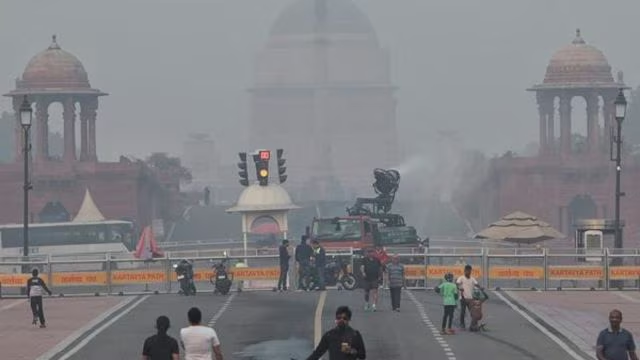
On 03 November 2025, Delhi’s air quality deteriorated significantly, with the Air Quality Index (AQI) registering in the “very poor” category across most monitoring stations, prompting health advisories and renewed concerns over the city’s persistent pollution crisis.
Key AQI Readings and Conditions
AQI levels were reported between 350 and over 400 in several locations. Areas such as Wazirpur recorded alarming readings of up to 439, entering the “severe” category. The main contributors to the pollution were high concentrations of PM2.5 and PM10 pollutants, with the absence of wind and low temperatures acting as a trap, keeping toxic particles close to the ground.
Experts compared the health impact of breathing Delhi’s polluted air on this day to smoking approximately seven cigarettes, owing to the high particulate matter present in the atmosphere.
Health Impact and Warnings
Doctors and environmental experts have issued advisories for vulnerable groups including children, the elderly, and people with pre-existing respiratory or heart conditions. Symptoms such as burning eyes, sore throat, breathlessness, and reduced visibility were reported by many residents.
Primary Causes
-
Crop residue burning in neighbouring states
-
Vehicle and industrial emissions
-
Construction and road dust
-
Weather factors like low wind speed and temperature inversion
These factors collectively contributed to the toxic haze enveloping the national capital.
Government & Public Response
Health advisories have been issued urging people to minimize outdoor activities, especially during peak pollution hours. Schools may consider shifting to hybrid or remote modes if pollution levels persist. Authorities are also urging residents to use protective masks outdoors and air purifiers indoors.
The pollution is expected to remain in the “very poor” or “severe” category over the next 24 to 48 hours unless weather conditions improve significantly.
Steps to Protect Yourself
-
Avoid strenuous outdoor activities
-
Use N95 or KN95 masks when outdoors
-
Run air purifiers indoors and keep living spaces sealed from outside air
-
Stay hydrated and include respiratory-boosting foods in your diet
As Delhi once again grapples with the annual air quality crisis, experts urge long-term measures including stricter enforcement of construction dust norms, cleaner fuel adoption, and regional coordination to tackle stubble burning and vehicular emissions effectively.