

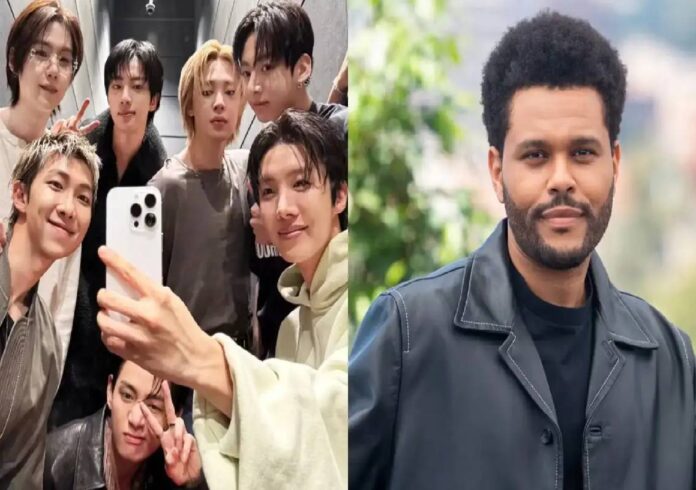
New Delhi: Winning a Grammy Award is considered one of the highest honours in the global music industry. However, not every artist has embraced the Recording Academy’s decisions. Over the years, several internationally acclaimed musicians have openly criticised the Grammy Awards, rejected nominations or even boycotted the ceremony, citing concerns over transparency, fairness and representation. Recent developments involving BTS have once again brought the debate over the Grammys into the spotlight.
Here is a look at seven major artists who publicly opposed or refused to accept Grammy decisions.
BTS
Global K-pop sensation BTS recently announced that they will not submit their music for consideration at the 2027 Grammy Awards.
The group objected to the Recording Academy’s newly introduced Best Asian Pop Music Performance category, saying music should not be judged based on language or region. Despite receiving multiple Grammy nominations over the years, BTS has never won a Grammy, making their decision one of the biggest recent rebukes of the awards.
The Weeknd
Canadian singer The Weeknd became one of the Grammys’ strongest critics after his blockbuster album After Hours and hit single Blinding Lights received zero nominations in 2021.
Calling the Grammys “corrupt”, he later announced that he would no longer submit his music for Grammy consideration. Although he eventually returned to perform at a later ceremony, his criticism led to widespread debate about the Academy’s voting process.
Drake
Rapper Drake has repeatedly questioned the relevance of award shows.
He withdrew his Grammy nominations in 2022 and has argued that artists should not rely on awards for validation. Drake has often criticised the Recording Academy’s selection process and has encouraged musicians to focus on connecting with audiences instead of chasing trophies.
Frank Ocean
Singer-songwriter Frank Ocean chose not to submit his critically acclaimed album Blonde for Grammy consideration.
He criticised the Recording Academy for failing to represent modern music and questioned whether the institution remained relevant to younger generations of artists and listeners.
Jay-Z
Hip-hop icon Jay-Z has publicly criticised the Grammys on several occasions.
While accepting the Dr. Dre Global Impact Award in 2024, he questioned the Academy’s voting decisions, pointing out that some of the most successful artists had never won major awards despite their global impact. His remarks reignited conversations about fairness and recognition within the music industry.
Kanye West
Kanye West has had a turbulent relationship with the Grammy Awards despite being one of the ceremony’s most awarded artists.
Over the years, he has criticised the Recording Academy’s voting process and, in 2020, even posted a controversial video appearing to show one of his Grammy trophies inside a toilet, expressing frustration with the music industry’s institutions.
Zayn Malik
Former One Direction member Zayn Malik accused the Recording Academy of favouritism in 2021.
He claimed the Grammys lacked transparency and suggested that artists without influential connections often struggled to receive recognition. His comments added to the growing list of musicians questioning the credibility of the awards.
Why the Grammys continue to face criticism
The Recording Academy has faced criticism over several issues, including alleged lack of transparency, genre classifications, diversity and voting procedures.
Following controversies involving artists such as The Weeknd and BTS, the Academy introduced reforms, including changes to its nomination process and the addition of new award categories. However, debates over fairness and representation continue to shape discussions around the music industry’s most prestigious awards.
Conclusion
From BTS refusing to submit their music to The Weeknd’s boycott and public criticism from artists like Drake, Jay-Z and Kanye West, the Grammy Awards have repeatedly found themselves at the centre of controversy. While the Recording Academy continues to introduce reforms, many leading musicians believe further changes are needed to ensure broader representation and greater transparency in recognising global musical talent.