

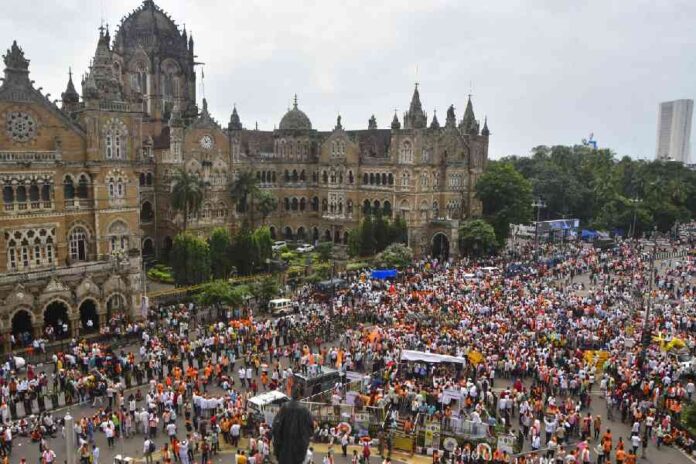
The Bombay High Court has strongly criticized the Maratha quota protesters who brought Mumbai to a grinding halt during recent demonstrations. The court expressed its disapproval of the disruptions caused by large-scale protests, which not only blocked roads and halted public transport but also left millions of commuters stranded across the city. The bench noted that while citizens have the right to protest, such demonstrations cannot come at the cost of paralyzing an entire metropolis and disrupting daily life.
During the hearing, the court underscored that Mumbai is the financial capital of the country, where millions depend on daily connectivity for livelihood, medical needs, and essential services. Bringing the city to a “standstill,” the judges observed, inflicts economic losses and endangers lives, particularly when ambulances and emergency services are delayed due to traffic blockages. The court warned that exercising democratic rights must always be balanced with the fundamental rights of others, including the right to movement and access to essential services.
The Maratha quota agitation has been escalating in Maharashtra, with protesters demanding immediate implementation of reservations in education and government jobs. While the state government has been engaging in negotiations, the protests have spilled over onto the streets, affecting public order in Mumbai, Pune, and other major cities. The court remarked that such demonstrations, when turned disruptive, cause more harm than good to the very cause being advocated, as public sympathy often diminishes when ordinary citizens are inconvenienced.
The bench also questioned the role of law enforcement, asking whether police had taken adequate steps to prevent large-scale traffic disruptions and whether advance measures were planned to ensure smooth movement across the city. The court directed authorities to strike a balance between maintaining law and order and safeguarding the constitutional rights of citizens to protest peacefully.
This development comes at a sensitive time, as the Maratha community continues to press for quota benefits under the Socially and Educationally Backward Classes (SEBC) category. Previous attempts to implement the quota have been struck down by the Supreme Court, which ruled that reservations cannot exceed the 50 percent ceiling. The ongoing agitation has therefore turned into a political flashpoint, with parties under pressure to find a legally sustainable solution that addresses the demands of the community while complying with judicial mandates.
The Bombay High Court’s intervention has sent a strong message to protesters and authorities alike: that while democratic dissent is protected, holding a city hostage is not acceptable. The court emphasized that protests should be conducted in designated areas where citizens can voice their concerns without jeopardizing the functioning of the state’s economic hub.
As the standoff between protesters and the state government continues, the judicial reminder highlights the urgent need for dialogue, structured negotiation, and lawful protest methods that do not compromise the rights of others