

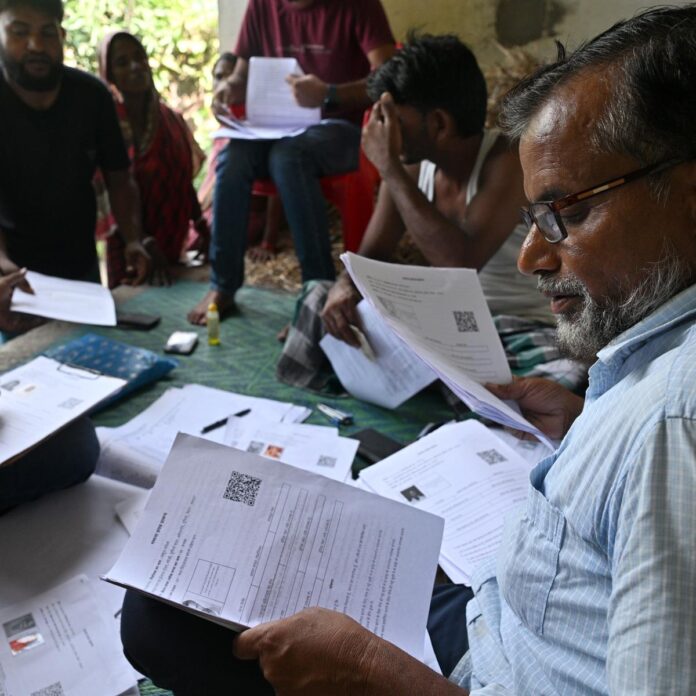
The Election Commission of India (ECI) has issued a significant number of notices during the Special Intensive Revision (SIR) of electoral rolls, with the majority concentrated in Bihar’s eight border districts: East Champaran, West Champaran, Madhubani, Kishanganj, Purnia, Katihar, Araria, and Supaul. These notices, directed at voters with unsatisfactory or missing documents, aim to verify eligibility, including citizenship, amid the ongoing revision process. The focus on these porous border areas has sparked a robust response from local authorities, though it has also ignited debates about the fairness and intent behind the ECI’s actions, prompting calls for closer examination of the process.
Historical Context Fuels Electoral Debate
The strategic context of this notice surge ties to Bihar’s history of electoral irregularities, particularly in border regions where migration and documentation issues have long posed challenges. The SIR, designed to update voter lists and remove ineligible entries, targets districts adjacent to Nepal and West Bengal, where discrepancies in enumeration forms have raised flags. The ECI’s emphasis on physical delivery of notices and hearings reflects a rigorous approach, yet past criticisms of rushed revisions and political bias—especially from opposition parties—add complexity. X posts reveal a mix of support for cleaning voter rolls and accusations of targeting specific communities, highlighting the contentious nature of this electoral overhaul.
Implications Stir Political and Social Tensions
The implications of this notice concentration span political, social, and operational dimensions. Politically, the focus on border districts has fueled allegations of disenfranchisement, with parties claiming it disproportionately affects Muslim-majority areas like Kishanganj, potentially influencing upcoming elections. Socially, the scrutiny risks alienating communities, particularly if citizenship doubts persist without clear resolution, while straining local administration. Operationally, the process of verifying over three lakh notices challenges the ECI’s capacity, testing the narrative of a transparent and fair revision promoted by officials. This invites skepticism about the balance between integrity and inclusivity in the electoral process.
Challenges Test Implementation Integrity
Significant challenges arise as the ECI navigates this revision. Operationally, ensuring accurate document scrutiny and timely hearings across remote districts demands substantial resources, with potential errors risking legal challenges. Socially and economically, the process could disrupt livelihoods if hearings require prolonged absences, while political tensions may escalate if perceived as biased. Policy risks include Supreme Court intervention or public protests, and the establishment’s portrayal of a meticulous cleanup invites doubt, given historical accusations of partisan intent. The complexity suggests a need for transparent oversight, yet logistical constraints may undermine trust.
Opportunities Emerge for Electoral Reform
Despite the obstacles, opportunities exist for positive change. Politically, a successful revision could strengthen electoral credibility, boosting public confidence if handled equitably. Socially, addressing documentation gaps might integrate marginalized voters, fostering inclusion through outreach programs. Policy-wise, this could lead to improved voter registration systems or bilateral agreements with neighboring countries to verify citizenship, setting a precedent for future revisions. Innovative approaches, such as digital verification platforms, could enhance efficiency. Whether this process rebuilds trust or deepens divisions depends on execution, but it underscores the potential to refine democratic mechanisms.
Outcome Hinges on Fairness and Transparency
The ECI’s surge of notices in Bihar’s eight border districts during the SIR process highlights a critical effort to purify electoral rolls, focusing on document and citizenship issues. While the initiative aims to uphold integrity, it risks political and social backlash, particularly in vulnerable regions. Amid operational challenges and policy risks, opportunities for reform offer a path forward, though the establishment’s narrative of a flawless revision warrants critical review given past controversies. The outcome—whether it strengthens electoral trust or exposes systemic flaws—rests on the ECI’s ability to ensure fairness and transparency throughout this contentious process.