

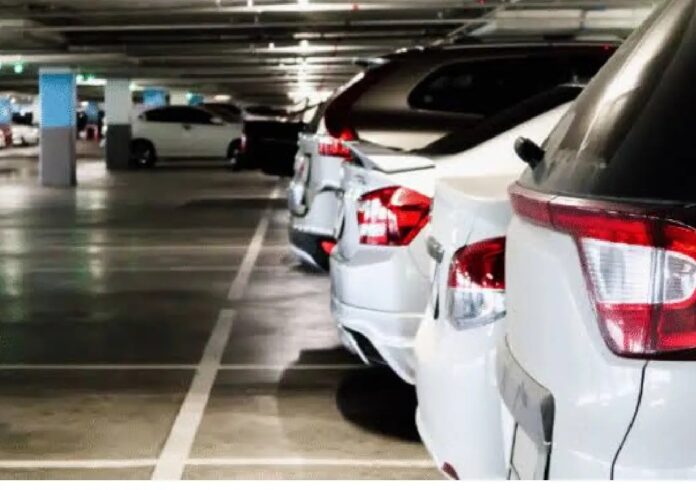
Property owners in Bengaluru could soon receive property tax exemptions of up to 35 years if they convert their vacant plots into public parking facilities, under a proposed parking policy aimed at easing the city’s growing parking crisis.
The proposed Greater Bengaluru Area Parking Rules, 2026, prepared by the Greater Bengaluru Authority (GBA) and the Bengaluru Traffic Police, seeks to increase off-street parking through private participation while making on-street parking more regulated and expensive.
The draft policy was discussed during a high-level meeting chaired by the Urban Development Department (UDD). Officials said further consultations will be held before the government releases a draft notification inviting public feedback.
Tax incentives to encourage private participation
One of the policy’s key highlights is a long-term property tax exemption for landowners who develop public parking facilities on vacant land instead of leaving it unused.
Under the proposal, owners constructing automated parking structures with a minimum capacity of 200 passenger car units (PCUs) will receive a 35-year property tax exemption. Multi-level parking facilities of the same capacity will qualify for 25 years, while smaller automated or multi-level parking structures will receive 15 years of exemption. Surface parking lots will be eligible for a five-year tax waiver.
Once the exemption period ends, owners will only be required to pay service charges.
Conditions for availing the benefit
The incentives come with strict eligibility conditions. Parking facilities must operate for at least 250 days a year and 12 hours daily, maintain the prescribed parking capacity, share real-time parking data with the GBA, and remain dedicated exclusively to public parking. Sites with mixed residential or commercial use will not qualify.
Paid parking to become the norm
The draft policy also proposes ending free on-street parking across Bengaluru, except for bicycles and designated auto-rickshaw stands.
Minimum parking charges have been proposed based on road categories. On busy Category-A roads, motorists may have to pay at least ₹80 per hour for on-street parking.
Residents parking vehicles on residential streets may also need annual parking permits, with proposed fees of ₹15,000 for hatchbacks, ₹20,000 for sedans, and ₹25,000 for SUVs.
Stricter enforcement planned
The policy further proposes banning non-residential on-street parking within 150 metres of Metro and suburban railway stations, with the restriction likely to expand to 500 metres once additional off-street parking is created.
It also introduces ‘No Tolerance Zones’ on major roads, where illegal parking will be strictly enforced. Parking operators may be authorised to issue violation notices and, with police approval, tow or clamp illegally parked vehicles.
If approved, the policy is expected to significantly reshape Bengaluru’s parking ecosystem while encouraging private investment in public parking infrastructure.