

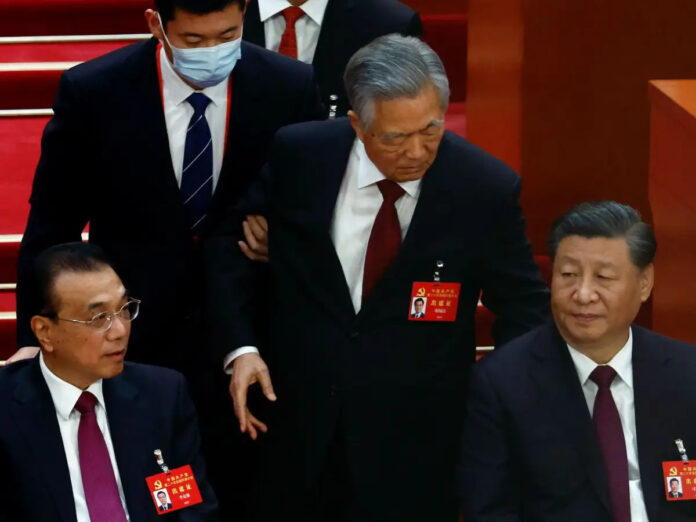
Speculation about a “silent coup” against Chinese President Xi Jinping has intensified, driven by his prolonged public absences, military purges, and reported factional maneuvering within the Chinese Communist Party (CCP). Key figures, including General Zhang Youxia and elders tied to former President Hu Jintao, are allegedly challenging Xi’s centralized authority, with Wang Yang emerging as a potential successor. This article examines the evidence, key players, implications, and challenges surrounding these claims, drawing on recent reports and social media sentiment to assess the likelihood of a political shift in Beijing.
Evidence of a Silent Coup
Xi’s Public Absences
-
Prolonged Disappearances: Xi was absent from public view for two weeks in late May to early June 2025, with no statements or media coverage, a departure from his usual prominence in state outlets like People’s Daily. He also missed the BRICS summit in Brazil, breaking a 12-year attendance record.
-
Unusual Circumstances: During a State Council oath-taking ceremony, Xi’s chair was notably empty, fueling speculation of internal strife, with social media posts citing these absences as evidence of a power struggle.
Military and Political Purges
-
Military Shifts: Key Xi loyalists, including National Security Advisor Zheng Yanshi, General Miao Hua, and Vice-Chairman He Weidong, were dismissed over corruption allegations. Dozens of generals have vanished or been replaced, signaling dissent within the People’s Liberation Army (PLA).
-
Politburo Changes: The removal of Ma Xingrui, a Xi ally and Xinjiang Party Secretary, marked a significant blow, with his replacement by Chen Xiaojiang attributed to party elders’ influence.
Factional Maneuvering
-
Beidaihe Conclave: The secretive Beidaihe meeting reportedly focused on Xi’s leadership, with suggestions of a “military mutiny” and an ongoing “coup” to restore collective leadership.
-
Leaked Successor List: Reports claim a successor list names Politburo Standing Committee member Ding Xuexiang as the next General Secretary and Shanghai Party Secretary Chen Jining as Premier, though their ties to Xi raise skepticism.
Key Players and Factions
Anti-Xi Forces
-
Zhang Youxia: As Vice Chairman of the Central Military Commission, General Zhang, once a Xi ally, is reportedly leading military resistance, backed by reformist elders.
-
Hu Jintao’s Faction: Elders linked to former President Hu Jintao, publicly humiliated by Xi in 2022, are pushing for collective leadership to curb Xi’s dominance.
-
Wang Yang: A former Vice Premier and technocrat, Wang is seen as a reformist, pro-market successor, less confrontational than Xi.
Xi’s Loyalists
-
Ding Xuexiang: Xi’s long-time aide, his rumored elevation to General Secretary is contentious due to his lack of local governance experience.
-
Chen Jining: Tied to Xi’s Tsinghua clique, Chen’s potential premiership raises questions about factional loyalties given his Shanghai clique connections.
Implications
Domestic Impact
-
Political Stability: A successful coup could lead to a transition at the Fourth Plenary Session or the 21st Party Congress, shifting the CCP toward collective leadership, though Xi’s entrenched power makes this uncertain.
-
Economic Policy: Reformist leadership could address economic challenges like youth unemployment and national debt, potentially boosting market-driven policies.
Global Consequences
-
Taiwan and U.S.-China Relations: A power shift could soften China’s stance on Taiwan, favoring diplomacy and impacting U.S.-China dynamics.
-
BRI and Global Influence: Changes in leadership could affect China’s Belt and Road Initiative, altering projects and international relations.
Challenges
Xi’s Entrenched Power
-
Consolidation: Xi’s 13-year rule and control over key CCP bodies make a coup unlikely without a major misstep, as noted by analysts.
-
Military Control: Despite purges, Xi’s retention of key figures like Zhang Youxia suggests continued influence over the PLA.
Opaque System
-
Lack of Transparency: The CCP’s secrecy fuels rumors but obscures verifiable facts, complicating assessments of coup claims.
-
Unreliable Sources: Reports from dissident outlets often lack credibility, as seen in debunked 2022 coup rumors.
Social and Political Risks
-
Public Sentiment: Social media reflects divided views, with some supporting anti-Xi sentiment due to economic woes, while others dismiss coup claims as speculative.
-
Elite Resistance: Factional pushes risk destabilizing the CCP, potentially leading to systemic upheaval.
Opportunities
Political Reform
-
Collective Leadership: A shift could restore checks and balances, reducing autocratic control and aligning with reformist goals.
-
Economic Stabilization: Reformist policies could address stagnant sectors, boosting investor confidence.
Global Realignment
-
Diplomatic Opportunities: A less confrontational leadership could improve ties with the West, facilitating trade and climate cooperation.
-
Regional Stability: A moderated stance on regional issues could reduce tensions, benefiting global initiatives.