

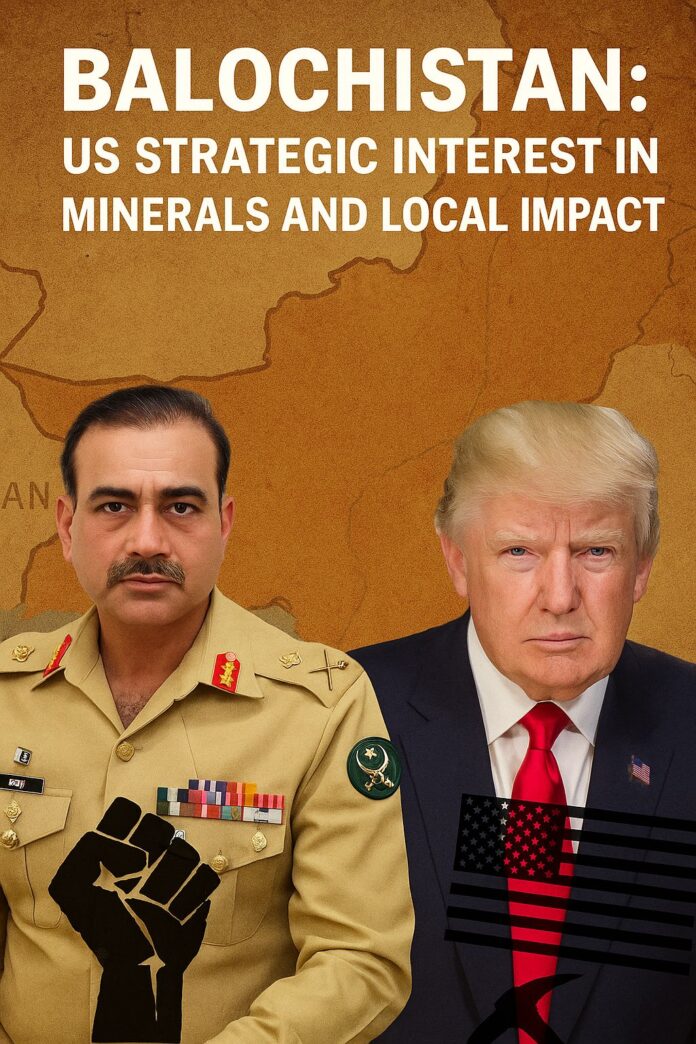
Balochistan, Pakistan’s largest but least developed province, has emerged as a focal point in the global struggle for critical mineral resources. With its vast deposits of copper, gold, lead, zinc, and other strategic minerals, the region is now at the crossroads of international diplomacy, regional conflict, and local resistance. The renewed involvement of the United States highlights both economic ambitions and geopolitical rivalries playing out against the backdrop of longstanding Baloch grievances.
US Strategic Interest in Balochistan’s Minerals
The United States is seeking to diversify supply chains for critical minerals to reduce dependence on China. In 2025, U.S.–Pakistan trade talks expanded into mining and energy, with Washington showing interest in ventures such as Reko Diq. Recent diplomatic engagements, including those involving Pakistan’s military leadership and former U.S. President Trump, underscored offers of access to mineral-rich sites as part of broader economic and strategic cooperation.
Reko Diq: A Global-Scale Project
Reko Diq is one of the world’s largest undeveloped copper-gold deposits, with nearly 6 billion tonnes of ore reserves. Following years of legal disputes, the project has been revived with financing from the IFC (\$1 billion) and Asian Development Bank (\$410 million). Barrick Gold, leading the consortium, has positioned Reko Diq not only as a mining venture but also as an economic lever in U.S.–Pakistan relations.
Local and Regional Implications
Despite the scale of these projects, local communities in Balochistan remain marginalized. Historically, resource extraction has occurred with little benefit to the province itself, fueling resentment and insurgency. Experts warn that new U.S.–Pakistan mining deals may intensify militarization and repeat past mistakes of exclusionary development seen under Chinese-led projects like Saindak and Duddar.
Summary of Key Insights
| Category | Key Insights |
|---|---|
| US Motives | Secure critical minerals, counter China’s dominance, and support defense supply chains |
| Project Focus | Reko Diq: massive copper-gold reserve with global financing |
| Trade Diplomacy | Mining sector embedded in U.S.–Pakistan trade agreements |
| Local Impact | Marginalization, risk of unrest, and demands for sovereignty |
| Regional Context | Chinese-led projects (Saindak, Duddar) signal external control over Balochistan’s resources |
Balochistan’s mineral wealth is no longer a local or even regional issue—it has become an arena for global competition. While U.S. involvement could reshape Pakistan’s economic landscape, its success will depend on whether local populations are given a fair share and a voice in development. Otherwise, the cycle of extraction without empowerment may deepen unrest and instability in the province.