

The Election Commission of India (ECI) has firmly rejected allegations that Muslim voters were deliberately excluded from Bihar’s electoral rolls, terming such claims “communal, baseless, and misleading.” The clarification comes after political parties and social groups accused officials of bias in the ongoing Summary Revision of Electoral Rolls (SIR) process.
In a detailed statement, the ECI emphasized that the voter verification and revision exercise being carried out in Bihar is a routine, transparent, and data-driven process conducted under well-established norms. It added that “no section of society is being targeted or excluded” and that allegations suggesting otherwise are an attempt to “communalize an administrative exercise.”
ECI Defends SIR Process as Transparent and Inclusive
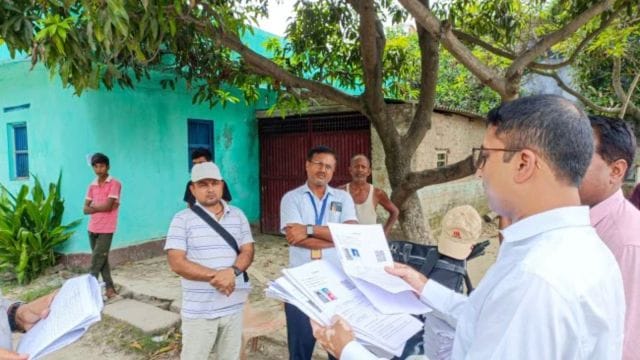
The Summary Revision of Electoral Rolls, conducted ahead of the 2025 Bihar Assembly elections, aims to update voter lists by adding new eligible voters, deleting names of the deceased, and correcting inaccuracies. The ECI explained that this process is supervised by Booth Level Officers (BLOs) and overseen by District Election Officers, ensuring accuracy through multiple verification stages.
According to the Commission, field-level checks, house-to-house verification, and public display of draft rolls are standard parts of the exercise. Citizens from all communities, including minorities, are encouraged to file claims and objections through designated online and offline platforms.
“The process is open to all. Every claim or objection is recorded, verified, and decided upon transparently. Any suggestion that voters of a particular religion are being deleted is factually incorrect and motivated,” the Commission said.
Political Accusations Stir Communal Tensions
The controversy erupted after some opposition leaders and local groups claimed that Muslim-majority areas in Bihar’s Seemanchal region had seen “unusual deletions” from voter lists. The allegations quickly gained traction on social media, with several posts accusing officials of targeting minority voters to influence the electoral balance in favor of the ruling coalition.
The ECI responded sharply, calling such statements “irresponsible and divisive.” It urged political leaders to refrain from making “unverified and inflammatory remarks” that could undermine public confidence in the electoral system.
“The Election Commission functions with complete neutrality and constitutional integrity. Attempts to give a communal color to an administrative process only harm democratic values,” the statement read.
Data and Accuracy Cited by Officials
Sources within the Election Commission have indicated that preliminary audits show no evidence of disproportionate deletion of voters from any community. Officials argue that minor fluctuations in numbers are natural due to migration, deaths, and corrections of duplication errors.
“The SIR data is accurate and verifiable. Every deletion or inclusion has documentary support,” one senior ECI official said, adding that random checks and sample verifications are being conducted to ensure fairness.
Opposition Reacts Cautiously
While the ECI’s response has quelled some tension, opposition parties continue to demand greater transparency. Leaders from the Rashtriya Janata Dal (RJD) and the Congress have urged the Commission to release detailed district-wise statistics to dispel any lingering doubts.
RJD spokespersons reiterated that the issue was not about communal politics but about ensuring inclusiveness and representation. “We respect the Election Commission, but it must address people’s concerns openly so that trust remains intact,” an RJD leader said.
Experts Warn Against Politicizing the Issue
Election experts and constitutional scholars have supported the ECI’s position, warning against politicizing routine administrative processes. They argue that voter list revisions are technical exercises that can be misconstrued when framed through communal narratives.
“Every year, the electoral rolls undergo minor changes due to demographic shifts. Giving a religious or caste angle to this process is not only inaccurate but dangerous,” said a former Chief Electoral Officer.
The Bigger Picture: Safeguarding Electoral Trust
The controversy underscores the delicate balance the Election Commission must maintain in a politically charged environment like Bihar, where electoral representation is deeply intertwined with caste and community identities.
By asserting the integrity of the SIR process and labeling the allegations as communal, the ECI has sought to protect institutional credibility ahead of a major election cycle. Officials maintain that the ultimate goal is to ensure maximum voter inclusion, urging citizens to participate in the ongoing verification and correction drives rather than spreading misinformation.
Conclusion
As Bihar moves closer to its next Assembly elections, the debate over voter list revisions highlights both the fragility and resilience of India’s democratic institutions. The Election Commission’s firm response — calling the allegations communal and defending the accuracy of the Summary Revision — reflects its effort to uphold neutrality in an increasingly polarized political climate.
Whether the issue subsides or escalates may depend on how transparently the ECI continues to engage with public concerns. But for now, the message from the Commission is unequivocal: the voter list revision is accurate, inclusive, and above all, non-discriminatory — and no one will be left out on the basis of faith.