

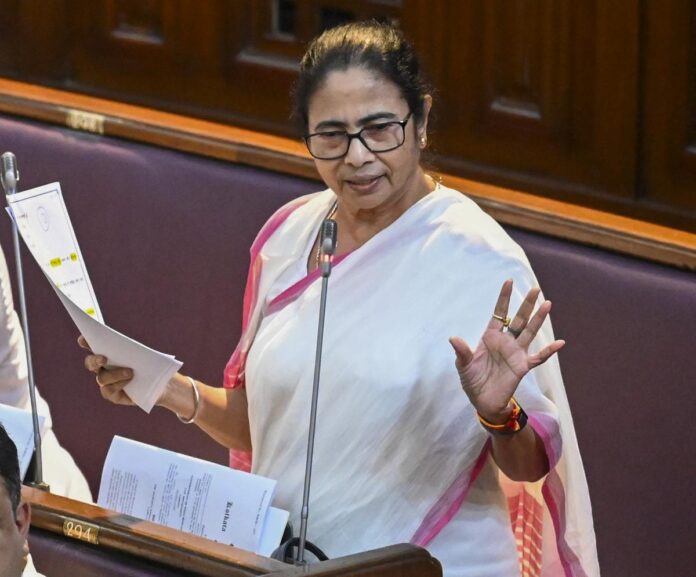
West Bengal Chief Minister Mamata Banerjee, often celebrated for her image as a leader of the marginalized and a crusader for women’s empowerment, once again finds herself at the center of a storm over her government’s handling of a rape survivor’s case. The incident has reignited concerns over political interference, institutional apathy, and the state’s repeated failures in ensuring justice for victims of sexual assault.
Reports emerging from West Bengal suggest that a rape survivor has been denied fair treatment and timely action by the state authorities. The handling of the case — marked by delays, insensitive remarks, and alleged attempts to protect the accused — has drawn sharp criticism from rights activists and opposition parties. Critics argue that such responses expose a disturbing pattern in the state’s approach toward gender-based violence, one that contradicts the Chief Minister’s long-standing claims of being a protector of women’s dignity.
Mamata Banerjee, who once stood as a vocal critic of similar injustices in other states, is now being accused of complacency and selective outrage. Her administration’s defensive stance, rather than ensuring accountability, has only deepened public disillusionment. The police’s sluggish response and the apparent reluctance to act swiftly against the accused have led many to believe that political considerations continue to overshadow justice in Bengal.
Women’s rights organizations have expressed anger, noting that such cases reflect a deeper institutional failure. They argue that beyond arrests and investigations, the problem lies in a culture of denial — one that discourages survivors from coming forward and often subjects them to public scrutiny and humiliation. In several instances, leaders from the ruling party have resorted to victim-blaming or dismissive comments, further eroding trust in the system.
This is not the first time that Mamata Banerjee’s government has faced such allegations. Past cases — including those in Nadia and Birbhum — have followed a similar pattern of initial denial, delayed action, and subsequent public outcry. Each controversy leaves behind the same question: how can a government that prides itself on women’s safety repeatedly fail to uphold it when it matters most?
The larger issue extends beyond political accountability. It underscores the fragility of justice delivery in cases involving powerful interests and the urgent need for systemic reform. Survivors often find themselves isolated — facing bureaucratic hurdles, social stigma, and psychological trauma — while those responsible escape unscathed due to political patronage or administrative inertia.
For Mamata Banerjee, this moment demands introspection. Her leadership has often been defined by emotional appeals and fierce rhetoric, but in matters of justice, symbolism is not enough. The state must prove that no one, regardless of position or influence, stands above the law.
As the outrage grows, one thing is clear: the people of West Bengal, especially its women, expect not just words of empathy but decisive, transparent action. Failing to deliver justice this time would not just be a political misstep — it would be a moral failure, one that stains the very foundation of a leader who once promised to fight for the voiceless.