

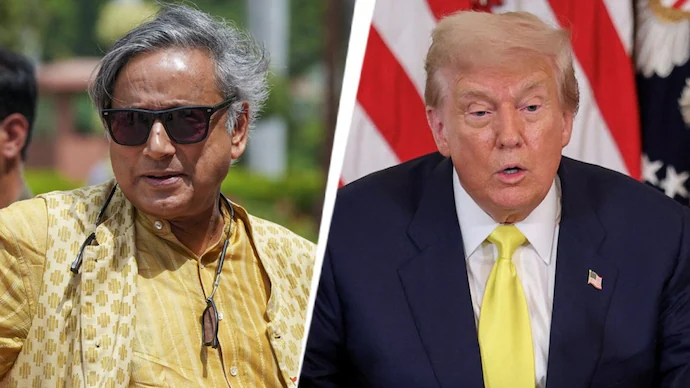
Senior Congress leader and former diplomat Shashi Tharoor has sharply criticized sections of the Indian diaspora for what he described as their “convenient silence” on recent setbacks in India’s relationship with the United States. Speaking at a public forum, Tharoor argued that while the diaspora has been vocal in celebrating high points in bilateral ties, it has been far less forthcoming in addressing areas of concern.
Tharoor, who has served as Minister of State for External Affairs and has long been a prominent voice on foreign policy, noted that the India–US partnership is one of the most important relationships of the 21st century. However, he emphasized that strong ties require honest assessment, not selective applause. “The diaspora is quick to organize rallies when leaders meet or agreements are signed, but where is that energy when frictions arise?” he asked, pointing to trade disputes, visa restrictions, and recent diplomatic irritations.
The Congress MP highlighted that the diaspora, estimated at over 4 million in the U.S., holds significant influence in shaping perceptions of India abroad. Their lobbying power, professional success, and cultural visibility give them the ability to act as a bridge between the two democracies. But according to Tharoor, this influence is undermined when they choose silence over constructive criticism. “If you want to be ambassadors of India, you must represent the whole picture, not just the glossy brochure,” he remarked.
Observers believe Tharoor’s comments reflect both political positioning and a broader concern about the balance of India’s public diplomacy. Under Prime Minister Narendra Modi, diaspora outreach has been a cornerstone of foreign engagement, with massive rallies like “Howdy, Modi” in Houston symbolizing India’s rising profile. Tharoor, however, appears to be urging the diaspora to go beyond symbolic gestures and take responsibility during difficult moments in the relationship as well.
The India–US partnership has seen ups and downs in recent years. While cooperation has deepened in defense, technology, and strategic alignment in the Indo-Pacific, irritants remain over trade imbalances, intellectual property rules, and differing approaches to global conflicts. For Tharoor, acknowledging these challenges is not a sign of weakness but a prerequisite for a healthier long-term relationship.
Critics of his remarks argue that the diaspora often avoids taking political stands to preserve unity within their communities and to prevent being drawn into partisan debates. Many prefer celebrating India’s cultural heritage and economic achievements rather than wading into complex geopolitical disputes. Yet, Tharoor’s call highlights an unresolved question: should the diaspora remain cheerleaders, or evolve into critical stakeholders who contribute to policy dialogue?
In conclusion, Tharoor’s criticism underscores the shifting expectations from the Indian diaspora in the United States. As India seeks to consolidate its role on the global stage, the diaspora’s voice will matter more than ever—not only in moments of triumph but also in times of tension. Whether the community chooses to embrace this more demanding role may well shape the next chapter of India–US engagement.