

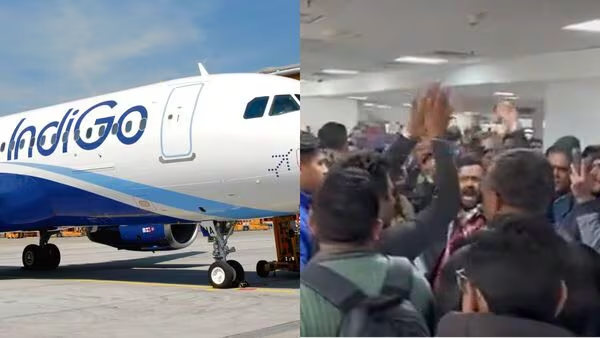
A Delhi–Kolkata IndiGo flight was delayed for nearly three hours after a heated confrontation broke out between a passenger and cabin crew over the chanting of “Har Har Mahadev” on board. The incident, which quickly spread across social media, has sparked a wider debate on freedom of expression, passenger conduct, and airline protocols.
According to passengers, the situation escalated when a traveler loudly chanted the religious slogan while boarding. Cabin crew members asked the individual to maintain decorum, which led to an argument. Other passengers joined in, with some supporting the flyer’s right to express religious sentiment and others urging restraint to avoid disruption of the flight.
The standoff soon intensified, prompting IndiGo staff to call in airport security to defuse the situation. With boarding stalled and tensions high, the flight remained grounded for almost three hours, causing significant inconvenience to passengers. Videos of the altercation quickly went viral, drawing polarized reactions online—some accusing the airline of being insensitive to religious expression, while others criticized the flyer for disregarding protocol and delaying hundreds of passengers.
IndiGo later issued a statement emphasizing that passenger and crew safety is its top priority. The airline clarified that crew members acted strictly in accordance with civil aviation rules, which prohibit unruly or disruptive behavior on board. It also urged passengers to respect the guidelines that ensure safe and timely operations.
The Directorate General of Civil Aviation (DGCA) is expected to seek a report on the incident. Experts note that while religious slogans are not prohibited, airlines are within their rights to curb any behavior that may be perceived as disruptive or that risks escalation among passengers.
This incident reflects growing challenges for airlines in balancing cultural sensitivities with operational discipline. With India’s aviation sector carrying millions of passengers each month, even small disruptions can have a cascading impact on schedules, safety, and passenger experience.