

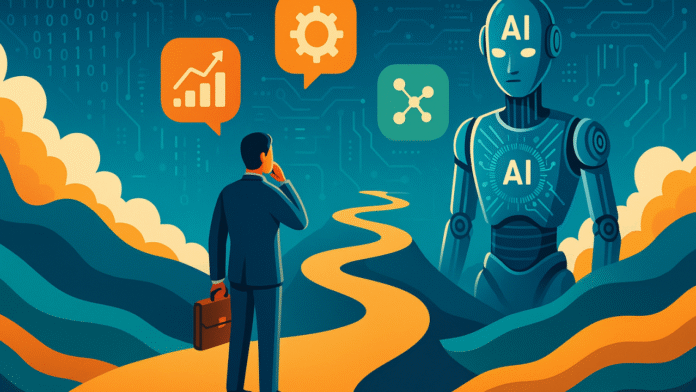
The rapid rise of artificial intelligence (AI) is reshaping the workplace, particularly for white-collar workers. A recent study reveals that 61% of white-collar tech workers believe AI could replace their roles within the next three to five years. Yet, despite this looming concern, many are embracing AI for its immediate benefits, such as reduced stress, improved work-life balance, and enhanced productivity. This article explores the dual narrative of AI as both a threat to job security and a tool for workplace improvement, drawing on recent data and expert insights to unpack this complex dynamic.
The AI Paradox: Fear of Replacement, Embrace of Benefits
Recent data from a survey of 2,500 white-collar tech workers indicates that 60% believe their jobs, or even their entire teams, could be replaced by AI within three to five years. Despite this, the same workers report using AI tools at least once daily, with 70% citing increased creativity and productivity, and 40% noting better work-life balance, reduced stress, and improved decision-making. This paradox highlights a fascinating tension: workers are aware of AI’s potential to disrupt their roles but are currently reaping tangible benefits from its integration.
Dallin Hatch, Head of Communications at Udacity, compares AI adoption to past technological revolutions like the internet or computers. “Folks in general tend to lean into learning the tools, and they’re discovering some great benefits,” he told Fortune. For now, employees are enjoying more time and less stress, even as they acknowledge the long-term risks. Philosopher Frank Martela echoes this sentiment, suggesting that AI’s immediate advantages are overshadowing future uncertainties.
The Current Benefits of AI in the Workplace
AI’s ability to automate repetitive tasks has led to significant improvements in workplace efficiency. For instance, AI tools can handle data analysis, draft reports, or streamline customer support, freeing workers to focus on higher-level tasks. This augmentation is particularly valuable in white-collar roles, where tasks like writing, research, and administrative work are increasingly supported by AI. The result is a workforce that feels more creative, productive, and less burdened by mundane responsibilities.
Moreover, 40% of surveyed workers report that AI has reduced workplace stress by automating time-consuming tasks, allowing for better work-life balance. This aligns with broader trends toward flexibility in the workplace, as business leaders like Microsoft’s Bill Gates and JPMorgan’s Jamie Dimon predict shorter workweeks—potentially as low as two or three-and-a-half days—driven by AI’s efficiency gains.
The Looming Threat: AI and Job Displacement
While AI’s benefits are clear, the fear of job displacement is not unfounded. Anthropic CEO Dario Amodei has warned of a potential “white-collar bloodbath,” with AI models rapidly improving to surpass human performance in tasks like coding, financial analysis, and content creation. Amodei estimates that within a few years, AI agents—capable of performing entire jobs at a fraction of the cost—could replace significant portions of the workforce.
This concern is echoed by industry leaders. Ford’s CEO Jim Farley and Amazon’s CEO Andy Jassy have both predicted that AI could eliminate up to half of white-collar jobs, with Amazon already planning to shrink its corporate workforce. Recent tech layoffs, partly attributed to AI adoption, underscore this trend. Goldman Sachs’ 2023 report further projects that 300 million jobs in the U.S. and Europe could be lost or diminished due to AI, particularly in administrative, managerial, and tech roles.
Entry-level roles are especially vulnerable. Derek Thompson’s reporting highlights a deteriorating job market for recent college graduates, with unemployment rates for this group rising to 5.8%, well above the national average. This suggests that AI is already disrupting the traditional career ladder, particularly for young workers.
The Optimistic Counterargument
Not all experts view AI as a doomsday scenario. Sam Altman, CEO of OpenAI, argues that technological advancements historically lead to prosperity, citing the example of lamplighters who adapted to new roles after the advent of electric lighting. Altman suggests that AI could usher in an “Intelligence Age,” where workers adapt to new opportunities created by technology.
Roles requiring high emotional intelligence, complex decision-making, or human interaction—such as therapists, counselors, teachers, and senior executives—are less likely to be fully automated. AI is more likely to augment these roles, enhancing human capabilities rather than replacing them entirely. For instance, doctors using AI can diagnose diseases faster, and teachers can personalize learning with AI tools, preserving the human element.
Navigating the Future: Adaptation and Education
To mitigate the risks of AI-driven job displacement, experts emphasize the importance of education and adaptation. Amodei advocates for increased public awareness and policy solutions to help workers transition to AI-augmented roles. Continuous learning is critical, with platforms like Udacity offering courses to develop AI-related skills. Workers who can leverage AI tools effectively will likely have a competitive edge in the evolving job market.
Businesses and educational institutions are also encouraged to collaborate on training programs, such as apprenticeships tailored for the AI era. Communities can support this transition by offering workshops and resources to build digital literacy. As Carlo Iacono notes, “Education is humanity’s best response to the rise of AI.” By treating AI as a tool to enhance creativity and productivity, workers can steer the technology toward a future where humans and AI coexist productively.
The Role of Policy and Public Awareness
The lack of government regulation or public discourse on AI’s job impact is a growing concern. Amodei notes that lawmakers and the public are largely unaware of AI’s accelerating capabilities, which could lead to a sudden wave of automation before society is prepared. Steve Bannon predicts that AI-driven job losses will become a major political issue by the 2028 U.S. presidential campaign, highlighting the need for proactive measures now.
Policy solutions could include incentives for companies to retrain workers, subsidies for AI education programs, or regulations to slow the pace of automation in vulnerable sectors. However, as Amodei warns, “You can’t stop the train, but you can steer it.” Immediate action is needed to ensure AI’s benefits are maximized while its risks are mitigated.
The rise of AI presents a dual reality for white-collar workers: immediate benefits of reduced stress and improved productivity, coupled with long-term fears of job displacement. While 61% of workers anticipate their roles could be automated within three years, they are currently leveraging AI to enhance their work lives. The future hinges on how society responds—through education, policy, and proactive adaptation. By embracing AI as a tool for augmentation rather than a replacement, workers and businesses can navigate this transformation toward a future where technology and human potential thrive together.