

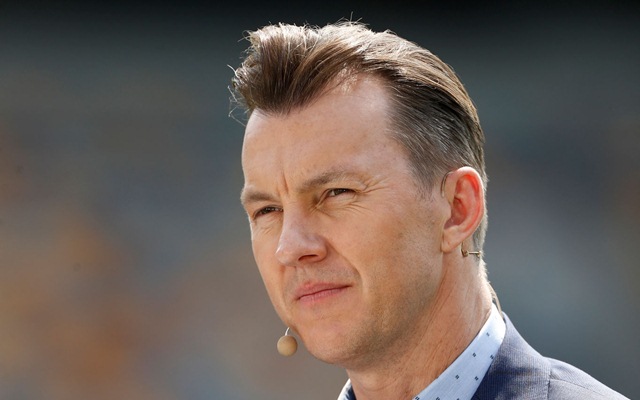
Highly anticipated India vs. Pakistan match in the World Championship of Legends (WCL) 2025 at Edgbaston, Birmingham, was canceled due to the refusal of several Indian players to participate, citing the April 22, 2025, Pahalgam terror attack that killed 26 civilians. Former Australian cricketer Brett Lee, representing Australia Champions, addressed the cancellation during a press conference in Coventry, maintaining a neutral stance and emphasizing unity through sport. His comment, “I love India, I love Pakistan,” captured widespread attention, as reported by India Today, The Hindu, and NDTV Sports. This article explores Lee’s reaction, the reasons behind the cancellation, and the broader implications for India-Pakistan cricket relations in the context of geopolitical tensions.
The Cancellation
The WCL 2025, a T20 tournament featuring retired cricketers, saw India Champions, led by Shikhar Dhawan, opt out of the scheduled match against Pakistan Champions. Key Indian players, including Dhawan, Harbhajan Singh, Yuvraj Singh, Suresh Raina, and Irfan Pathan, declined to participate, citing the Pahalgam attack perpetrated by The Resistance Front (TRF), a Pakistan-based Lashkar-e-Taiba proxy. The attack strained India-Pakistan relations, prompting the Indian contingent’s boycott, as confirmed by Dhawan’s X post: “Jo kadam 11 May ko liya, uspe aaj bhi waise hi khada hoon. Mera desh mere liye sab kuch hai” (I stand by the decision taken on May 11. My country is everything to me). The WCL organizers, co-owned by Bollywood star Ajay Devgn, issued an apology for “unintentionally causing discomfort” and canceled the match, offering full refunds to ticket holders (NDTV Sports). Sponsor EaseMyTrip also withdrew support, aligning with a “Bharat First” stance (myKhel).
Brett Lee’s Reaction
When questioned about the cancellation, Lee navigated the sensitive issue with diplomacy, stating, “That is a tough question. But the thing I’ll say right is, I love India, I love Pakistan. So I hope that they can get to a discretion where they can appreciate themselves. But most importantly, we are here on a tournament. So Australia versus India versus South Africa. We are all inclusive. So what happened last night is what happened. We pushed for it” (The Economic Times). His remarks, echoed across India Today and The Tribune, emphasized cricket’s role in fostering unity over political divides, urging fans and players to focus on the tournament’s inclusive spirit. Lee’s neutral stance was praised on X, with @LokmatTimes_ngp noting his call for “cricket unity” (LokmatTimes_ngp).
Geopolitical Context
The cancellation stems from heightened India-Pakistan tensions following the Pahalgam attack, which the US recently linked to TRF, designating it a Foreign Terrorist Organization (News18). India’s subsequent Operation Sindoor, targeting terror camps in Pakistan, and China’s blocking of TRF’s UNSC listing further soured relations (The Indian Express). Cricket, a cultural bridge between the two nations, has long been affected by such tensions. Since the 2008 Mumbai attacks, bilateral series have been suspended, with matches limited to ICC events like the World Cup and Champions Trophy, often at neutral venues like Dubai (Wikipedia). The WCL cancellation mirrors this trend, with Indian players’ refusal reflecting national sentiment, as seen in Dhawan’s firm stance (India Today).
Pakistan’s Response
Pakistan Champions’ captain Shahid Afridi criticized the Indian players’ last-minute withdrawal, arguing that cricket should remain separate from politics. “If [India] didn’t want to play against Pakistan, they should’ve said so before coming,” Afridi said, adding, “Cricket is bigger than politics” (GeoSuper). His remarks sparked controversy, with reports suggesting some Indian players specifically objected to Afridi’s presence (GeoSuper). The WCL’s decision to award Pakistan two points for the canceled match further fueled debates (NDTV Sports).
Implications
-
Cricketing Relations: The cancellation underscores the fragility of India-Pakistan cricket ties, with the Asia Cup 2025 facing similar venue uncertainties (NDTV Sports). The hybrid model used in the 2025 Champions Trophy, where India played in Dubai, may become a norm (Wikipedia).
-
Social Impact: The boycott reflects strong national sentiment in India post-Pahalgam, as seen in X posts like @toisports praising Lee’s neutrality but supporting Dhawan’s patriotism (toisports). However, it risks deepening fan divisions.
-
Tournament Dynamics: The WCL, featuring teams from Australia, England, South Africa, and West Indies, continues, with Pakistan defeating England by five runs in the opener (NDTV Sports). India Champions, who won the 2024 WCL final against Pakistan, remain strong contenders (myKhel).
Challenges
-
Player Sentiments: Balancing national pride with sportsmanship is challenging, as seen in Indian players’ unified stance (The Hindu).
-
Organizer Missteps: The WCL’s initial scheduling, despite known tensions, drew backlash for misjudging the emotional climate (India Today).
-
Fan Polarization: Social media reactions on X show divided sentiments, with Indian fans supporting the boycott and some Pakistani fans, like @geosupertv, backing Afridi’s call for apolitical cricket (geosupertv).
Path Forward
-
Neutral Venues: Future India-Pakistan matches may require neutral venues to avoid boycotts, as seen in the Champions Trophy (NDTV Sports).
-
Clear Communication: Organizers must consult players early to prevent last-minute cancellations, as Afridi suggested (GeoSuper).
-
Promoting Unity: Lee’s call for inclusivity should guide tournaments to focus on sport over politics (The Tribune).
Brett Lee’s diplomatic response to the WCL 2025 India-Pakistan match cancellation highlights cricket’s potential to unite, even amid geopolitical strife. The boycott, driven by the Pahalgam attack, reflects India’s firm stance against Pakistan-backed terrorism, as reinforced by the US TRF designation. While Lee’s “I love India, I love Pakistan” plea resonates, the cancellation underscores the deep impact of political tensions on sport. Moving forward, clear communication and neutral venues may help preserve the India-Pakistan cricket rivalry’s spirit while respecting national sentiments.