

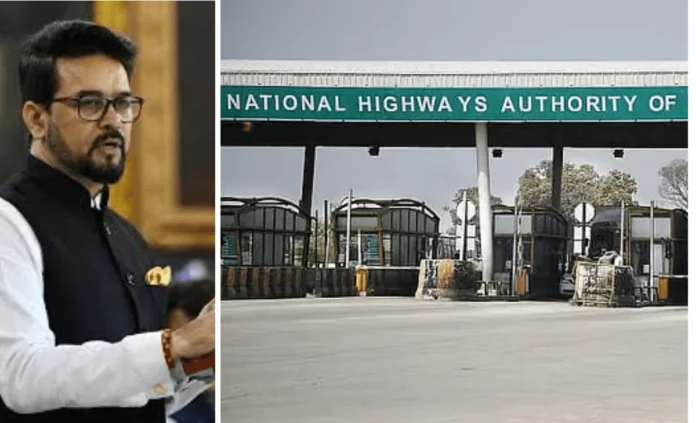
Hamirpur MP and former Union Minister Anurag Thakur sharply criticized officials of the National Highways Authority of India (NHAI) and the Union Ministry of Road Transport and Highways for their “irresponsible” handling of the National Highway-3 (NH-3) construction project in the Dharampur Assembly constituency of Himachal Pradesh. Thakur’s scathing remarks, reported by The Tribune and echoed on social media platforms like X, came during a visit to flood-hit areas in Dharampur, where local residents raised concerns about substandard construction practices and negligence by NHAI and its contractors. This article delves into the details of the incident, the issues highlighted, the broader context of NHAI’s operations, and the implications for infrastructure development and public safety in India.
The Incident in Dharampur
During his visit to the flood-affected areas of Dharampur, Anurag Thakur was approached by villagers who expressed frustration over the poor quality of work on the 22-km stretch of NH-3 connecting Hamirpur to Mandi. According to reports, only 7 km of the highway has been constructed, despite hills being cut for 15 km of the stretch, indicating significant delays and inefficiencies. The villagers alleged that neither the construction company nor NHAI officials addressed their grievances, which included damaged access paths to homes, cracks in residential structures, and the constant threat of landslides due to improper hill-cutting techniques.
Thakur confronted NHAI officials at the site, accusing them of either incompetence or complicity in protecting contractors for their “misdeeds.” He pointed out that the hills were cut vertically in violation of technical and scientific norms, leading to severe instability. “The hills that were cut vertical had not only damaged one step but had slid to the last point and damaged step two and three as well,” Thakur stated, as reported by The Tribune. This improper cutting has caused landslides, endangering lives and properties in the region. He directed the officials to compensate affected residents, construct protection walls immediately, and address the villagers’ concerns to prevent further disasters.
Broader Context of NHAI’s Operations
The National Highways Authority of India, established under the NHAI Act of 1988, is responsible for developing, maintaining, and managing India’s national highway network, which spans over 150,000 km as of 2024. Operating under the Ministry of Road Transport and Highways (MoRTH), NHAI oversees major projects like the Golden Quadrilateral and the North-South and East-West Corridors, which are critical to India’s economic and logistical framework. Despite its mandate to ensure quality and efficiency, NHAI has faced recurring criticism for delays, cost overruns, and substandard construction practices.
A 2012 World Bank report highlighted fraudulent and corrupt practices by contractors on NHAI projects, including bribes and gifts to influence officials. More recently, NHAI has been under scrutiny for issues like toll collection irregularities, with 14 agencies barred in 2024 for fraudulent activities, and delays in major projects like the Delhi-Dehradun Expressway due to land disputes. In Himachal Pradesh, similar concerns have been raised by state officials, with Himachal Pradesh Panchayati Raj Minister Anirudh Singh alleging 700 complaints against NHAI in Shimla alone for negligence in road construction.
Specific Issues Raised by Thakur
Thakur’s criticism focused on several critical lapses in the NH-3 project:
-
Substandard Construction Practices: The vertical cutting of hills, contrary to technical norms, has destabilized slopes, increasing the risk of landslides. This is particularly concerning in Himachal Pradesh, a hilly state prone to natural disasters like floods and landslides, especially during the monsoon season.
-
Neglect of Public Grievances: Villagers reported that NHAI and the construction company ignored their complaints about damaged access paths and structural cracks in homes, forcing residents to live under constant threat. This lack of responsiveness undermines public trust in infrastructure projects.
-
Project Delays: Of the 22-km stretch in Dharampur, only 7 km has been completed, despite significant hill-cutting for 15 km. This slow progress reflects poor project management and oversight by NHAI and its contractors.
-
Lack of Safety Measures: The absence of protection walls along the highway has exacerbated the risks posed by unstable slopes, endangering both residents and travelers.
Thakur emphasized that these lapses are unacceptable, stating, “There was no reason for these people to live under the threat of a disaster.” He assured the villagers that he would escalate the matter to Union Minister for Road Transport and Highways Nitin Gadkari to ensure accountability and swift action.
Public and Political Reactions
The incident garnered significant attention on social media, particularly on X, where users praised Thakur for advocating for the affected communities. A post by @INCKasumpti lauded Thakur’s intervention, stating, “Hon’ble MP Shri Anurag Thakur is commendable for taking the side of the people and taking strict action against NHAI’s disorganized working style.” Another post by @TheNewsRadar1 highlighted the bipartisan concern over NHAI’s lapses, noting that both Thakur and Himachal Pradesh Minister Anirudh Singh had criticized the agency’s performance.
However, the issue also sparked political debate. Anirudh Singh, facing allegations of assaulting NHAI officials in Shimla, denied the charges and called for a high-level inquiry into NHAI’s operations, citing widespread public dissatisfaction. These overlapping criticisms from political leaders across party lines underscore the severity of the issues plaguing NHAI’s projects in Himachal Pradesh.
Economic and Social Implications
The mismanagement of NH-3 construction has significant consequences for the region:
-
Economic Impact: National highways are vital for connectivity, tourism, and economic activity in Himachal Pradesh, a state known for its scenic routes and tourist destinations like Mandi and Hamirpur. Delays and poor-quality construction hinder trade, tourism, and access to markets, affecting local economies.
-
Social Impact: The damage to homes and access paths has disrupted the lives of residents, creating safety hazards and reducing quality of life. The lack of responsiveness from NHAI and contractors has fueled public discontent, eroding trust in public institutions.
-
Environmental Concerns: Improper hill-cutting practices exacerbate environmental degradation in a region already vulnerable to landslides and floods. This aligns with broader concerns about unsustainable infrastructure development, as highlighted in India’s $1.5 trillion climate investment needs by 2030.
NHAI’s Broader Challenges
The Dharampur incident is not an isolated case but part of a pattern of challenges facing NHAI. The agency has made strides in modernizing infrastructure, such as implementing GIS-based toll plaza monitoring and partnering with ISRO for satellite mapping of highways. However, issues like contractor negligence, inadequate supervision, and reliance on outdated technologies persist. A 2021 MoRTH circular emphasized stricter accountability for NHAI officers, mandating monthly inspections and penalties for non-compliance with quality standards, yet lapses continue.
NHAI’s financial strategies, such as prepaying ₹56,000 crore in loans in 2024-25 to save ₹1,200 crore in interest, demonstrate efforts to manage its ₹2.76 lakh crore debt. However, the agency’s reliance on the Hybrid Annuity Model (HAM), where contractors receive 40% funding during construction, has been criticized for enabling incomplete projects, as alleged by Anirudh Singh. Thakur’s call for accountability aligns with these broader systemic issues, highlighting the need for stricter oversight and enforcement.
The Path Forward
To address the concerns raised by Thakur and the residents of Dharampur, several steps are necessary:
-
Improved Construction Standards: NHAI must enforce strict adherence to technical and scientific norms for hill-cutting and road construction, particularly in geologically sensitive areas like Himachal Pradesh. Regular safety audits, as mandated by MoRTH, should be rigorously implemented.
-
Compensation and Rehabilitation: Affected residents must receive timely compensation for damages to their properties and access paths. NHAI should prioritize building protection walls to mitigate landslide risks.
-
Enhanced Oversight: Strengthening Project Implementation Units (PIUs) with qualified technical and accounts officers can improve project monitoring. NHAI’s Vigilance Wing should investigate allegations of contractor misconduct to ensure accountability.
-
Community Engagement: Establishing grievance redressal mechanisms, such as the ‘Rajmargyatra’ mobile application promoted by the Supreme Court, can improve communication between NHAI and affected communities. Public awareness campaigns can further enhance trust.
-
Policy Reforms: Thakur’s plan to raise the issue with Nitin Gadkari suggests the need for a national policy on relief and rehabilitation for communities affected by highway construction, as proposed by Anirudh Singh. Revising the HAM to reduce upfront payments, as under consideration by NHAI, could incentivize contractors to complete projects efficiently.