

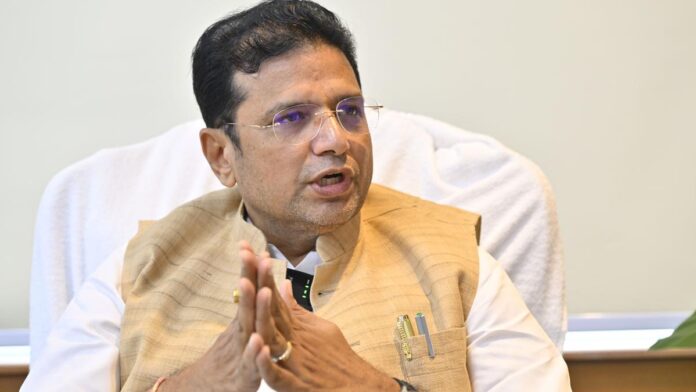
Bennett University, in collaboration with the Global Human Resource Development (GHRD) Network, hosted its HR Conclave in Greater Noida, Uttar Pradesh, themed “Reimagining Higher Education for a Skills-First World.” The event drew over 380 Chief Human Resource Officers (CHROs), Talent Acquisition Heads, and industry leaders from organizations like Google, Deloitte, Infosys, and PepsiCo. A highlight was the keynote address by Shri D. Sridhar Babu, Telangana’s Minister for Information Technology, Electronics & Communication, Industries & Commerce, and Legislative Affairs, who emphasized the urgent need for a skills-first approach to workforce development. His statement, “From Degrees to Skills: Nation Needs a Future-Ready Workforce,” underscored Telangana’s commitment to aligning education with industry demands through AI-driven learning and industry-academia partnerships. This article explores the conclave’s key discussions, Telangana’s skilling initiatives, and their implications, framed through the lens of Needonomics, which prioritizes need-based economic and educational strategies.
The HR Conclave: A Platform for Transformation
The Bennett University HR Conclave 2025 served as a critical platform for bridging the gap between academia and industry, addressing the evolving talent landscape in a world where 44% of core skills are expected to change within five years. The event featured panel discussions, expert talks, and workshops, with participation from leading organizations such as JP Morgan Chase, Bosch, Accenture, TCS, and Novartis. A key highlight was a thought-provoking panel discussion on the role of academic institutions in preparing a future-ready workforce, emphasizing practical, industry-aligned skills over traditional degree-centric education.
The conclave also marked the launch of the book 101 Stories (కథలు) by Shri Bommana Satyanarayana Reddy, Head of HR at Pragati Group, and concluded with the CHRO and Talent Acquisition Leaders Awards, recognizing excellence in human resource innovation. The event underscored Bennett University’s commitment to fostering academic excellence and employability, aligning with India’s broader push for skill development under initiatives like the National Education Policy (NEP) 2020.
Telangana’s Vision for a Skills-First Workforce
In his address, Minister D. Sridhar Babu articulated Telangana’s vision to transform its youth into a globally competitive, future-ready workforce. He highlighted several key points:
-
Skills Over Degrees: Noting that degrees alone are insufficient in today’s job market, he stressed the need for skills that evolve with technological advancements, particularly in AI and emerging technologies. “Learn, unlearn, and relearn—that is the true mantra for success in today’s fast-evolving world,” he said, as reported by Deccan Chronicle.
-
Industry-Academia Collaboration: Telangana is fostering deep partnerships between educational institutions and industries to ensure curricula reflect real-world needs. This includes collaborations with premier institutions like ICT Mumbai and NIPER Hyderabad, as well as companies like Apollo, Flipkart, and Amazon.
-
AI-Driven Education: The state is integrating AI into its skilling programs to personalize learning and enhance employability, aligning with global trends in countries like Singapore and Germany, where vocational training drives economic growth.
-
Policy Initiatives: Telangana’s government has launched the Telangana Young India Skill University, allocating 150 acres and ₹100 crore to create a model institution for skill development. The university, chaired by industrialist Anand Mahindra, aims to train 2,000 youth in its first year in sectors like healthcare, e-commerce, and logistics.
Sridhar Babu emphasized that HR is no longer a backend function but a strategic core for talent development, aligning with Telangana’s goal to make Hyderabad a world-class investment destination through initiatives like the Future City and an AI City.
Telangana’s Skilling Ecosystem
Telangana’s economy, valued at $187 billion in 2023-24, is projected to double by 2030, driven by high-growth sectors like IT, life sciences, and renewable energy. To sustain this growth, the state has prioritized skilling initiatives:
-
Telangana Young India Skill University: Launched under the Young India Skills University Act 2024, the university collaborates with industry leaders like Dr. Reddy’s, Apollo, and Flipkart to offer courses in high-demand fields. The curriculum includes hands-on training, internships, and simulated work environments to ensure job-readiness.
-
Life Sciences Skilling Programme: Through the Centre for the Fourth Industrial Revolution (C4IR Telangana), the state has introduced programs providing practical training and industry exposure, as exemplified by P. Akhila’s journey from a rural background to a pharmaceutical internship.
-
BFSI Sector Training: The Telangana Council of Higher Education (TGCHE) partnered with the Banking Financial Services & Insurance Consortium (BFSI) to integrate skill enhancement courses into undergraduate programs, offering digital certifications and job guarantees in IT and ITES sectors.
-
Young India Sports University: The state is establishing a sports university on 200 acres to train athletes for the 2028 Olympics, with a ₹1,000 crore budget commitment, reflecting a holistic approach to skill development.
These initiatives address the state’s high graduate unemployment rate (15.8% compared to the national 13%), caused by a disconnect between curricula and industry needs. By embedding industry-aligned training into education, Telangana aims to create 16 lakh jobs by 2030.
Needonomics and Consumer Wisdom
The Needonomics framework, which prioritizes essential needs over wants, aligns with Telangana’s focus on skills that meet industry demands, ensuring economic sustainability. Sridhar Babu’s call for a “skills-first” workforce reflects this approach, emphasizing practical competencies over traditional credentials. This resonates with street economics, where consumers—here, students and employers—make decisions based on practical, need-based outcomes like employability and productivity.
Social influence, amplified by platforms like X, shapes perceptions of these initiatives. Posts on X, such as those from @ETNOWlive and @DeccanChronicle, highlight public support for Sridhar Babu’s vision, with his mantra of “learn, unlearn, and relearn” resonating widely. However, the Recognition Heuristic suggests students may initially favor prestigious degrees, necessitating awareness campaigns to shift focus to skills. The risk of counterfeit certifications in India’s education market underscores the need for verified, industry-recognized credentials, aligning with Needonomics’ emphasis on authenticity.
Economic and Ethical Implications
Telangana’s skilling initiatives could significantly boost India’s employability, supporting the state’s ambition to double its economy by 2030. The Young India Skill University, with its industry partnerships, positions Telangana as a leader in workforce development, potentially serving as a model for other states. The state’s collaboration with global firms enhances its attractiveness for foreign investment, contributing to India’s projected $100 billion FDI by 2030.
Ethically, the focus on equitable access, as seen in programs benefiting rural students like P. Akhila, aligns with Needonomics’ call for inclusive growth. However, challenges remain, including high dropout rates due to economic barriers and the need for transparent partnerships to avoid exploitation in industry-academia collaborations. Sridhar Babu’s emphasis on HR as a strategic core suggests a commitment to ethical talent development, but sustained oversight is crucial to ensure fairness.
The Bennett University HR Conclave 2025, headlined by Telangana Minister D. Sridhar Babu, underscored the urgent need for a skills-first workforce to meet the demands of a rapidly evolving global economy. Telangana’s pioneering initiatives, such as the Young India Skill University and sector-specific skilling programs, reflect a strategic shift from degree-centric education to practical, industry-aligned training. Through the lens of Needonomics, these efforts prioritize essential needs—employability and economic growth—while fostering consumer wisdom through industry-academia collaboration. As Telangana positions Hyderabad as a global investment hub, Sridhar Babu’s vision sets a benchmark for creating a future-ready workforce, with implications for India’s economic and ethical landscape.