

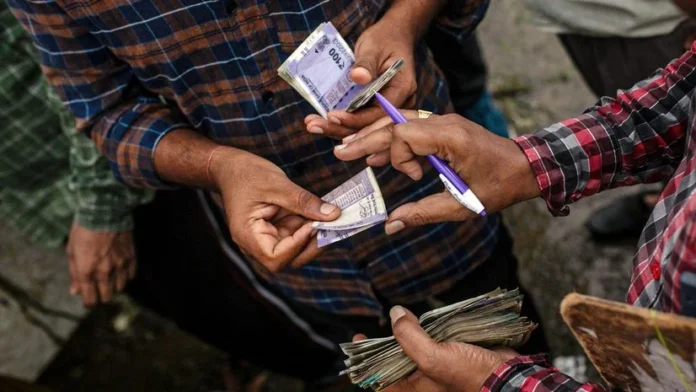
India’s Unified Payments Interface (UPI) has been a global fintech success, processing over 650 million transactions daily and surpassing Visa to become the world’s leading real-time payment system. Launched in 2016 by the National Payments Corporation of India (NPCI), UPI transformed India’s payment landscape, reducing cash reliance and fostering a digital economy. However, a surprising trend has emerged in Bengaluru, India’s tech capital: small vendors and shopkeepers are shunning UPI in favor of cash, driven by fears of tax scrutiny and Goods and Services Tax (GST) notices. Signs reading “No UPI, Only Cash” are increasingly visible at neighborhood stores, threatening to reverse years of progress in digital payments. This article explores the reasons behind this shift, its implications for India’s digital economy, and potential solutions to balance tax compliance with digital adoption.
The Rise of UPI: A Digital Revolution
Since its launch, UPI has revolutionized how Indians transact. Built on the Immediate Payment Service (IMPS) infrastructure, UPI enables seamless, instant inter-bank transactions via mobile phones, making it a preferred choice for both consumers and merchants. By July 2025, UPI processes over 18 billion transactions monthly, dominating electronic retail payments in India. Its interoperability, ease of use, and incentives like cashbacks have driven widespread adoption, particularly among small vendors who embraced QR codes for low-value transactions during the COVID-19 pandemic.
The International Monetary Fund (IMF) has praised UPI’s success, noting that India leads the world in fast payments. Proxies for cash usage, such as ATM withdrawals and currency in circulation, have declined significantly, reflecting UPI’s dominance. Globally, UPI’s influence is evident in initiatives like the UPI-PayNow linkage with Singapore and the UPI-AANI integration with the UAE, facilitating cross-border remittances. Bengaluru, a leader in digital payments, accounted for 7.73% of India’s UPI transactions in May 2025, second only to Maharashtra. However, despite these achievements, a growing backlash among small vendors signals a potential setback.
The GST Crackdown: Triggering a Return to Cash
The catalyst for the shift back to cash is the Karnataka Tax Department’s aggressive use of UPI transaction data to identify tax evaders. A six-month investigation into UPI transactions between FY2022 and FY2025 uncovered nearly 65,000 merchants in Karnataka who received substantial UPI payments without GST registration. The department issued notices to traders with sales exceeding ₹40 lakh, demanding significant tax payments—some in the lakhs of rupees.
For small vendors, these notices have sparked fear and confusion. Many operate in the informal sector, where compliance with GST regulations is challenging due to high costs and complexity. Shankar, a shopkeeper from Horamavu, Bengaluru, expressed his frustration: “I cannot accept UPI payments anymore. The tax notices and the fear of harassment have forced me to switch back to cash.” The perception that UPI transactions are being treated as direct evidence of income has led vendors to remove QR codes and display “No UPI, Only Cash” signs at their shops.
Advocate Vinay K Sreenivasa, joint secretary of the Federation of Bengaluru Street Vendors Associations, highlighted additional concerns: “Many vendors fear being harassed by GST officials. Some are also worried about possible eviction by civic bodies, which has led them to stop accepting UPI payments.” The threat of eviction is particularly acute for street vendors, who often operate on precarious licenses.
Why Vendors Are Ditching UPI
Several factors are driving small vendors to shun UPI:
-
Fear of Tax Scrutiny: The Karnataka GST department’s use of UPI data to track unregistered businesses has created a sense of vulnerability. Vendors fear that digital transactions expose them to audits and penalties, even if their income is below the taxable threshold.
-
High Compliance Costs: For micro and small businesses, GST registration involves significant administrative and financial burdens. Many vendors, operating on thin profit margins, find compliance costs prohibitive, especially when tax notices demand large sums based on UPI transactions.
-
Misunderstanding of Tax Notices: Vendors often misunderstand UPI transaction data as being directly equated to taxable income. A former GST field official noted that the entire amount received via UPI may not reflect actual business income, but this nuance is lost on many small traders, leading to panic.
-
Harassment and Eviction Fears: Beyond tax liabilities, vendors worry about harassment from authorities or eviction by civic bodies, particularly street vendors with informal setups. The fear of losing their livelihood outweighs the convenience of UPI.
-
Trust Deficit: The enforcement drive has eroded trust in digital payment systems. Vendors perceive UPI as a tool for surveillance rather than a facilitator of convenience, prompting them to revert to cash to avoid scrutiny.
This trend is not limited to Bengaluru. Social media posts on X indicate similar shifts in other cities, suggesting a broader backlash against UPI among small vendors across India.
Implications for India’s Digital Economy
The return to cash poses significant challenges to India’s Digital India mission, which aims to formalize the economy and promote cashless transactions. Key implications include:
-
Reversal of Digital Progress: Bengaluru’s shift to cash could undermine India’s global reputation as a fintech leader. The city’s high UPI adoption rate made it a model for digital payments, and a decline in usage could weaken India’s position in global fintech rankings.
-
Revival of the Cash Economy: Increased cash usage may encourage informal transactions, making it harder for authorities to track economic activity. This could reduce tax revenues and hinder efforts to formalize India’s economy, where the informal sector accounts for a significant portion of GDP.
-
Consumer Inconvenience: Customers, accustomed to UPI’s convenience, may face difficulties accessing cash, especially for small transactions. An X user remarked, “Have completely stopped buying from shops that don’t accept online payments or UPI,” highlighting growing consumer frustration.
-
Potential Nationwide Spread: Experts warn that Karnataka’s GST crackdown could set a precedent, with other states adopting similar measures to meet revenue targets. If vendors across India abandon UPI, the digital payment ecosystem could face a significant setback.
-
Impact on Financial Inclusion: UPI has been a key driver of financial inclusion, bringing small vendors and unbanked individuals into the formal financial system. A return to cash risks excluding these groups, undermining years of progress.
The Path Forward: Balancing Compliance and Digital Adoption
To address this issue, policymakers must balance tax enforcement with supporting small vendors in adopting digital payments. Potential solutions include:
-
Simplified GST Compliance: Introducing a simplified GST registration process for small vendors, such as a presumptive tax scheme with lower compliance costs, could encourage formalization without driving them to cash. For example, a flat tax rate for businesses below a certain turnover threshold could reduce administrative burdens.
-
Education and Awareness: Clarifying that UPI transactions are not automatically treated as taxable income is critical. Outreach programs, conducted in local languages, can educate vendors on tax obligations and the benefits of compliance, such as access to credit and government schemes.
-
Incentives for Digital Payments: Reintroducing or expanding incentives like cashbacks, zero transaction fees, or rewards for UPI usage could make digital payments more appealing. Targeted incentives for small vendors could offset compliance costs.
-
Transparent Enforcement: The GST department should adopt transparent and fair enforcement practices, ensuring that tax notices are based on accurate assessments. Providing vendors with clear guidelines on how UPI data is used in audits can rebuild trust.
-
Support for Street Vendors: Protecting street vendors from eviction fears is essential. Local governments can work with vendor associations to formalize licenses and provide legal protections, encouraging them to continue using UPI.
-
Technology Solutions: Developing UPI features that allow vendors to categorize transactions (e.g., personal vs. business) could help authorities distinguish taxable income from non-taxable transfers, reducing the risk of erroneous tax demands.
Lessons from the Global Context
India is not alone in grappling with the tension between digital payments and tax compliance. In countries like Brazil and Nigeria Hawkins, similar enforcement drives have led to resistance from small businesses. Brazil’s Simples Nacional program, which offers simplified tax regimes for micro-enterprises, provides a model for India to consider. By offering tax exemptions or simplified regimes for small vendors, Brazil has encouraged formalization without alienating informal businesses. India could adopt similar strategies to ensure that digital payments remain attractive to small vendors.
The resurgence of cash among Bengaluru’s small vendors reflects a critical challenge in India’s journey toward a digital economy: balancing tax compliance with the needs of the informal sector. While UPI has been a game-changer, the fear of GST notices and harassment has driven vendors to revert to cash, threatening to undo years of progress in digital adoption. By addressing vendors’ concerns through simplified compliance, education, and incentives, policymakers can restore trust in UPI and ensure that India’s digital revolution continues to thrive.
The return of cash as king is a wake-up call for India’s policymakers. With the right reforms, UPI can regain its crown, ensuring that small vendors and consumers alike benefit from a seamless, inclusive digital economy. The time to act is now—before the cash comeback spreads further.