

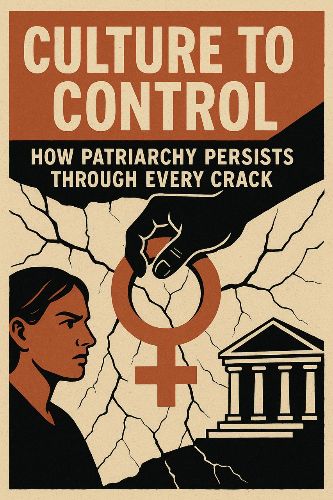
“No one is more arrogant toward women, more aggressive or scornful, than the man who is anxious about his virility.”
The textbook defines patriarchy as a system that privileges male dominance. But that sterile description misses its true form: patriarchy is not merely systemic—it is a condition. One so omnipresent, so deeply woven into the social and cultural fabric, that most don’t recognize it until it bruises, suffocates, or silences. It’s not just a policy issue or a political structure—it is an atmosphere. It lives and breathes in every space we occupy.
Patriarchy determines who gets to speak uninterrupted in meetings, who is encouraged to express anger, and who is expected to apologize for ambition. It is dressed up in tradition, cloaked in professionalism, and justified by culture. It is in WhatsApp forwards, household conversations, workplace expectations, and the subtle policing of female agency.
Much like the mythical Hydra of Lerna, patriarchy sprouts new heads each time one is cut off. Its many faces—sexism, racism, casteism, capitalism, ageism, ableism, homophobia, transphobia—do not exist in isolation. They are connected, functioning together to uphold structures of dominance. You could live in a liberal democracy or an authoritarian regime; patriarchy adapts. Its methods change, but its mission remains: control.
It thrives in the unnoticed. A schoolteacher who praises quiet, obedient girls while labeling assertive ones as “difficult.” A dinner table joke at the expense of a working mother. A workplace where appraisal discussions center more on attire than ability. These may seem harmless. They are not. They are the very scaffolding that keeps patriarchy standing.
One such moment unfolded in a seemingly ordinary corporate office. A young woman, new to the company, approached the HR manager to seek support with onboarding challenges. She expected solutions. What she got instead was a derailing interrogation about her appearance. “Why don’t you wear makeup? Do your hair? Maybe try skirts?” The implication: a woman’s legitimacy at work begins with her visual appeal. Not a word about performance. Just conformity. Just compliance.
This wasn’t an exception. It was an echo of countless other encounters where the metric of a woman’s worth is reduced to how pleasing she is to male perception. This is patriarchy at work—not loud, not violent, but casually corrosive.
Patriarchy also doesn’t only rely on men to survive. It enlists women too. Mothers who warn their daughters not to “intimidate” men. Female bosses who demand obedience over opinion. Women who gatekeep other women under the pretext of tradition. The foot soldiers of patriarchy are often those who were once wounded by it—and now unknowingly perpetuate its codes.
These acts are subtle, even well-intentioned, but collectively, they enforce a status quo that keeps women in their “place.” Feminism, in this context, is not a plea for equal rights. It is a radical interruption of patriarchal programming.
Feminism demands the dismantling—not the reform—of the institutions and mindsets that sustain inequality. It asks difficult questions, disrupts polite rooms, and refuses inherited narratives. It is not about being palatable. It is about being powerful. It is the rage of a thousand silenced voices finally speaking without asking for permission.
“Never forget that it only takes a political, economic or religious crisis for women’s rights to be called into question. These rights can never be taken for granted,” wrote Simone de Beauvoir. “You must remain vigilant throughout your life.”
Because patriarchy does not sleep. It adapts. It waits. And so must our resistance—resolute, relentless, and always ready.
Until every crack is filled. Until the monster is truly dead.