

My first memory of the Asian Games is an elephant called Appu and a television called Apsara. It was 1982. I was 13, in Class 8 at Don Bosco, Park Circus, Calcutta, and the Asian Games in Delhi seemed to have suddenly taken over India. Appu was based on a real elephant called Kuttinarayanan, which I found out much later.
I didn’t know that Appu was also the first mascot in Asian Games history. Or that Delhi 1982 would mark another historic transition, with China topping the medal table for the first time and ending Japan’s dominance.
Forty-four years later, with the Asian Games heading to Aichi-Nagoya in Japan from September 19 to October 4, 2026, it is worth dipping into the Asiad’s wonderful book of trivia.
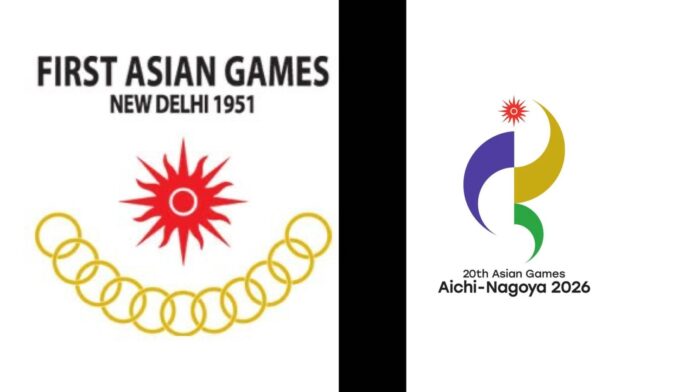
The first Asian Games were held in New Delhi in 1951, with just 11 participating countries, 489 athletes and six sports. Japan finished comfortably on top of the medal table.
Hangzhou 2022, eventually staged in 2023 because of the COVID-19 pandemic, brought together more than 12,000 athletes from 45 National Olympic Committees. The Asian Games had become bigger than the Olympics in terms of participating athletes.
Another interesting aspect is that the Thai capital, Bangkok, has hosted the Games four times — in 1966, 1970, 1978 and 1998. The 1970 Games were originally scheduled to be held in Seoul, but South Korea withdrew because of financial and security concerns. Bangkok stepped in, having hosted the Games just four years earlier.
Sport has never existed entirely outside politics, and Asian Games history reflects Asia’s complicated geopolitical journey. Israel, for example, participated in the Asian Games during its early decades and won medals, including football gold in 1974. It subsequently ceased participating in the Games and eventually became part of the European sporting structure.
The Asiad has also been willing to embrace sports that reflect the continent rather than simply replicate the Olympic programme. So we have had kabaddi from South Asia, sepak takraw from Southeast Asia, wushu from China, kurash from Central Asia and pencak silat from Indonesia and the wider Southeast Asian region.
You can win an Asian Games medal without running anywhere. The Asian Games have had a wonderfully elastic interpretation of sport. Chess, bridge and xiangqi — Chinese chess — have all featured. Bridge was included at Jakarta 2018, producing one of the more unusual sights at a major multi-sport event: athletes sitting calmly at card tables while, elsewhere in the city, marathon runners were discovering entirely different definitions of suffering.
Cricket was remarkably late to the party.
For a continent containing India, Pakistan, Bangladesh, Sri Lanka and Afghanistan, cricket’s Asian Games history is surprisingly brief. It first appeared at Guangzhou 2010. Cricket then disappeared from Jakarta 2018 before returning at Hangzhou, when India finally entered and promptly won both the men’s and women’s gold medals.
For decades, the idea of India winning 100 medals at a single Asian Games seemed fanciful.
At Jakarta 2018, India won 69 medals. Then came Hangzhou, where India finished with a record 107 medals — 28 gold, 38 silver and 41 bronze.
For someone whose first Asian Games memories involved Appu appearing through occasional static on Apsara, 107 Indian medals feels like another age entirely.
And so to Aichi-Nagoya 2026. The Games will feature 43 sports, ranging from athletics, swimming and gymnastics to kabaddi, kurash, wushu, cricket and esports. And in a sign of how the definition of competitive sport continues to evolve, padel and teqball are also on the programme.
Somewhere over its 75-year journey, the Asian Games have developed a brand proposition that no other major sporting event can quite replicate.
The Olympics is the world’s greatest celebration of sport. The Asian Games need not try to be a smaller version of it. Its strength lies precisely in being different.
Its cultural diversity makes it truly an event that showcases a thousand ways to play.
Follow RevSportz for latest sports news
The post The Asian Games Brand : A thousand ways to play! appeared first on Sports News Portal | Revsportz.